Studying in Arizona 2026 — Tuition, Cost & Universities
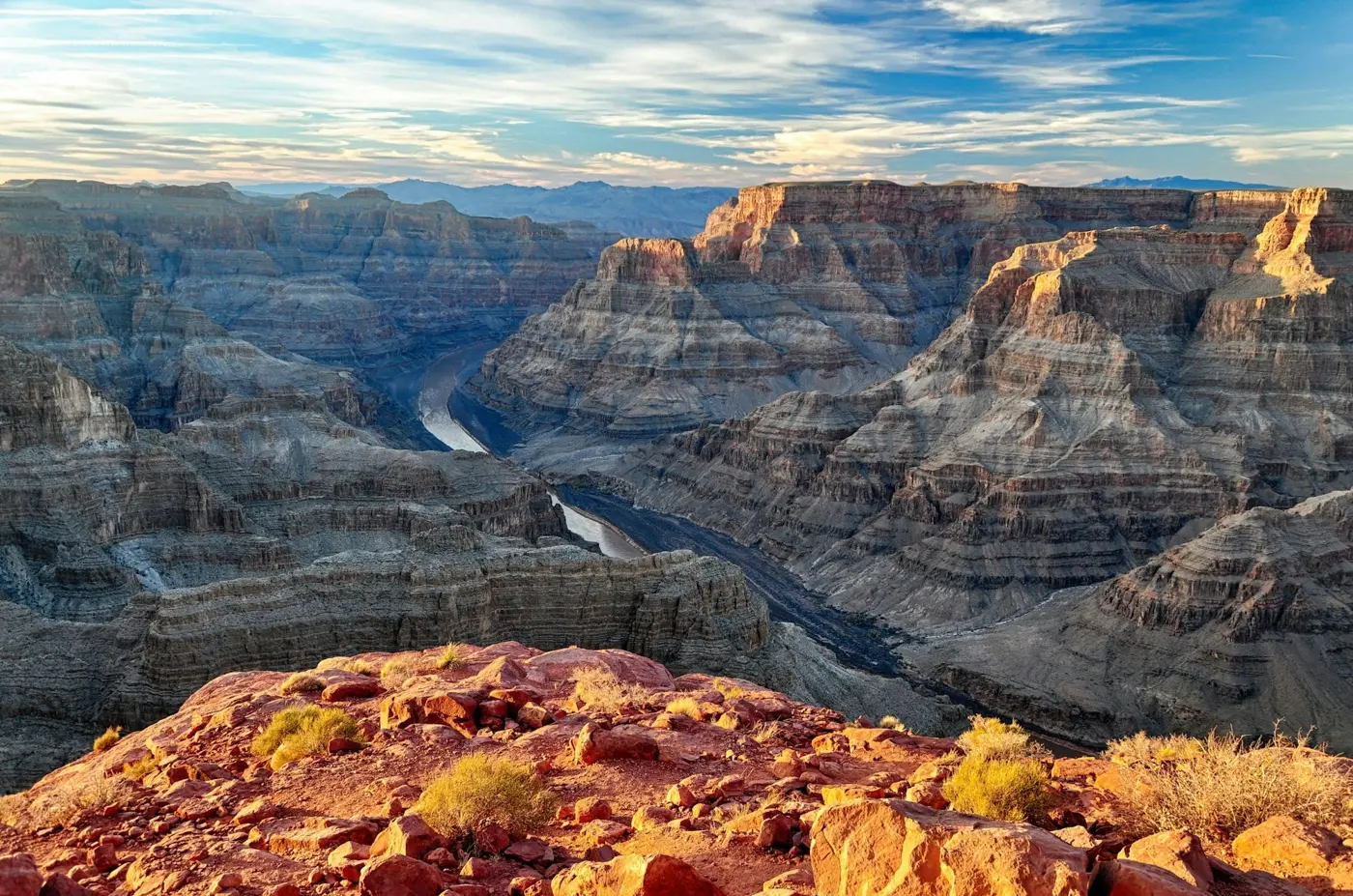
The Grand Canyon State — huge international community, low costs, and a booming chip industry
- Flagship
- ASU
- Out-of-state tuition
- ~$33–40k/yr
- Cost of living
- $1,400–2,000/mo
- Top industry
- Semiconductors
- Rent
- $850
- Food
- $310
- Transport
- $175
- Personal
- $415
Studying in Arizona as an international student
Arizona — the Grand Canyon State — has quietly become one of the most popular US destinations for international students, and the maths explains why. Arizona State University (ASU) hosts one of the largest international student populations in the entire United States, the cost of living is low-to-moderate, and the state is in the middle of a semiconductor boom as TSMC and Intel build major chip fabs near Phoenix. The two anchor universities are ASU (Tempe/Phoenix) and the University of Arizona in Tucson, famous for optics, astronomy, and space research.
As an international student you pay nonresident tuition — roughly US$33,000/year at ASU or ~US$40,000/year at the University of Arizona. Living costs are refreshingly reasonable at US$1,400–2,000/month, well below California or New York. The one thing to be honest about is the heat: this is a hot desert, and summers are intense. This guide gives you the real 2026 numbers.
Tuition: in-state vs out-of-state vs international
Arizona has three public universities plus private options. International students pay the nonresident (out-of-state) rate — the in-state column below is shown only for context (F-1 students cannot normally qualify for it).
| Institution | In-state (context) | International / nonresident | Notes |
|---|---|---|---|
| Arizona State University (Tempe) | ~US$12,000/yr | ~US$33,000/yr | Huge intl community; online + innovation |
| University of Arizona (Tucson) | ~US$13,000/yr | ~US$40,000/yr | Optics, astronomy, space research |
| Northern Arizona University (Flagstaff) | ~US$12,000/yr | ~US$27,000/yr | Cooler climate; smaller campus |
| Grand Canyon University (private) | — | ~US$35,000/yr | Large private; Phoenix |
ASU offers strong merit scholarships to international students, which can pull the effective nonresident cost down meaningfully — worth pursuing before you assume the sticker price. NAU in Flagstaff is both cheaper and far cooler if the desert heat concerns you.
Top universities in Arizona
| University | Type | City | Approx. intl tuition/yr |
|---|---|---|---|
| Arizona State University | Public | Tempe / Phoenix | ~US$33,000 |
| University of Arizona | Public | Tucson | ~US$40,000 |
| Northern Arizona University | Public | Flagstaff | ~US$27,000 |
| Grand Canyon University | Private | Phoenix | ~US$35,000 |
ASU is the headline draw — repeatedly ranked among the most innovative universities in the US, with one of the country's biggest international cohorts, strong engineering and business schools, and a vast online programme. The University of Arizona is a world leader in optical sciences, astronomy, and planetary/space research — it has led major NASA missions and operates world-class telescopes. With semiconductor fabs rising nearby, engineering and physics graduates are walking into a hiring boom.
Cost of living by city
Arizona is one of the more affordable big-university states. Monthly all-in estimates for a student:
| City / area | Shared room rent | Total monthly (all-in) |
|---|---|---|
| Tempe (ASU) | US$700–1,000 | US$1,500–2,000 |
| Phoenix | US$700–1,000 | US$1,500–2,000 |
| Tucson (U of A) | US$650–950 | US$1,400–1,900 |
| Flagstaff (NAU) | US$700–1,000 | US$1,500–2,000 |
Housing is reasonable by US standards, and far below California. The one cost to plan for is summer air-conditioning — running the AC from June to September pushes electricity bills up sharply, so factor that into your budget. Apply for university housing early in the bigger cities. Use our cost-of-study calculator to model your own numbers.
Health insurance, climate & safety
Health insurance is mandatory. ASU and the University of Arizona require all international students to carry coverage and enroll you in the campus plan — roughly US$2,500–4,000/year — unless you waive it with comparable coverage. Never go uninsured in the US; a single hospital visit can cost thousands.
Climate: be honest about the heat. Phoenix and Tucson are hot desert — summers (June–September) regularly top 40°C (104°F), and you will live between air-conditioned buildings during the day. The reward is a glorious mild, sunny winter (15–20°C) when much of the world is frozen. If extreme heat is a dealbreaker, Flagstaff (NAU) sits at high altitude with cool summers and snowy winters.
Safety varies by neighborhood far more than by state. Campus areas in Tempe and Tucson are safe and walkable; in greater Phoenix, choose your neighborhood with normal big-city care.
Jobs & careers after graduation
Work authorization itself — on-campus work, CPT, and post-graduation OPT / STEM OPT — is governed by US federal immigration rules, not by Arizona. See our USA work & career guide and visa & arrival guide for the mechanics.
What Arizona adds is one of the fastest-growing job markets in the country:
- Semiconductors — a historic build-out as TSMC and Intel open major chip fabs near Phoenix, hiring thousands of engineers and technicians.
- Aerospace & defense — a long-established cluster across the Phoenix and Tucson areas.
- Tech & software — a growing startup and corporate scene in greater Phoenix.
- Healthcare — one of the state's largest and most reliable employment sectors.
For STEM graduates on the 3-year STEM OPT extension, Arizona's semiconductor expansion makes it one of the most promising emerging states for relevant employment. See our costs & funding guide to plan ahead.
Frequently asked questions
How much does it cost an international student to study in Arizona?
Budget roughly US$50,000–58,000/year all-in at ASU (≈US$33k tuition + ≈US$20k living). The University of Arizona runs higher on tuition (≈US$40k), but Arizona's low-to-moderate cost of living keeps the total well below California or New York.
Do international students pay in-state or out-of-state tuition?
Out-of-state (nonresident). F-1 students cannot normally establish Arizona residency for tuition, so plan on the nonresident rate — though ASU and U of A offer merit scholarships that can soften it.
What is the climate really like?
A hot desert. Phoenix and Tucson summers regularly exceed 40°C and June–September is intense. Winters are mild and sunny. Flagstaff (NAU) is the cool, high-altitude alternative.
Can international students work in Arizona?
Work rules (CPT/OPT) are federal — see the USA guides. Arizona's advantage is its booming job market: semiconductors (TSMC, Intel), aerospace/defense, tech, and healthcare.
Compare Arizona with the rest of the USA
Explore the full USA study guide for visas, admissions, and costs — then model your own budget with the cost-of-study calculator.
Open the USA study guide