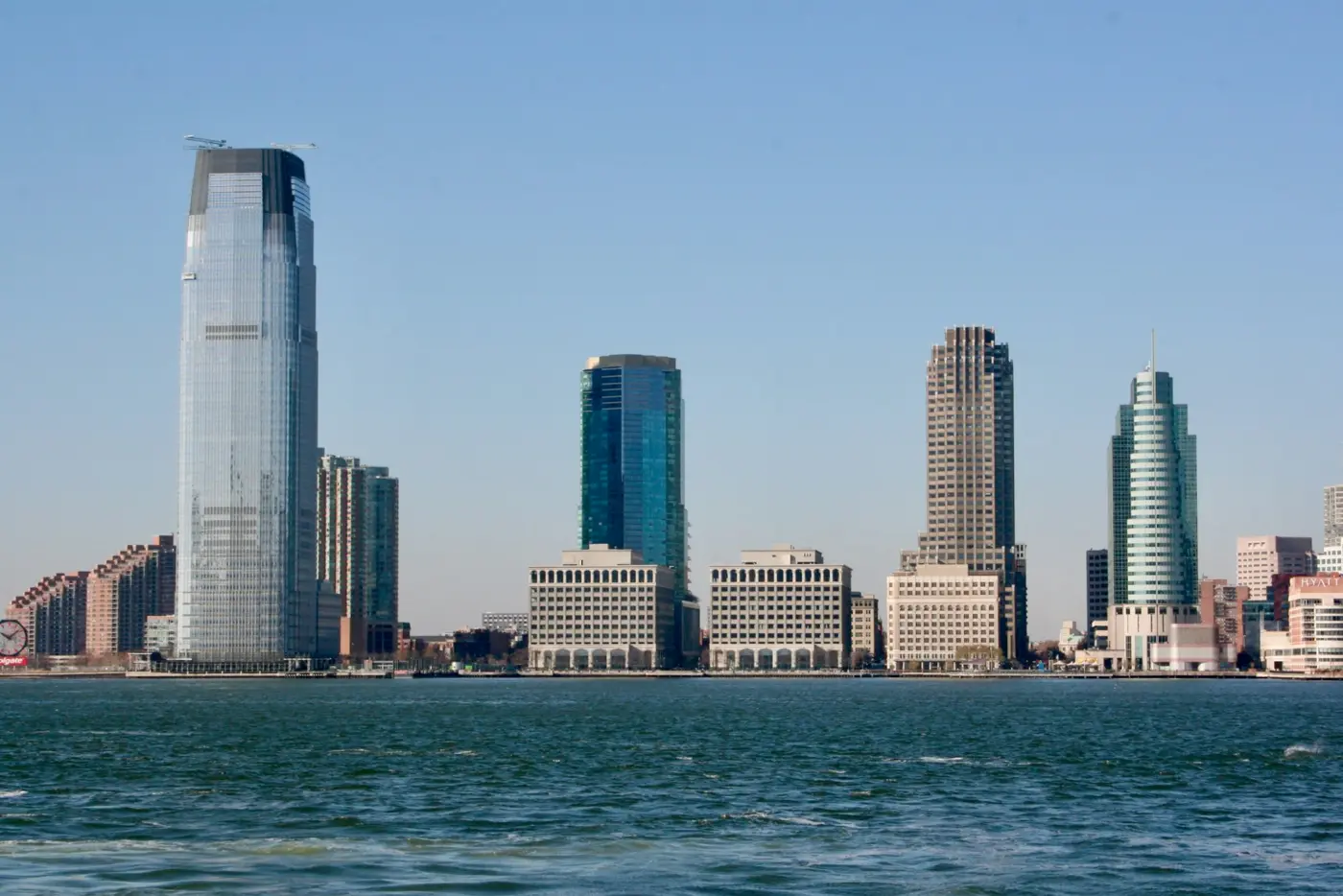
Studying in New Jersey 2026 — Tuition, Cost & Universities
The Garden State — Ivy League research, the pharma capital, and a gateway to NYC
- Flagship
- Rutgers / Princeton
- Out-of-state tuition
- $33k–62k/yr
- Cost of living
- $1,800–2,600/mo
- Top industry
- Pharma
- Rent
- $1,073
- Food
- $351
- Transport
- $195
- Personal
- $331
Studying in New Jersey as an international student
New Jersey is one of the most underrated US states for international students. It sits directly between New York City and Philadelphia, giving you access to two major job markets, and it is home to Princeton University, the public flagship Rutgers, and respected STEM schools NJIT and Stevens. It is also the pharmaceutical capital of the United States — nicknamed the "Medicine Chest of the World" — with global giants like Johnson & Johnson, Merck, and Bristol Myers Squibb headquartered here.
As an international student you pay out-of-state (nonresident) tuition. That means roughly US$33,000/year at Rutgers, US$35,000–43,000/year at NJIT or Stevens, or ~US$62,000/year at Princeton. Living costs run US$1,800–2,600/month — high, but generally lower than inside New York City, which is why many students live in New Jersey and commute. This guide lays out the real 2026 numbers so you can plan with confidence.
Tuition: in-state vs out-of-state vs international
New Jersey has a strong public flagship plus elite and specialist privates. International students pay the nonresident (out-of-state) rate — the in-state column below is shown only for context (F-1 students cannot normally qualify for it).
| Institution type | In-state (context) | International / nonresident | Notes |
|---|---|---|---|
| Rutgers (public flagship) | ~US$16,000/yr | ~US$33,000/yr | New Brunswick, Newark & Camden campuses |
| NJIT (public STEM) | ~US$18,000/yr | ~US$35,000/yr | Engineering, computing, architecture in Newark |
| Community colleges | ~US$5,000/yr | ~US$10,000–13,000/yr | Transfer route into Rutgers/NJIT |
| Private (Princeton, Stevens) | — | ~US$43,000–62,000/yr | Stevens ~US$43k; Princeton ~US$62k (Ivy) |
Rutgers is the value anchor of public higher education in New Jersey: a respected research flagship at roughly half the cost of a private. Starting at a New Jersey community college and transferring into Rutgers or NJIT is a well-trodden way to cut the total cost of a bachelor's degree while keeping the same final diploma.
Top universities in New Jersey
| University | Type | City | Approx. intl tuition/yr |
|---|---|---|---|
| Princeton University | Private (Ivy) | Princeton | ~US$62,000 |
| Stevens Institute of Technology | Private | Hoboken | ~US$43,000 |
| Rutgers University | Public (flagship) | New Brunswick | ~US$33,000 |
| NJIT | Public (STEM) | Newark | ~US$35,000 |
| Rutgers–Newark | Public | Newark | ~US$33,000 |
Princeton is a global top-five university, especially strong in the sciences, mathematics, economics, and public policy. Rutgers is the state's comprehensive research flagship across dozens of fields, while NJIT and Stevens are go-to choices for engineering, computer science, and technology — Stevens in particular sits on the Hudson River with direct views of Manhattan. Proximity to the pharma industry, Wall Street, and Philadelphia's hospitals and labs puts strong internships within easy reach.
Cost of living by city
New Jersey is dense and expensive, but generally cheaper than New York City. Monthly all-in estimates for a student:
| City / area | Shared room rent | Total monthly (all-in) |
|---|---|---|
| Hoboken / Jersey City (near NYC) | US$1,200–1,800 | US$2,100–2,600 |
| Newark | US$900–1,400 | US$1,800–2,300 |
| New Brunswick (Rutgers) | US$800–1,300 | US$1,700–2,200 |
| Trenton / Camden (south NJ) | US$700–1,100 | US$1,500–2,000 |
Housing is the make-or-break cost. Towns hugging New York City — Hoboken, Jersey City — command the highest rents, while central and southern New Jersey are noticeably cheaper. Many students deliberately live in New Jersey and commute into Manhattan or Philadelphia to save money. Apply for university housing early, and use our cost-of-study calculator to model your own numbers.
Health insurance, climate & safety
Health insurance is mandatory. Rutgers, Princeton, NJIT, Stevens, and other New Jersey universities auto-enroll international students in the campus plan (roughly US$2,500–4,500/year) unless you waive it with comparable coverage. Never go uninsured in the US — a single emergency-room visit can cost thousands of dollars.
Climate means four distinct seasons: warm, humid summers and cold winters with regular snow. Spring and autumn are mild and pleasant. Budget for proper winter clothing if you are coming from a warmer country.
Safety varies by city and neighborhood far more than by state. Campus areas and suburban towns (Princeton, New Brunswick around campus, much of central New Jersey) are very safe; in the larger cities choose your neighborhood with the same care you would in any major metro.
Jobs & careers after graduation
Work authorization itself — on-campus work, CPT, and post-graduation OPT / STEM OPT — is governed by US federal immigration rules, not by New Jersey. See our USA work & career guide and visa & arrival guide for the mechanics.
What New Jersey adds is a deep, specialized job market plus access to two neighboring metros:
- Pharmaceuticals & life sciences — the "Medicine Chest of the World": Johnson & Johnson, Merck, Bristol Myers Squibb, and dozens of biotech firms.
- Finance — major banks and asset managers, plus Wall Street a short train ride away.
- Logistics & supply chain — the Port of New York and New Jersey is one of the busiest in the Americas.
- Access to NYC & Philadelphia — internships and graduate jobs in both cities within commuting distance.
For pharma, life-sciences, and engineering graduates on the 3-year STEM OPT extension, few states pack more relevant employers into such a small area.
Frequently asked questions
How much does it cost an international student to study in New Jersey?
Budget roughly US$55,000–85,000/year all-in, depending on the school. Rutgers runs ~US$33k tuition, NJIT/Stevens ~US$35k–43k, and Princeton ~US$62k. Add US$1,800–2,600/month for living.
Do international students pay in-state or out-of-state tuition?
Out-of-state (nonresident). F-1 students cannot normally establish New Jersey residency for tuition, so plan on the nonresident rate for your whole degree.
Can I live in New Jersey and study or work in NYC?
Yes — many students do. NJ Transit and PATH trains reach Manhattan in 20–45 minutes, so living in Jersey City, Newark, or New Brunswick and commuting in is a common way to cut rent.
Can international students work in New Jersey?
Work rules (CPT/OPT) are federal — see the USA guides. New Jersey's advantage is its job market: pharmaceuticals, finance, logistics, and easy access to NYC and Philadelphia.
Compare New Jersey with the rest of the USA
Explore the full USA study guide for visas, admissions, and costs — then model your own budget with the cost-of-study calculator.
Open the USA study guide