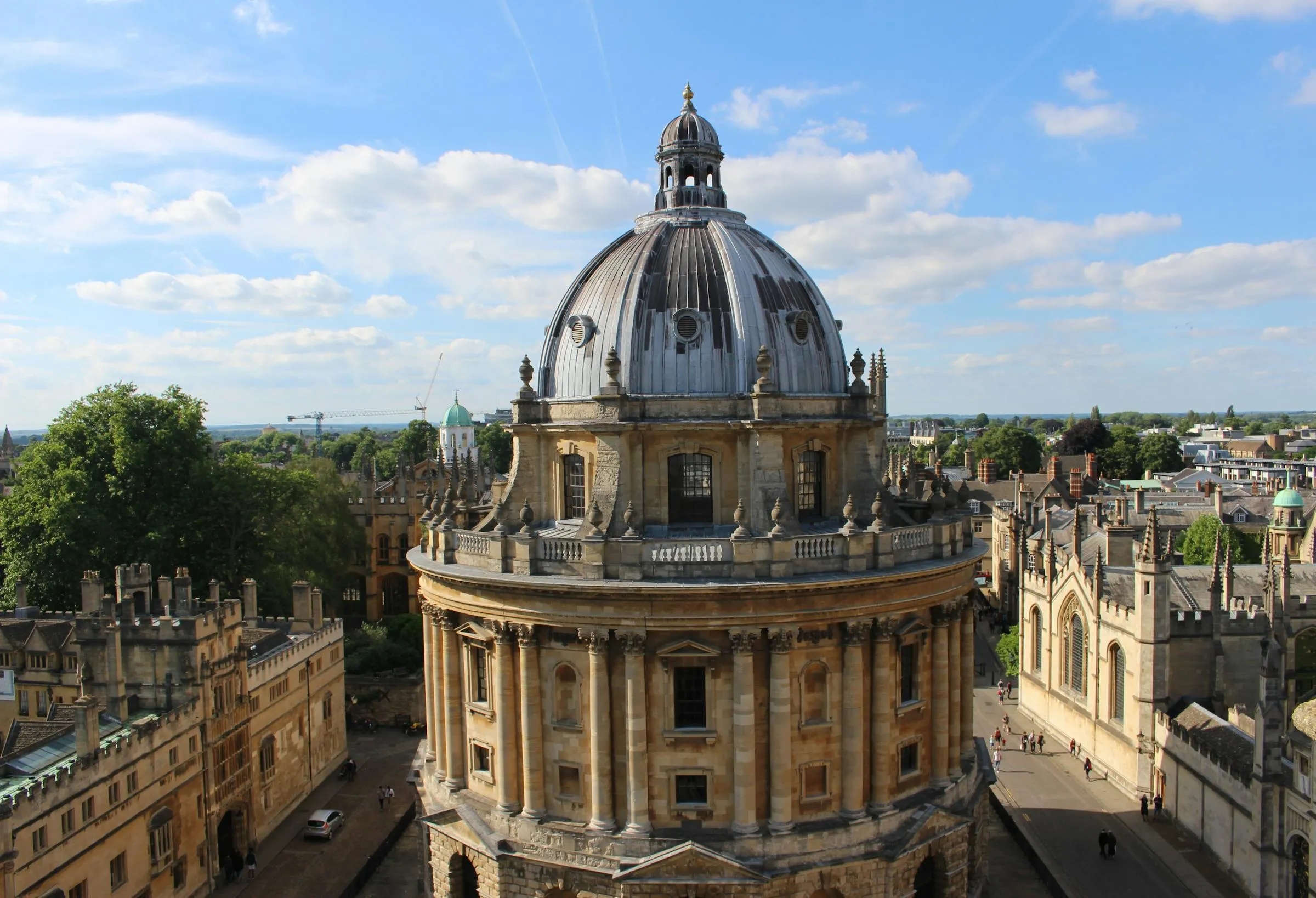
How to Apply to Spanish Universities in 2026
Step-by-step guide to applying at Spanish universities 2026: UNED credential evaluation, Selectividad/PCE exams, regional portals, DELE B2 and deadlines.
On this page
- Understanding the Spanish University System
- Step 1: Credential Evaluation Through UNED
- Step 2: The Selectividad and PCE Exams
- Step 3: Regional Application Portals
- Step 4: Master’s and Doctoral Applications
- Step 5: Language Requirements
- Step 6: Application Timeline for 2026
- English-Taught Programs in Spain
- Application Tips That Save Time and Stress
- Common Mistakes International Applicants Make
- Costs Summary
- Frequently Asked Questions
Spain attracts over 125,000 international students each year. The country offers world-ranked universities, tuition fees between €680 and €2,500 per year at public institutions, and a quality of life that few European destinations match. But the application process confuses many newcomers. Unlike the UK or Germany, Spain has no single centralized portal for all universities. Depending on your nationality, your target degree level, and the region where you want to study, you will follow one of several distinct pathways. This guide walks you through every step: credential evaluation through UNED, the Selectividad and PCE exams, regional pre-enrolment portals, language requirements, and the exact timeline you should follow to secure your spot.
If you are still deciding whether Spain is the right destination, visit our Study in Spain hub for a complete overview. For visa details, see our Spain Student Visa Guide 2026.
Understanding the Spanish University System
Spain has 50 public universities and 39 private universities. Public universities charge regulated tuition fees set by each autonomous community (region). Private universities set their own fees, which range from €5,000 to €20,000 per year for undergraduate programs and significantly more for MBA or specialized master’s degrees.
The academic calendar runs from September to June. Most undergraduate programs (grado) last four years (240 ECTS credits). Official master’s programs (máster oficial) take one or two years (60–120 ECTS). Doctoral programs (doctorado) typically require three to five years of research.
Public vs. Private: Key Differences
Public universities dominate research output and international rankings. The Universidad de Barcelona, Universidad Autónoma de Madrid, and Universidad Complutense de Madrid consistently appear in the top 200 worldwide. Private universities like IE University, ESADE, and Universidad de Navarra excel in business, law, and specialized professional programs.
At a public university, a typical engineering or science degree costs €1,200–€2,500 per year in the first enrolment. If you fail and repeat a subject, the fee for that subject doubles or triples. Humanities and social science degrees cost less, often under €1,000 per year. At a private university, expect to pay €8,000–€18,000 per year regardless of field.
Bologna System and ECTS
Spain follows the Bologna Process. All degrees issue ECTS credits recognized across the European Higher Education Area. A full academic year equals 60 ECTS. This means your Spanish degree transfers seamlessly to Germany, France, the Netherlands, or any other Bologna signatory country.
Step 1: Credential Evaluation Through UNED
If you completed your secondary education outside Spain, you must have your credentials evaluated before you can apply to any Spanish university for an undergraduate program. The body responsible for this is UNED (Universidad Nacional de Educación a Distancia), specifically its credential evaluation service called UNEDasiss.
What UNEDasiss Does
UNEDasiss performs two functions. First, it verifies that your foreign secondary school diploma is equivalent to the Spanish Bachillerato (high school diploma). Second, it converts your grades into the Spanish grading scale (0–10) so universities can compare you with domestic applicants. This converted grade is called your nota de acceso (access grade).
How to Apply to UNEDasiss
- Create an account at uned.es and navigate to the UNEDasiss portal.
- Select your services. You need at minimum the Acreditación (credential evaluation). If you want to improve your grade, also select Pruebas de Competencias Específicas (PCE exams).
- Upload documents. You need your secondary school diploma, transcript with grades, a certified translation into Spanish (by a sworn translator or apostille), and your passport.
- Pay the fee. The basic credential evaluation costs approximately €110. Each additional PCE exam costs around €25.
- Wait for results. Processing takes 4–8 weeks. During peak season (March–May), expect delays. Apply by February to receive results before June deadlines.
The Apostille Requirement
Spain requires a Hague Apostille on your secondary school diploma. Obtain this from the designated authority in your home country before you leave. Without the apostille, UNED will reject your application. Some countries also require a certified Spanish translation of the apostilled document. Plan at least four weeks for this step alone.
Step 2: The Selectividad and PCE Exams
The Selectividad (officially called Evaluación de Bachillerato para el Acceso a la Universidad, or EBAU) is the Spanish university entrance exam that domestic students take after finishing Bachillerato. International students do not take the Selectividad directly. Instead, you take PCE exams (Pruebas de Competencias Específicas) administered by UNEDasiss.
What Are PCE Exams?
PCE exams test your knowledge in specific subjects. Each exam corresponds to a Spanish Bachillerato subject. You choose which subjects to take based on the degree you want to study. For example, a student applying to medicine would take Biology, Chemistry, and Mathematics. A student applying to business might take Mathematics, Economics, and English.
How Many PCE Exams Do You Need?
This depends on the university and region. Most universities accept 2–4 PCE exams. The maximum is 6. Each passed exam can add up to 2 points to your access grade, potentially raising it from a maximum of 10 to a maximum of 14. Competitive programs like Medicine (cutoff around 12.5–13.5) require you to take and score well on multiple PCEs.
When and Where
UNED offers PCE exams twice per year: May/June (ordinary session) and September (extraordinary session). You can take them at UNED exam centers in Spain or at designated centers in over 30 countries worldwide, including India, Morocco, China, Colombia, and the United States. Register by March for the May session.
Preparation Resources
UNED publishes past exams and syllabi on its website. Many private academies in Madrid and Barcelona offer intensive PCE preparation courses lasting 3–6 months. Online options include PCE Academy, Academia Guiu, and Luis Vives. Budget €1,500–€3,000 for a full preparation course.
Step 3: Regional Application Portals
Spain is divided into 17 autonomous communities, and each manages its own university admissions system. After receiving your UNEDasiss credential evaluation and PCE results, you apply through the regional portal of the community where your target university is located.
Catalonia (Barcelona)
Applications go through the Oficina de Preinscripció Universitària at accesnet.gencat.cat. The process is called preinscripció. You rank up to 8 degree programs across all Catalan public universities (Universitat de Barcelona, Universitat Autònoma de Barcelona, Universitat Politècnica de Catalunya, Universitat Pompeu Fabra, etc.). The portal opens in June and the first round of offers comes in July. A second round follows in September.
Madrid
Applications go through the Universidad Complutense portal or directly through each university’s admissions office. The Community of Madrid uses a centralized system at admision.uam.es or through the EMES system. You can rank up to 12 degree programs across Madrid’s 6 public universities. The application period runs from June to July, with results in late July.
Andalusia (Seville, Granada, Málaga)
The Junta de Andalucía manages admissions through the Distrito Único Andaluz portal. You can rank degree programs across all 10 Andalusian public universities in a single application.
Valencia
The Valencian Community uses the preinscripción system managed jointly by its five public universities. Apply through the portal at each university’s website or through the coordinated system.
Other Regions
The Basque Country, Galicia, Aragon, Castilla y León, and other communities each have their own portals. Check your target university’s international admissions page for the specific portal and deadlines. The pattern is similar everywhere: you submit your UNEDasiss credentials, rank your preferred programs, and wait for an offer.
Step 4: Master’s and Doctoral Applications
Graduate applications work differently from undergraduate ones. You do not need UNEDasiss or PCE exams. Instead, you apply directly to the university.
Official Master’s Programs (Máster Oficial)
Each university sets its own application period, typically between February and June for programs starting in September. You submit your bachelor’s degree, transcript, CV, motivation letter, and language certificates. Some programs require a specific GPA or relevant background. Official master’s programs are regulated by the Spanish government, charge public tuition rates (€800–€3,500 per year), and qualify you for doctoral studies.
University-Specific Master’s Programs (Máster Propio)
These are non-official programs designed by the university. They cost significantly more (€5,000–€25,000) and do not grant access to doctoral programs. However, they often have strong industry connections and practical curricula. Business schools like IE, ESADE, and IESE offer this type.
Doctoral Programs
Apply directly to the doctoral school (escuela de doctorado) of your target university. You need an official master’s degree (or equivalent). The application requires a research proposal, academic transcripts, and at least one letter of recommendation from a professor. Most doctoral programs have rolling admissions, but the main intake is September.
Step 5: Language Requirements
The language of instruction determines which certificate you need. Most undergraduate programs at public universities teach in Spanish. A growing number of master’s programs teach in English, especially at private universities and in fields like business, engineering, and data science.
Spanish-Language Programs: DELE B2
Most universities require DELE B2 (Diploma de Español como Lengua Extranjera) for admission to Spanish-taught programs. DELE is issued by the Instituto Cervantes and recognized worldwide. The B2 level proves you can understand complex texts, interact with native speakers fluently, and produce clear written arguments.
Some universities accept alternative certificates: SIELE (Servicio Internacional de Evaluación de la Lengua Española), which is a digital, adaptive test with results available within three weeks, or institutional language tests administered by the university itself. Check your target university’s specific requirements.
DELE exam dates are fixed throughout the year. The most common sessions are in April, May, July, and November. Registration closes 6–8 weeks before the exam date. The B2 exam costs approximately €196 (varies by country). Results arrive 3–4 months after the exam. Plan accordingly: if you need results by June, take the exam no later than February.
English-Taught Programs
For English-taught programs, universities typically accept IELTS (minimum 6.0–6.5), TOEFL iBT (minimum 80–90), or Cambridge C1 Advanced. Some universities accept Duolingo English Test (minimum 105–115). Private universities and business schools often have their own English assessment during the interview process.
Regional Languages
In Catalonia, the Basque Country, Galicia, and Valencia, some courses are taught in regional languages (Catalan, Basque, Galician, Valencian). Public universities in these regions often teach a mix of Spanish and the regional language. Check the language breakdown of your specific program before applying. Universities in Barcelona, for example, may teach 40–60% of courses in Catalan.
Step 6: Application Timeline for 2026
Timing is everything. Missing a deadline by one day can delay your studies by an entire year. Follow this month-by-month timeline for September 2026 entry.
October–December 2025
- Research universities and programs. Use the official RUCT database (Registro de Universidades, Centros y Títulos) at educacion.gob.es to search all accredited programs.
- Take a DELE exam if you need Spanish certification. The November 2025 session gives results by February 2026.
- Begin the apostille process for your secondary school diploma.
- Contact UNEDasiss to understand requirements specific to your country.
January–February 2026
- Submit your UNEDasiss application with all required documents. Pay the fee. The earlier you submit, the sooner you receive results.
- Register for PCE exams (May/June session) if you need to improve your access grade.
- Apply to master’s programs directly at universities (many open in February).
- Gather financial documents for your visa application (bank statements, scholarship letters).
March–April 2026
- Prepare for PCE exams. Attend preparation courses or study independently.
- Submit private university applications. Most private universities have rolling admissions with early deadlines in March–April.
- Apply for scholarships. The Spanish Ministry of Education scholarship (Beca MEC) and university-specific scholarships often close in April.
May–June 2026
- Take PCE exams (May/June session).
- Submit regional preinscripción applications once results are available (usually mid-June).
- Accept your master’s offer if you have received one. Pay the reservation fee (typically €300–€500).
July–August 2026
- Receive your undergraduate offer (first round in July, second round in September).
- Accept the offer and pay tuition. Most universities require payment or a first installment by late July.
- Apply for your student visa at the Spanish consulate in your home country. This requires your acceptance letter, proof of funds (€600/month or €7,200/year minimum), health insurance, and a clean criminal record. Processing takes 4–8 weeks.
- Arrange housing. University residences (colegios mayores) fill fast. Private apartment searches should begin in June for September move-in.
September 2026
- Arrive in Spain. Complete your empadronamiento (municipal registration) within your first week.
- Apply for your NIE (Número de Identidad de Extranjero) at the Oficina de Extranjería.
- Attend orientation at your university. Enrol in courses. Classes typically begin in the second or third week of September.
English-Taught Programs in Spain
Spain offers a growing number of programs taught entirely in English. Over 500 bachelor’s and master’s programs across the country now use English as the primary language of instruction.
Top Universities for English-Taught Programs
- IE University (Madrid/Segovia) — business, law, data science, architecture. All programs in English.
- ESADE (Barcelona) — MBA, MSc programs in English.
- Universitat Pompeu Fabra (Barcelona) — several bachelor’s programs in English, including Economics, Business, and Political Science.
- Universidad Carlos III de Madrid — bilingual bachelor’s programs in engineering, economics, and law.
- Universitat de Barcelona — select master’s programs in English across sciences and humanities.
- Universidad de Navarra (Pamplona) — engineering, business, and science programs with English tracks.
Tuition for English-Taught Programs
Public university English-taught programs charge the same regulated fees as Spanish-taught ones (€680–€2,500/year). Private university programs cost €8,000–€22,000 per year. Business school MBAs (IE, IESE, ESADE) run €40,000–€70,000 for the full program.
Application Tips That Save Time and Stress
1. Start the Apostille Early
This is the single biggest bottleneck for international applicants. The apostille process in some countries takes 6–8 weeks. Add translation time on top. Begin in October of the year before your planned start date.
2. Apply to Multiple Regions
Nothing stops you from submitting preinscripción applications in both Catalonia and Madrid. Each region has its own portal and process. Applying to two or three regions doubles your chances of getting into a competitive program.
3. Contact the International Office Directly
Spanish university websites are often outdated or confusing. Email the Oficina de Relaciones Internacionales at your target university and ask for the exact documents they need from students in your country. Staff usually respond within 5–10 business days and can clarify requirements that the website leaves ambiguous.
4. Get Your Documents Translated by a Sworn Translator
Spain requires traducción jurada (sworn translations) of all foreign-language documents. Only translators registered with the Spanish Ministry of Foreign Affairs can certify these translations. Find one at the MAEC website (exteriores.gob.es). Budget €40–€80 per page.
5. Do Not Rely on September Intake Alone
Some master’s programs offer a February intake. If you miss the September deadline, check whether your program has a second entry point. This is more common at private universities and business schools.
Common Mistakes International Applicants Make
Mistake 1: Assuming EU Rules Apply to Everyone
EU/EEA citizens do not need a visa or UNEDasiss credential evaluation (their Bachillerato equivalence is automatic under EU treaties). Non-EU citizens must complete the full UNEDasiss process. Many applicants waste months by following advice intended for EU students.
Mistake 2: Missing the PCE Registration Deadline
PCE registration closes in March for the May/June session. Students who discover the PCE requirement in April have to wait until the September extraordinary session, which may not leave enough time for regional applications.
Mistake 3: Underestimating Catalan Language Requirements
Students who choose Barcelona for its international reputation are sometimes surprised to find courses taught partly in Catalan. Check the specific language split for your program. Universitat Pompeu Fabra publishes this information transparently on each program’s page.
Mistake 4: Submitting Unofficial Translations
A translation done by a friend, a non-sworn translator, or even a professional translation agency without Spanish MAEC accreditation will be rejected. Use only traductores jurados.
Mistake 5: Ignoring the Homologación Process
If you want your foreign degree to be officially recognized in Spain (not just for university admission but for professional practice), you need homologación from the Spanish Ministry of Education. This is a separate, longer process (6–18 months) from UNEDasiss. It is required for regulated professions like medicine, law, nursing, and architecture.
Costs Summary
| Item | Cost (2026) |
|---|---|
| UNEDasiss credential evaluation | €110 |
| PCE exam (per subject) | €25 |
| DELE B2 exam | €196 |
| Sworn translation (per page) | €40–80 |
| Apostille (varies by country) | €10–50 |
| Student visa fee | €80 |
| Public university tuition (undergraduate, annual) | €680–2,500 |
| Private university tuition (undergraduate, annual) | €5,000–20,000 |
| Official master’s tuition (annual) | €800–3,500 |
Frequently Asked Questions
Do I need to take the Selectividad exam as an international student?
No. International students take PCE exams through UNEDasiss instead. The Selectividad (EBAU) is only for students who completed the Spanish Bachillerato. PCE exams serve the same purpose: they allow you to improve your access grade and meet subject-specific requirements.
Can I apply to Spanish universities without DELE B2?
For English-taught programs, yes. You need an English certificate instead (IELTS 6.0+, TOEFL 80+). For Spanish-taught programs, most universities require DELE B2 or an equivalent certificate. Some accept SIELE or their own placement test. Check your target university’s exact requirements.
How long does the UNEDasiss process take?
Processing takes 4–8 weeks from the date UNED receives your complete application with all documents. During peak season (March–May), expect the upper end of this range. Submit by February for September entry.
Can I apply to universities in different regions simultaneously?
Yes. Each autonomous community has its own portal. You can submit a preinscripción in Catalonia, another in Madrid, and a third in Andalusia. There is no rule against parallel applications. This strategy is especially useful for competitive programs.
What is the difference between a máster oficial and a máster propio?
A máster oficial is regulated by the Spanish government, charges controlled tuition, and grants access to doctoral programs. A máster propio is designed by the university itself, charges market rates, and does not lead to a PhD. Both are valid qualifications, but their legal status, cost, and academic pathways differ.
Do EU citizens need UNEDasiss credential evaluation?
No. EU/EEA citizens benefit from automatic recognition under EU treaties. They apply directly through the regional preinscripción portal using their home country grades. Non-EU citizens must go through UNEDasiss.
What if my country does not have a UNED exam center?
UNED operates exam centers in over 30 countries. If your country is not on the list, you can travel to a neighboring country with a center or take the exams in Spain itself. Contact UNEDasiss for the closest available center.
Is there an age limit for university admission in Spain?
No. Spain has no upper age limit for university admission. Students over 25, 40, or 45 can access university through specific entrance exams designed for mature learners (Acceso para mayores de 25/40/45 años). These are separate pathways from the standard UNEDasiss route.
When do Spanish universities publish cutoff grades?
Cutoff grades (notas de corte) are published after each admissions round, typically in July and September. The previous year’s cutoffs are available on each university’s website and give a reliable indication of the grade you need. Highly competitive programs like Medicine publish cutoffs above 12.5 out of 14.
Can I transfer from a university in another country to a Spanish university?
Yes, through a process called reconocimiento de créditos (credit recognition). You submit your transcript, and the Spanish university evaluates which credits transfer. If at least 30 ECTS are recognized, you can enrol directly without going through UNEDasiss. The process and criteria vary by university.
Related Articles

How to Apply to Australian Universities: Complete Guide (2026)
Step-by-step guide to applying to Australian universities in 2026: direct applications, UAC, VTAC, QTAC, entry requirements and key deadlines.
Group of Eight (Go8) Universities in Australia: The Complete Guide (2026)
Complete guide to Australia's Group of Eight elite universities — rankings, tuition fees, acceptance rates, research strengths, and how to choose the right Go8 uni.

How to Apply to Canadian Universities 2026
OUAC for Ontario, direct applications elsewhere. Application fees CAD$75–250, WES credential evaluation CAD$220, IELTS 6.5 minimum. Full timeline.