Living in South Korea - Study in South Korea
A practical guide to everyday life in South Korea — student cities, housing, transport, food, healthcare, safety, culture, and navigating the language barrier.
Living in South Korea
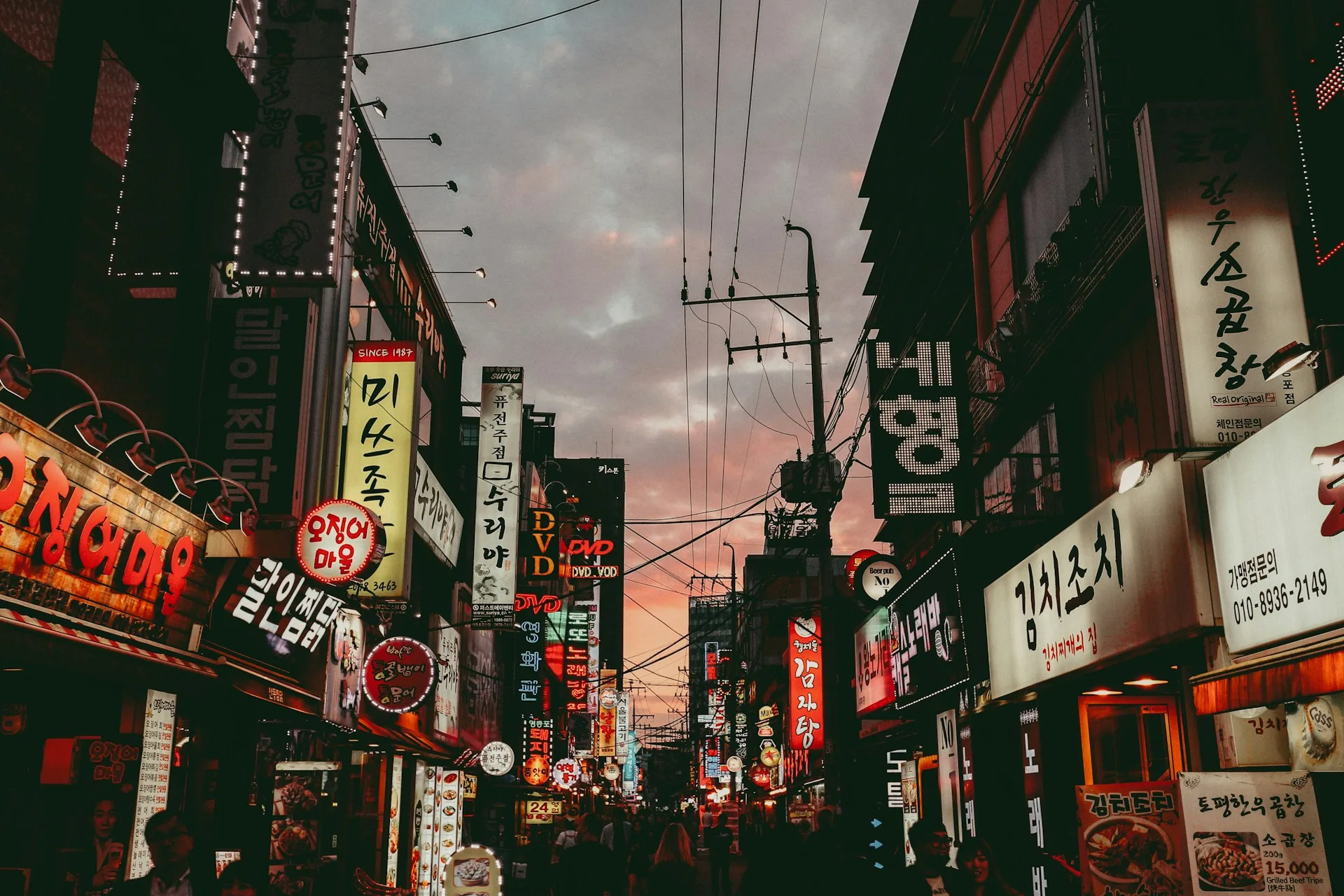
Life in South Korea is a unique blend of cutting-edge modernity, deep cultural traditions, incredible food, and a level of convenience and safety that consistently surprises international students. From Seoul's 24-hour lifestyle to Busan's beaches and Daejeon's research community, each city offers a different experience. Understanding what daily life is actually like will help you prepare and make the most of your time.
Student Cities
Seoul — The Capital and Main Student Hub
Population: 9.7 million | Universities: 60+ | Best for: Job market, social life, culture, most programs
Seoul is where the majority of international students study, and for good reason. It's home to the SKY universities, SKKU, Hanyang, Sogang, Ewha, and dozens more. The city offers unmatched access to internships, cultural experiences, and networking opportunities.
| Feature | Details |
|---|---|
| Housing costs | KRW 300,000-700,000/month |
| Transport | World-class metro (9 lines), buses, KTX station |
| Key areas | Hongdae (nightlife, arts), Gangnam (business), Sinchon (student area near Yonsei/Ewha), Anam (Korea University) |
| Pros | Everything is here — jobs, culture, food, social life |
| Cons | Expensive, crowded, competitive |
Busan — Coastal City with Character
Population: 3.4 million | Key university: Pusan National University | Best for: Beach lifestyle, lower costs, seafood
Busan is South Korea's second-largest city and has a completely different vibe from Seoul — more relaxed, beach-oriented, and with a distinct regional identity.
| Feature | Details |
|---|---|
| Housing costs | KRW 250,000-500,000/month |
| Transport | Metro (4 lines), buses, KTX to Seoul (2.5 hours) |
| Key areas | Haeundae (beach), Seomyeon (center), PNU area (student district) |
| Pros | Beaches, seafood, lower costs, unique culture |
| Cons | Fewer English-taught programs, smaller job market |
Daejeon — Science and Research Hub
Population: 1.5 million | Key university: KAIST | Best for: STEM students, research, affordable living
Daejeon is South Korea's science city, home to KAIST, the government's main research institutes, and a cluster of technology companies.
| Feature | Details |
|---|---|
| Housing costs | KRW 200,000-450,000/month |
| Transport | Bus network, KTX to Seoul (50 minutes) |
| Key areas | Yuseong (hot springs, KAIST area), Dunsan (commercial center) |
| Pros | Affordable, research-focused, quiet, easy access to Seoul via KTX |
| Cons | Smaller city, less nightlife, fewer international students |
Daegu, Gwangju, and Other Cities
| City | Population | Key University | Best For |
|---|---|---|---|
| Daegu | 2.4 million | Kyungpook National | Medical studies, affordable living |
| Gwangju | 1.5 million | Chonnam National, GIST | Arts, culture, lowest costs |
| Incheon | 3.0 million | University of Incheon, Inha | Near Seoul, international feel |
| Suwon | 1.2 million | SKKU (Suwon campus), Ajou | Samsung connections, suburban Seoul |
Housing
Types of Student Housing
| Type | Monthly Cost (Seoul) | Deposit | Pros | Cons |
|---|---|---|---|---|
| University dormitory | 300,000-600,000 | Minimal | Cheapest, social, on-campus | Limited space, rules, curfew (some) |
| Goshiwon | 300,000-500,000 | None or 1 month | No deposit, flexible | Very small rooms (3-5 sqm) |
| Oneroom (wolse) | 400,000-700,000 | 5-10 million | Private, independent | Requires deposit |
| Shared apartment | 300,000-500,000 | Split | Social, affordable | Finding compatible roommates |
| Hasukjip (boarding house) | 400,000-600,000 | Minimal | Meals included | Less independence |
Pro tip for first-year students: Apply for university dormitory as your first choice. It's the cheapest option, helps you make friends quickly, and you avoid the complex Korean rental deposit system. After your first semester, you'll understand the housing market well enough to find off-campus options.
Understanding the Korean Rental System
Korea has a unique rental system you must understand:
- Jeonse (key money): A large lump-sum deposit (KRW 50-200 million+) with no monthly rent. The landlord invests the deposit and returns it when you leave. Not typical for students.
- Wolse (monthly rent): A smaller deposit (KRW 5-10 million) plus monthly rent. More common for students.
- Goshiwon: No deposit; pay monthly. The simplest option for newcomers.
Transport
South Korea's public transport is world-class and incredibly affordable.
Seoul Metro
- Lines: 9 subway lines plus additional lines connecting suburbs
- Hours: 5:30 AM - midnight (roughly)
- Cost: KRW 1,400 (base fare, T-money card) — goes up slightly with distance
- Quality: Clean, punctual, free Wi-Fi, air-conditioned, signs in Korean, English, Chinese, and Japanese
Buses
- Available in all cities; comprehensive routes
- Same T-money card works for transfers (free transfer within 30 minutes)
- Seoul has over 400 bus routes including express buses
KTX (Korea Train Express)
| Route | Duration | Cost (Standard) |
|---|---|---|
| Seoul - Busan | 2h 30min | KRW 59,800 |
| Seoul - Daejeon | 50min | KRW 23,700 |
| Seoul - Daegu | 1h 40min | KRW 43,500 |
| Seoul - Gwangju | 1h 50min | KRW 44,100 |
T-money Card
Get a T-money card at any convenience store (KRW 2,500) and load it. It works on:
- All subway systems
- All city buses
- Most taxis
- Some convenience stores
- Lockers at train stations
Food
Korean food is one of the highlights of living in South Korea. It's varied, flavorful, and remarkably affordable for students.
Student Budget Food Options
| Option | Cost (KRW) | Notes |
|---|---|---|
| Campus cafeteria | 3,500-6,000 | Best value; Korean set meals |
| Kimbap restaurant | 3,000-5,000 | Quick meals; kimbap, ramyeon, bibimbap |
| Convenience store | 2,000-4,000 | Triangle kimbap, cup noodles, bento boxes |
| Street food | 2,000-5,000 | Tteokbokki, sundae, hotteok |
| Korean BBQ | 10,000-15,000 | Group dining; pork belly popular |
| Delivery apps | 7,000-15,000 | Baemin, Yogiyo, Coupang Eats — free delivery common |
Dietary notes:
- Halal food: Growing but still limited. Seoul has halal restaurants near Itaewon and university areas. Homecooking or imported halal groceries are the most reliable options
- Vegetarian/vegan: Challenging in Korea where most dishes contain meat or fish stock. Buddhist temple food (sachal eumsik) is fully vegan. Some dedicated vegetarian restaurants exist in Seoul
- Allergies: Korean food uses sesame, soy, and shellfish widely. Peanuts are less common than in Western food
Healthcare
South Korea has an excellent healthcare system. All students must enroll in National Health Insurance (NHI).
| Feature | Details |
|---|---|
| NHI coverage | 70% of medical costs |
| Monthly premium | ~KRW 75,000 for students |
| Hospital visits | Walk-in at most clinics; appointments for specialists |
| Pharmacy | Separate from hospitals; prescription required for most medications |
| Emergency | Call 119; go to any emergency room |
| Dental | Basic procedures covered; cosmetic not covered |
Compare health insurance options for South Korea
Safety
South Korea is one of the safest countries in the world for students:
- Violent crime is extremely rare
- Theft is uncommon — people regularly leave bags in cafes unattended
- Public transport is safe at all hours
- 24/7 culture means streets are well-lit and populated at all hours in urban areas
- CCTV coverage is extensive in cities
- Emergency services are efficient and responsive (112 for police, 119 for fire/ambulance)
Natural hazards to be aware of:
- Typhoons (August-September) — rare direct hits but occasional heavy rain
- Fine dust (misemeonji) — air quality can be poor in spring; check air quality apps
- Monsoon (July) — heavy rain for 2-3 weeks; carry an umbrella
Culture and Social Life
University Culture
Korean university culture has unique features:
- MT (Membership Training): Overnight social trips organized by clubs and departments — great for making friends
- Festivals: Each university hosts annual multi-day festivals with K-pop performances, food stalls, and activities
- Drinking culture: Social gatherings (hoesik) often involve alcohol; don't feel pressured — it's acceptable to decline
- Sunbae-Hubae: Senior-junior relationships that shape social dynamics. Show respect to seniors (sunbae) who often mentor you
- Study cafes: Koreans study in dedicated study cafes (dokseosil or study cafes) open 24/7
Useful Apps
| App | Purpose |
|---|---|
| KakaoTalk | Essential messaging app — everyone in Korea uses it |
| Naver Map / Kakao Map | Navigation (more accurate than Google Maps in Korea) |
| Papago | Korean-English translation (better than Google Translate for Korean) |
| Baemin / Yogiyo | Food delivery |
| Coupang | Online shopping (Korea's Amazon) |
| T-money | Transport card balance and top-up |
| Subway Korea | Real-time subway navigation |
Learning Korean
Even basic Korean dramatically improves your daily life:
- Hangul (the Korean alphabet) can be learned in 1-2 hours — it's logical and phonetic
- Survival Korean (ordering food, asking directions, basic greetings) takes 1-2 weeks of study
- Conversational Korean takes 3-6 months of regular study
- University language courses are often free or low-cost for enrolled students
- Language exchange with Korean students is widely available on campus
Four Seasons
| Season | Months | Temperature | What to Expect |
|---|---|---|---|
| Spring | March-May | 5-20C | Cherry blossoms, pleasant weather, fine dust |
| Summer | June-August | 25-35C | Hot, humid, monsoon in July, beach season |
| Autumn | September-November | 10-25C | Stunning foliage, crisp air, best season |
| Winter | December-February | -10 to 5C | Cold, dry, skiing season, heated buildings |
Next Steps
- Understand costs and funding — Budget for housing, food, and daily expenses
- Check visa requirements — ARC registration and first-week essentials
- Work and career options — Part-time work during your studies
- Why study in South Korea? — A complete overview of what South Korea offers
Frequently Asked Questions
What is the best student city in South Korea?
How safe is South Korea for international students?
What is public transport like in South Korea?
Is it hard to find housing as a student in South Korea?
What is the food like in South Korea?
Do I need to speak Korean to live in South Korea?
What is the weather like in South Korea?
What is Korean university campus culture like?
Related Guides
Why Study in South Korea
South Korea offers world-class SKY universities, fully funded KGSP scholarships, affordable tuition, a booming tech and culture industry, and one of the safest living environments on Earth.
🗺️Plan Your Studies
A step-by-step planning timeline for studying in Canada — from choosing a province and program to meeting language requirements and applying to Designated Learning Institutions.
🎓Programs & Universities
A comprehensive guide to Canadian universities, colleges, and programs — from the U15 research universities to co-op powerhouses and college diplomas.
📝Admissions & Application
Everything you need to apply to Australian universities — documents, deadlines, portals, and tips to make your application stand out.
💰Costs & Funding
A realistic breakdown of tuition, living costs, scholarships, and part-time work earnings — with city-by-city comparisons and budgeting examples.
🛂Visa & Arrival
Complete guide to the Australian student visa (Subclass 500) — requirements, Genuine Student test, processing times, and your first-week checklist after landing.
💼Work & Career
Complete guide to working in Canada as an international student — on/off-campus work rights, co-op permits, the PGWP, Express Entry, and key industries hiring international graduates.
Latest News
Australia Introduces New Measures for International Students – Study Abroad
Australia Introduces New Measures for International Students – Study Abroad
What to Expect when Studying Abroad in Fall 2020 – Study Abroad
What to Expect when Studying Abroad in Fall 2020 – Study Abroad
Aurora University Network, Among Others, Selected by European Commission to Officially Join European University Networks – Study Abroad
Aurora University Network, Among Others, Selected by European Commission to Officially Join European University Networks – Study Abroad
Latest Articles
10 Proven Tips for Learning German Before You Arrive
Master the basics of German with these practical tips and resources. From apps to language partners, discover the best ways to prepare for your studies in Germany.
Complete Student Budget Guide for Germany 2026
Realistic breakdown of monthly expenses, money-saving tips, and budget planning for international students in Germany. Learn how to live comfortably on a student budget.
How to Apply to German Universities: Complete Step-by-Step Guide
A comprehensive guide walking you through every step of the application process for German universities, from document preparation to receiving your admission letter.