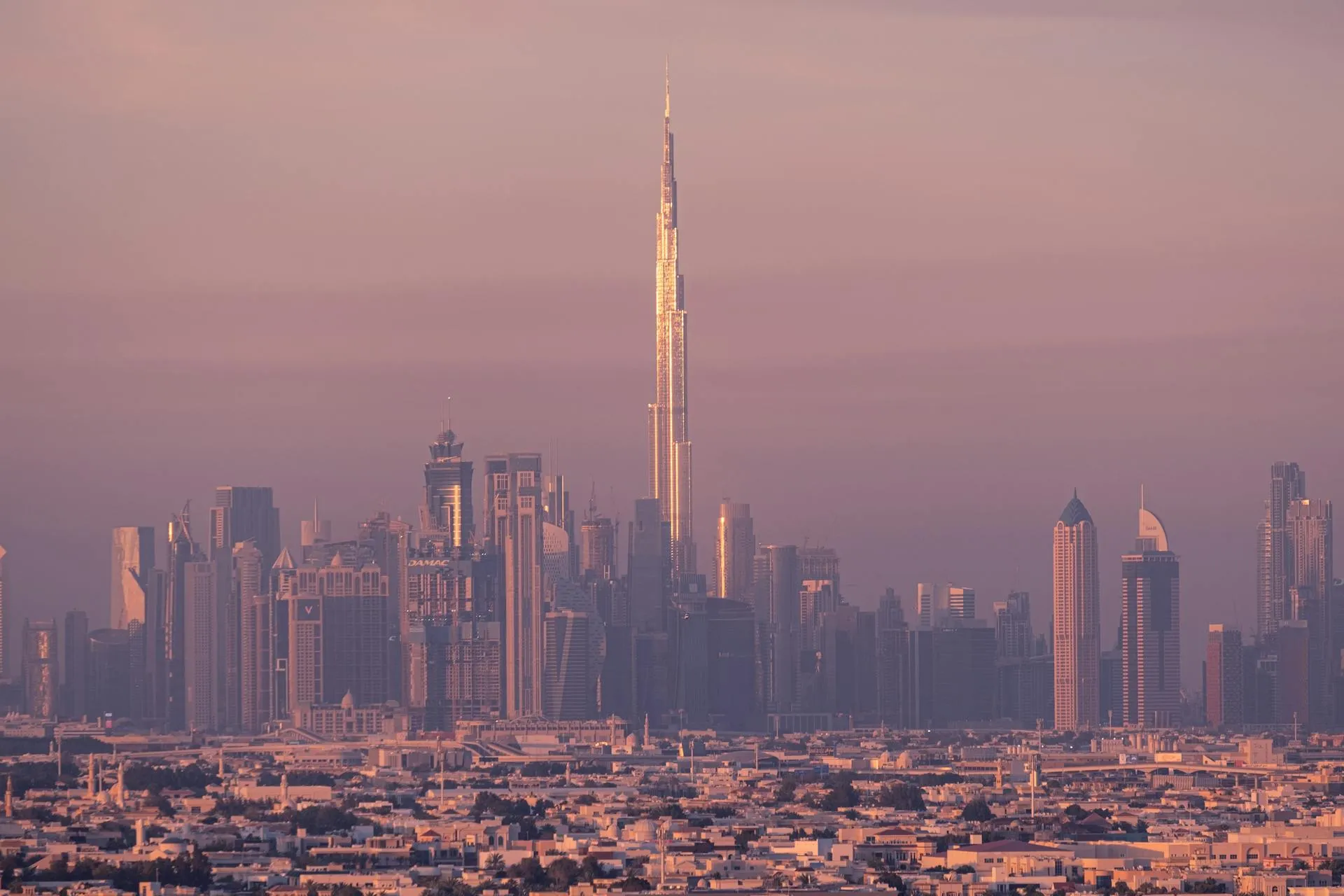
Why Study in UAE
The UAE pairs English-taught degrees at NYU Abu Dhabi, MBZUAI, and 30+ branch campuses with zero income tax, top safety, and a 5-year Green Visa — here's the honest case.
Why Study in the UAE
The United Arab Emirates is 54 years old, home to 10 million people (90% expats), and one of the most globalized places on earth. More than 80,000 international students study here — from India, Egypt, Nigeria, Pakistan, Jordan, China, the US, and everywhere in between. They come for the English-taught programs, the scholarships at NYU Abu Dhabi and MBZUAI, the branch campuses that deliver UK and US degrees onshore, and the career pipeline into Dubai's regional HQs. Here's the honest case for the UAE.
Scholarships That Actually Cover Everything
Cost is where the UAE surprises most people. Two institutions offer what amount to full rides:
| Institution | Coverage |
|---|---|
| NYU Abu Dhabi | Tuition + housing + meal plan + 2x annual travel home + health insurance for most admitted students (need-based) |
| MBZUAI | Full tuition + AED 8,000-10,000/month stipend + laptop + health insurance (all PhD, most Master's) |
| Khalifa University | Research assistantships: tuition + AED 7,000-10,000/month (competitive) |
| Federal universities | Partial waivers for academic merit; scholarships for GCC nationals |
Branch campuses cost more but are still cheaper than their home institutions:
- Heriot-Watt Dubai — engineering BEng around AED 80,000/year (vs. GBP 27,000/year at Edinburgh)
- Manchester Dubai — MBA around AED 130,000 total (vs. GBP 55,000 at Manchester UK)
- American University of Sharjah — BA around AED 100,000/year
- Sorbonne Abu Dhabi — Bachelor around AED 65,000/year
Scholarships beyond the big two. Most universities offer 10-50% merit waivers to students with strong GPAs or SAT/IELTS scores. Check each university's scholarship portal before submitting.
English Is the Default, Not the Exception
The UAE was built by expats, and English is the working language of business, government, and higher education.
- All major universities teach in English — lectures, textbooks, exams, research
- No Arabic requirement for admission at NYU Abu Dhabi, MBZUAI, Khalifa, AUS, AUD, or any branch campus
- English dominates daily life — menus, contracts, banks, hospitals, metro, Uber
- Arabic-language programs exist — mainly at federal universities for Islamic studies, law, and Arabic literature
You'll pick up phrases like shukran (thank you), yalla (let's go), and inshallah (God willing) within weeks. But you'll never be stuck because of a language barrier.
Global Branch Campuses Bring World Degrees Onshore
The UAE hosts more foreign university branches than any country except China. You can earn an identical degree to the home campus — same accreditation, same curriculum, same transcript.
- NYU Abu Dhabi — full liberal-arts research university, selective (3-4% acceptance rate), degree identical to NYU New York
- Sorbonne Abu Dhabi — French and English programs in humanities, law, business
- Heriot-Watt Dubai — engineering, business, and actuarial science with Edinburgh accreditation
- Manchester Dubai — executive MBA and Master's programs
- Curtin Dubai — Australian undergraduate and postgraduate degrees
- RIT Dubai — American engineering, computing, and business degrees
- Middlesex Dubai — UK undergraduate programs at lower tuition
- Birmingham Dubai — business, computer science, and engineering
- Wollongong Dubai — Australian business and IT degrees
Your diploma reads "University of Manchester" or "NYU" — no "Dubai campus" footnote on the degree itself.
Zero Income Tax — Meaningfully Boosts Student Life
The UAE has no personal income tax. For students, this matters in three ways:
- Part-time work pays in full — if you earn AED 5,000/month tutoring or interning, you keep AED 5,000. No PAYE, no social security deduction.
- Post-study salaries stretch further — a graduate engineer earning AED 15,000/month nets AED 15,000, vs. AED 10,500 after tax in Germany or the UK.
- Savings compound faster — students who stay 2-3 years after graduation often save enough for a Master's elsewhere or a house down payment.
The only tax you pay is 5% VAT on most purchases. Healthcare (with student insurance), education, and rent are exempt.
Career Pipeline Into Dubai's Regional HQs
Dubai and Abu Dhabi host Middle East HQs of:
- Tech: Google, Microsoft, Amazon, Meta, Oracle, IBM, SAP, Cisco
- Finance: HSBC, Standard Chartered, Citibank, JPMorgan, Deutsche Bank, Emirates NBD, First Abu Dhabi Bank
- Consulting: McKinsey, BCG, Bain, Deloitte, PwC, EY, KPMG, Accenture
- Energy: ADNOC, TAQA, Masdar, Dubai Electricity and Water Authority
- Aerospace: Emirates, Etihad, Boeing, Airbus, Lockheed Martin
- Media: CNN, BBC, Reuters, Bloomberg, MBC, Al Arabiya
Internships are abundant in summer and part-time during semester. The Careers offices at NYU Abu Dhabi, AUS, Khalifa, and Heriot-Watt have direct employer relationships. Dubai Internet City and Abu Dhabi Global Market (ADGM) run dedicated internship fairs.
Green Visa. After graduation, non-Emirati grads can apply for the 5-year Green Visa — self-sponsored, renewable, lets you job-hunt or freelance without an employer. Exceptional graduates (GPA 3.8+, awards, published research) can get the 10-year Golden Visa.
Safe, Connected, and Multicultural
The UAE consistently ranks in the top 10 safest countries globally. For students specifically:
- Low crime — walking home at 2 AM is normal in Abu Dhabi, Dubai, and Sharjah
- Reliable infrastructure — Dubai Metro, Etihad Rail (launching), world-class hospitals
- Multicultural by design — 200+ nationalities; no one is "the foreigner"
- Global flight hub — Dubai and Abu Dhabi airports serve 240+ destinations; Tel Aviv, Mumbai, Nairobi, Istanbul, and Singapore are under 5 hours
Weekend trips from Dubai: Oman (2-hour drive), Muscat, Salalah, Amman, Cairo, Colombo, Bali — all under AED 2,500 round trip in low season.
Is the UAE Right for You?
The UAE is an excellent choice if:
- You want a top US/UK degree on scholarship — NYU Abu Dhabi, MBZUAI, and Khalifa make this achievable
- You're targeting finance, consulting, tech, or energy careers — the regional HQs are here
- You want to save or send money home — zero tax plus strong salaries make this realistic
- You value safety and reliable infrastructure — the UAE delivers on both
- You want travel access across Asia, Africa, and Europe — the flight network is unbeatable
It may not be the best fit if:
- You prefer cool climates — summers are brutal
- You want a strong on-campus bar/club culture — alcohol is regulated
- You're looking for cheap Eastern European prices — Dubai is expensive
- You need very specialized niche programs (e.g., Norse studies, forestry) — the catalogue skews business, engineering, and AI
Next Steps
Ready to dig deeper?
- Admissions and application — deadlines, documents, and portals
- Programs and universities — detailed guide to NYUAD, MBZUAI, Khalifa, and branch campuses
- Costs and funding — tuition, living expenses, and scholarships
- Visa and arrival — GDRFA student visa and first weeks
- Living in the UAE — housing, healthcare, transport, and culture
- Work and career — part-time jobs, internships, and Green Visa
- The 10-step guide — your full roadmap
Frequently Asked Questions
Do I need Arabic to study in the UAE?
Is it expensive to study in the UAE?
Can I work while studying in the UAE?
What happens after graduation — can I stay?
Is the UAE safe for international students?
How hot is it really?
Can I get a full scholarship?
Which is better for students — Dubai or Abu Dhabi?
Latest Articles
How to Write a Statement of Purpose in 2026
A strong Statement of Purpose opens doors. Learn the exact paragraph structure, STEM and humanities examples, and the 5 rejection mistakes.
Studying Abroad with Your Family: Complete Guide 2026
Partner visa, family insurance, school enrollment, 3-bedroom rent — what families need for an international degree, with 2026 numbers.
Dating While Studying Abroad: 2026 Guide
Roughly 40% of international students form a romantic relationship within 12 months abroad. Apps, culture, visas, safety — the honest guide.