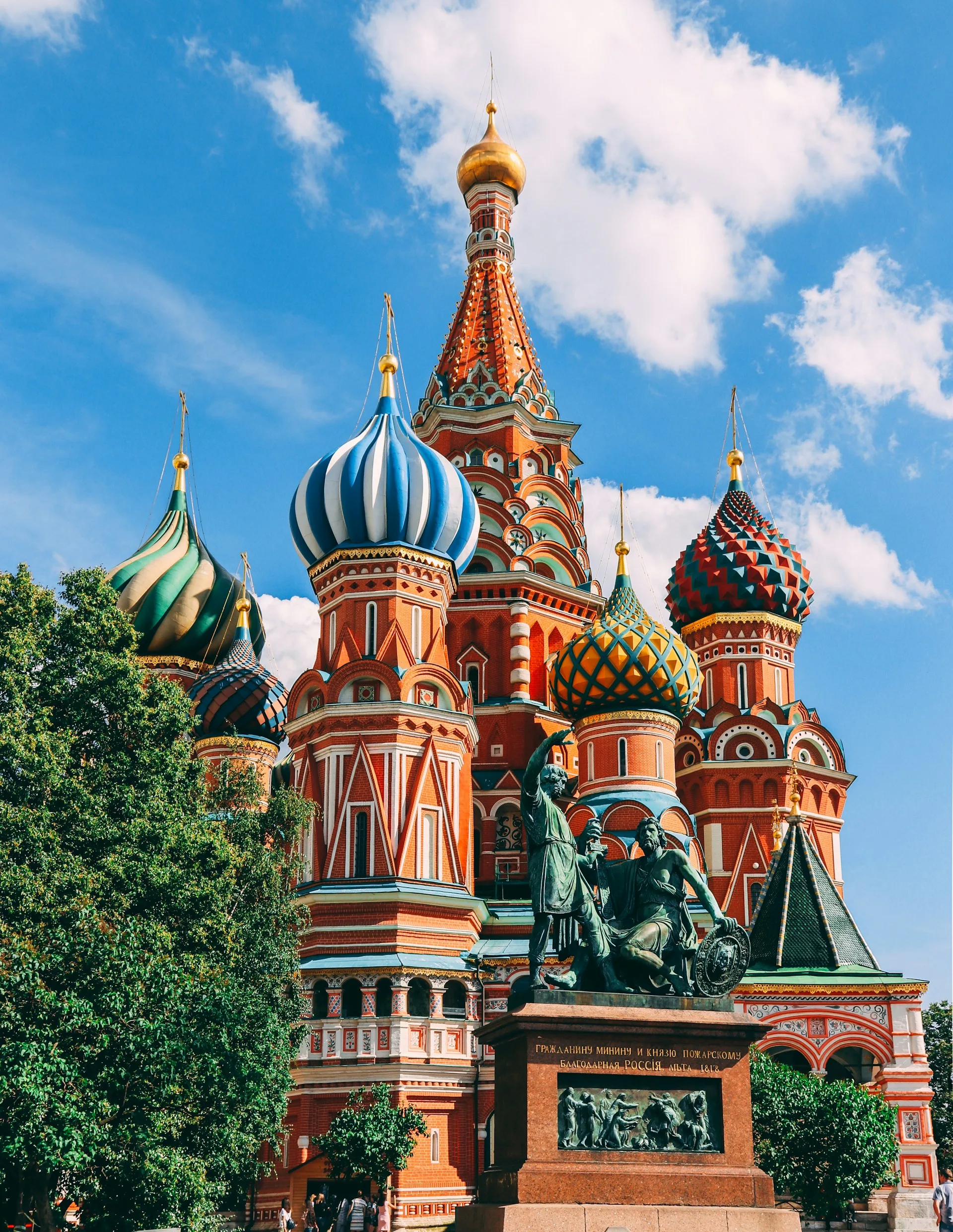
Visa & Arrival in Russia - Study in Russia
International students need a Russian student visa with an invitation letter from their university. Here's the complete process — documents, HIV test, registration, and health insurance.
Visa & Arrival in Russia
If you are an international student planning to study in Russia, you will almost certainly need a student visa. The process revolves around one critical document — the invitation letter from your university — without which you cannot apply. Once you have it, the visa process itself is relatively straightforward but time-sensitive. This guide covers every step from the invitation letter to your first weeks in Russia.
Do You Need a Visa?
Your visa requirements depend on your nationality:
No visa needed (or simplified entry)
- CIS countries with visa-free agreements — citizens of Belarus, Kazakhstan, Kyrgyzstan, Armenia, and some other CIS states can enter Russia without a visa. However, you still need to complete migration registration after arrival.
- Specific bilateral agreements — a small number of countries have visa-free or simplified entry arrangements with Russia. Check the Russian Ministry of Foreign Affairs website for the current list.
Student visa required (most international students)
All other nationalities need a student visa (uchebnaya viza) issued by the Russian embassy or consulate in their country. This is the standard pathway for the vast majority of international students.
The Invitation Letter — The Key Document
The invitation letter (priglasheniye) is the single most important document in your visa process. Without it, you cannot apply for a student visa.
How the process works
- You receive your admission letter from the university
- The university applies for your invitation letter from the Main Directorate for Migration Affairs (GUVM) of the Russian Ministry of Internal Affairs
- Processing takes 2-6 weeks — this is the step that causes the most delays
- The university sends you the invitation letter — by courier, email (scanned copy), or you collect it at the consulate
| Detail | Information |
|---|---|
| Who applies for it | Your university (not you) |
| Processing time | 2-6 weeks (sometimes longer during peak season) |
| Valid for | Entry to Russia within 90 days of issue |
| Format | Telex (electronic) sent directly to the consulate, or physical document |
Student Visa Application
Once you have the invitation letter, apply for your visa immediately:
Required documents
| Document | Specifications |
|---|---|
| Passport | Valid for at least 18 months beyond your planned entry date; at least 2 blank pages |
| Visa application form | Completed online at visa.kdmid.ru (Russian consular portal) |
| Passport photos | 2 photos, 3x4 cm, recent, white background |
| Invitation letter | Original or telex confirmation sent to the consulate |
| HIV test certificate | Negative result from a licensed lab, dated within 3 months |
| Medical certificate | Statement of general fitness; no active tuberculosis or other specified conditions |
| Visa fee | Varies by nationality and processing speed (typically USD 40-160) |
| Health insurance | Some consulates require proof; others accept purchase upon arrival |
Visa fee by nationality (approximate)
| Nationality | Standard processing | Express processing |
|---|---|---|
| Most countries | USD 40-80 | USD 80-160 |
| US citizens | USD 160 (reciprocity fee) | USD 250+ |
| EU citizens | EUR 35-70 | EUR 70-140 |
| CIS nationals | Often free or reduced | N/A |
HIV Test — Strict Requirement
The HIV test is a non-negotiable requirement for the Russian student visa:
- Type: HIV antibody test (standard blood test)
- Facility: must be conducted at a licensed/certified medical laboratory
- Result: must be negative
- Date: must be within 3 months of your visa application
- Language: English or with certified translation
- Note: this requirement applies to all foreign nationals staying in Russia for more than 3 months
Visa processing timeline
| Processing type | Time | Cost |
|---|---|---|
| Standard | 5-15 working days | Standard fee |
| Express | 3-5 working days | Double the standard fee |
| Urgent | 1-2 working days (some consulates) | Triple the standard fee |
Arriving in Russia
Your first days in Russia involve several mandatory steps. Here is the sequence:
Day 1-2: Immediate priorities
- Pass through immigration control — present your passport and visa. You will receive a migration card (migratsionnaya karta) — a small paper form that is stamped at the border. Keep this card safe. You need it for registration and visa renewal.
- Get to your university — your university may arrange airport pickup. If not, use official taxi apps (Yandex Go is the most popular in Russia) or public transport.
- Check into your dormitory — bring your passport, migration card, and admission documents.
Day 1-7: Migration registration
Migration registration is mandatory within 7 working days of arrival. This is not optional — failure to register can result in fines and complications with your visa.
| If you live in... | Who handles registration |
|---|---|
| University dormitory | The university — they will collect your documents and process registration |
| Private apartment | Your landlord — they are legally obligated to register you at the local migration office |
| Hotel (temporary) | The hotel — they register you automatically |
What you receive
After registration, you receive the tear-off portion (otryvoknaya chast) of the notification form. This small piece of paper is your proof of registration. Carry it with your passport at all times. You may be asked to show it by police or officials.
Week 1-2: Essential setup
| Task | Where | What you need |
|---|---|---|
| University enrollment | University international office | Passport, admission letter, educational documents, photos |
| Health insurance purchase | University or insurance office | Passport, migration card |
| Bank account | Sberbank, Tinkoff, or Alfa-Bank | Passport, migration registration, phone number |
| Russian SIM card | MTS, Beeline, Megafon, or Tele2 store | Passport |
| Student ID (studencheskiy bilet) | University | Automatically issued during enrollment |
Health Insurance in Russia
Health insurance is mandatory for all international students. Here are your options:
Voluntary Health Insurance (VHI / DMS)
This is the standard insurance for international students:
| Feature | Details |
|---|---|
| Cost | RUB 4,000-15,000/year |
| Coverage | Outpatient visits, emergency care, ambulance, hospital stays |
| Where to buy | At your university, insurance companies (Sogaz, Ingosstrakh, Reso-Garantiya), or online |
| Duration | Typically 1 year, renewable |
What VHI/DMS covers
- Doctor consultations at partnered clinics
- Emergency ambulance service
- Hospital stays and surgery (within plan limits)
- Basic diagnostics and lab tests
- Prescribed medications (some plans)
What VHI/DMS typically does NOT cover
- Dental treatment (unless specifically included)
- Pre-existing conditions
- Cosmetic procedures
- Pregnancy and childbirth (unless premium plan)
Compare student health insurance options for Russia →
Visa Renewal and Extension
Your initial student visa is typically valid for 3-12 months. You will need to renew it regularly:
How visa renewal works
| Detail | Information |
|---|---|
| When to renew | Before your current visa expires (apply 30-45 days before expiry) |
| Where | Through your university — they submit renewal documents to the migration office |
| Processing time | 2-4 weeks |
| Required documents | Passport, current visa, migration card, registration, enrollment confirmation, photos |
| Cost | Typically free for the first renewal; subsequent renewals may vary |
Your university handles the renewal process — you provide the documents, and the international office submits them to the migration authorities. Do not try to handle this independently.
Important rules
- Never overstay your visa — even by one day. Overstaying can result in fines, deportation, and entry bans.
- Keep all documents current — migration registration, visa, and university enrollment must all be valid simultaneously.
- Notify your university of address changes — if you move from the dormitory to a private apartment, your registration must be updated.
The Migration Card — Do Not Lose It
The migration card (migratsionnaya karta) is a small paper form you receive at the Russian border upon entry. It is stamped by immigration officials and is required for:
- Migration registration
- Visa renewal
- Opening a bank account
- Various administrative procedures
- Departure from Russia
If you lose your migration card, you must report it to the police immediately and obtain a duplicate. This process is time-consuming and stressful. Keep the migration card in a safe place with your passport.
Arrival Checklist
| Priority | Task | Deadline |
|---|---|---|
| Immediate | Safeguard passport, migration card, and visa | Day 1 |
| Immediate | Check into dormitory or accommodation | Day 1 |
| Urgent | Complete migration registration | Within 7 working days |
| Week 1 | Purchase Russian SIM card | Within first few days |
| Week 1 | Purchase health insurance | Before university enrollment |
| Week 1-2 | Complete university enrollment | Per university schedule |
| Week 1-2 | Open bank account | After migration registration |
| Week 1-2 | Get student ID card | During enrollment process |
| Month 1 | Familiarize yourself with the city, transport, and campus | Ongoing |
| Month 1 | Attend orientation events and meet fellow students | Ongoing |
Common Visa and Registration Mistakes
- Waiting too long to apply for the visa — apply the day you receive your invitation letter. Summer is the busiest period at consulates.
- Not getting the HIV test on time — it must be dated within 3 months of your visa application. Get it done early but not too early.
- Losing the migration card — this small piece of paper is critically important. Photograph it and store the original safely.
- Missing the 7-day registration deadline — if your university does not process registration promptly, follow up immediately. Unregistered foreign nationals face fines.
- Not carrying documents — always carry your passport, visa, migration card, and registration confirmation (or photocopies at minimum).
- Ignoring visa expiry dates — set calendar reminders 45 days before your visa expires and start the renewal process immediately.
Next Steps
- Living in Russia — housing, transport, food, and daily life
- Costs and funding — budget planning and financial details
- Admissions and application — the application process before the visa stage
- Work and career — employment options during and after studies
Frequently Asked Questions
Do I need a visa to study in Russia?
What is the invitation letter and how do I get it?
What documents do I need for a Russian student visa?
How long does the Russian student visa take to process?
Why do I need an HIV test for the Russian visa?
What happens when I arrive in Russia?
What is migration registration and how does it work?
Do I need health insurance for the Russian student visa?
Related Guides
Why Study in Russia
Russia offers affordable tuition, a fully funded government scholarship, world-class STEM and medicine programs, and a rich cultural experience — here's why over 350,000 international students choose it.
🗺️Plan Your Studies in Russia
Start planning 9-12 months ahead with this step-by-step timeline covering intakes, credential recognition, Russian language prep, and the preparatory faculty year.
🎓Programs & Universities in Russia
From Moscow State and MIPT to ITMO and HSE, find the right Russian university and program for your goals with this comprehensive guide to Russia's top institutions.
📝Admissions & Application for Russia
Master the Russian university application process — from the Study in Russia portal and Government Scholarship to direct admission, document legalization, and entrance exams.
💰Costs & Funding
A realistic breakdown of tuition, living costs, scholarships, and part-time work earnings — with city-by-city comparisons and budgeting examples.
🏡Living in Russia as a Student
Everything you need to know about student housing, city life, metro systems, healthcare, Russian culture, weather, food, and safety tips for international students in Russia.
💼Work & Career in Russia
From limited part-time work options during studies to post-graduation career paths in energy, tech, aerospace, and mining — your guide to working during and after studying in Russia.
Latest News
Australia Introduces New Measures for International Students – Study Abroad
Australia Introduces New Measures for International Students – Study Abroad
What to Expect when Studying Abroad in Fall 2020 – Study Abroad
What to Expect when Studying Abroad in Fall 2020 – Study Abroad
Aurora University Network, Among Others, Selected by European Commission to Officially Join European University Networks – Study Abroad
Aurora University Network, Among Others, Selected by European Commission to Officially Join European University Networks – Study Abroad
Latest Articles
10 Proven Tips for Learning German Before You Arrive
Master the basics of German with these practical tips and resources. From apps to language partners, discover the best ways to prepare for your studies in Germany.
Complete Student Budget Guide for Germany 2026
Realistic breakdown of monthly expenses, money-saving tips, and budget planning for international students in Germany. Learn how to live comfortably on a student budget.
How to Apply to German Universities: Complete Step-by-Step Guide
A comprehensive guide walking you through every step of the application process for German universities, from document preparation to receiving your admission letter.