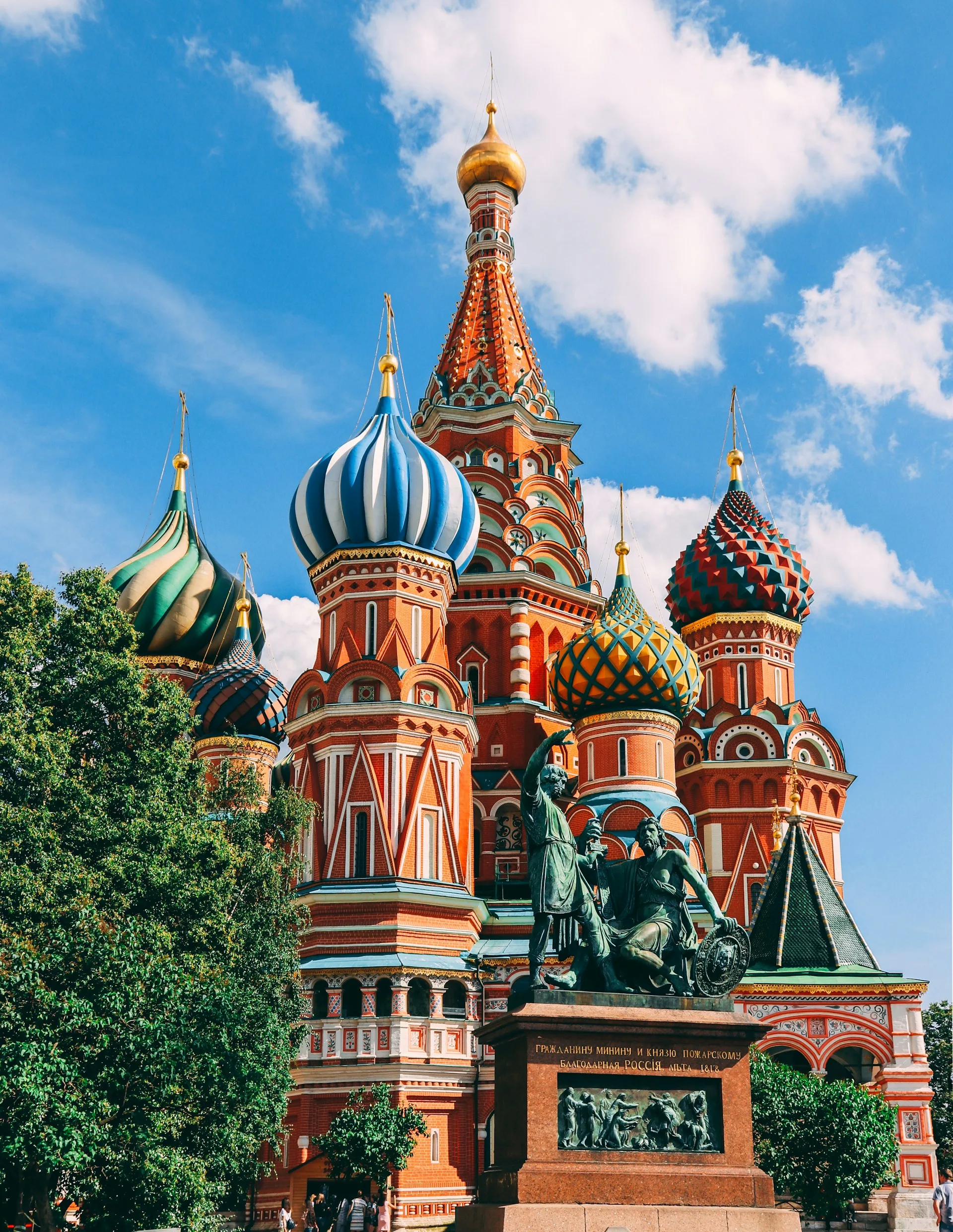
Admissions & Application for Russia - Study in Russia
Master the Russian university application process — from the Study in Russia portal and Government Scholarship to direct admission, document legalization, and entrance exams.
Admissions & Application for Russian Universities
Applying to Russian universities as an international student is more straightforward than many expect, but it does involve specific processes that differ from Western systems — particularly around document legalization, the centralized Government Scholarship portal, and the role of the preparatory faculty. The key is understanding which application route applies to you, gathering properly legalized documents, and respecting the timelines. This guide walks you through every step.
Application Routes
International students can apply to Russian universities through three main routes:
Route 1 — Russian Government Scholarship (Quota Program)
This is the most popular route for international students and the only way to access full government funding:
| Detail | Information |
|---|---|
| Portal | education-in-russia.com |
| Application opens | January-February (varies by country) |
| Application closes | March-April (varies by country) |
| Selection process | Document review + interview at Russian embassy or designated agency |
| Decision | April-June |
| Coverage | Full tuition + dormitory + monthly stipend |
| University choices | Select up to 6 universities in order of preference |
Step-by-step process:
- Create an account on the Study in Russia portal (education-in-russia.com)
- Fill out your profile — personal information, educational background, program preferences
- Upload documents — scanned copies of educational certificates, transcripts, passport, medical certificate, photos
- Select up to 6 universities — ranked in order of preference
- Submit application before the deadline
- Selection stage — your application is reviewed by the Russian embassy or designated selection agency in your country. This may include an interview (in person or online) and academic evaluation.
- Receive results — if selected, you receive confirmation and your assigned university
- University issues invitation letter — needed for the visa process
- Apply for visa and arrange travel
Route 2 — Direct University Admission (Self-Funded)
If you are not applying for the Government Scholarship, or if you want more control over your university choice:
| Detail | Information |
|---|---|
| How to apply | Contact the international admissions office of your chosen university |
| Application period | March-July for September start (varies by university) |
| Process | Submit documents directly to the university |
| Decision | Rolling — typically within 2-4 weeks |
| Cost | You pay tuition yourself (RUB 120,000-400,000/year) |
Step-by-step process:
- Identify your program on the university's website or the Study in Russia portal
- Contact the international admissions office — most respond to email in English
- Submit required documents — usually by email initially, then originals by post or upon arrival
- Receive admission letter — if accepted, the university issues a formal acceptance
- University applies for invitation letter — this is processed by the migration authorities (takes 2-6 weeks)
- Receive invitation letter — needed for your visa application
- Apply for visa at the Russian consulate in your country
Route 3 — Olympiad Winners and Special Admission
Winners and prize-winners of certain academic Olympiads receive preferential admission:
- International Olympiads (Mathematics, Physics, Chemistry, Biology, Informatics) — winners can enter top programs without entrance exams
- Russian national Olympiads recognized by the Ministry of Education — various levels of preferential admission
- University-specific Olympiads — many Russian universities run their own Olympiads for international students, with winners receiving tuition waivers or guaranteed admission
Required Documents
Prepare these documents carefully — incomplete or improperly legalized documents are the most common cause of application delays:
Core documents for all applicants
| Document | Specifications | Notes |
|---|---|---|
| Educational certificate/diploma | Original + apostille + notarized Russian translation | Your school-leaving certificate for Bachelor's, or degree for Master's |
| Academic transcripts | Original + apostille + notarized Russian translation | Full record of subjects and grades |
| Passport | Valid for at least 18 months beyond arrival | Colour copy of the main page |
| Medical certificate | General health certificate from a licensed facility | Must include statement of fitness to study |
| HIV test result | Negative result, dated within 3 months | Required by Russian immigration law |
| Passport photos | 3x4 cm, recent, white/light background | Bring at least 12 copies (needed for multiple registrations) |
| Application form | Completed and signed | Provided by the portal or university |
Additional documents depending on route
| Document | When needed |
|---|---|
| Language certificate | TORFL for Russian programs; IELTS/TOEFL for English programs |
| Motivation letter | Some Master's and PhD programs |
| CV/Resume | Master's and PhD applications |
| Letters of recommendation | Some Master's and PhD programs (1-2 letters) |
| Portfolio | Arts, architecture, design programs |
| Research proposal | PhD applications |
| Publication list | PhD applications (if applicable) |
Document Legalization
This is the step that trips up the most applicants. Your foreign educational documents must be properly legalized for use in Russia:
Apostille (Hague Convention countries)
If your country is a member of the Hague Apostille Convention (most countries are):
- Obtain an apostille from the designated authority in your country (usually the Ministry of Foreign Affairs, Ministry of Education, or a notary authority)
- The apostille is attached to or stamped on your original educational document
- Then get a notarized Russian translation of both the document and the apostille
| Step | Where | Typical time | Typical cost |
|---|---|---|---|
| Apostille | Designated authority in your country | 1-4 weeks | Varies by country (USD 10-100) |
| Notarized translation | Certified translator (in your country or Russia) | 3-7 days | USD 30-80 per document |
Consular legalization (non-Hague countries)
If your country is not part of the Hague Convention:
- Authenticate your document at the Ministry of Education in your country
- Legalize at the Ministry of Foreign Affairs
- Legalize at the Russian embassy or consulate in your country
- Get a notarized Russian translation
This process takes longer (4-8 weeks) and is more expensive. Start early.
Entrance Examinations
Most Russian universities admit international students based on document evaluation (review of academic transcripts and credentials) rather than entrance exams. However, some situations require additional testing:
When entrance exams are required
- Moscow State University (MSU) — requires entrance exams for most programs, including for international students. Subjects depend on the program.
- Medical programs — many medical universities require entrance tests in biology and chemistry (often multiple-choice, available in English for English-taught programs)
- Creative programs — art, music, design, and architecture programs require portfolios and/or auditions
- Some competitive Master's programs — may include interviews or written assessments
What entrance exams look like
| Program type | Typical exam format | Language |
|---|---|---|
| Sciences (MSU) | Written exam in the relevant subject | Russian (or English for English programs) |
| Medicine | Multiple-choice biology + chemistry | Russian or English |
| Engineering (some) | Mathematics + physics written test | Russian |
| Arts/Music | Portfolio review + audition/practical exam | Varies |
| Master's | Interview + document review | Russian or English |
Application Timeline
For Government Scholarship (September start)
| When | What to do |
|---|---|
| October-December (year before) | Research universities and programs; begin document legalization |
| January-February | Register on Study in Russia portal; submit application |
| March-April | Selection process at Russian embassy (interview + document review) |
| April-June | Receive scholarship decision |
| June-July | University issues invitation letter |
| July-August | Apply for visa; arrange travel |
| September 1 | Arrive and begin studies (or preparatory faculty) |
For Direct Admission (September start)
| When | What to do |
|---|---|
| December-February | Research universities; begin document legalization |
| March-April | Contact university international offices; submit applications |
| April-May | Receive admission decisions |
| May-June | University processes invitation letter (2-6 weeks) |
| June-July | Receive invitation letter; apply for visa |
| August | Receive visa; arrange travel |
| September 1 | Arrive and begin studies |
After Receiving Admission
Once you receive your admission letter, there are several steps before you can depart:
- Wait for the invitation letter — your university applies for this from the Russian migration authorities. Processing takes 2-6 weeks. This is a separate document from the admission letter and is required for your visa.
- Apply for your student visa — as soon as you have the invitation letter, apply at the Russian consulate in your country
- Arrange health insurance — check with your university whether their insurance is included or if you need to arrange it separately
- Confirm dormitory accommodation — contact the university to reserve your dormitory place
- Book travel — plan to arrive 2-5 days before orientation begins
| Post-admission step | Timeline |
|---|---|
| Invitation letter | 2-6 weeks after admission confirmation |
| Visa application | 1-3 weeks processing (apply immediately) |
| Travel booking | After visa is approved |
| Arrival | 2-5 days before orientation/semester start |
Common Mistakes to Avoid
- Starting document legalization too late — apostille and translation take weeks. Begin as soon as you have your diploma.
- Submitting untranslated documents — all documents must have notarized Russian translations, even if you are applying to an English-taught program.
- Forgetting the HIV test — this is a strict requirement for the Russian visa. Get the test done at a licensed facility with the result in English.
- Missing the Government Scholarship deadline — deadlines vary by country and are firm. Check your country's specific timeline on the Study in Russia portal.
- Not bringing enough passport photos — bring at least 12 copies of 3x4 cm photos. You will need them for the visa, university enrollment, dormitory registration, library card, and other purposes.
- Ignoring the invitation letter timeline — the invitation letter can take 2-6 weeks to process. Factor this into your visa application timeline.
Next Steps
- Costs and funding — tuition breakdown and Government Scholarship details
- Visa and arrival — complete visa guide and first steps after landing
- Plan your studies — preparation timeline and language requirements
- Programs and universities — find the right program for your goals
Frequently Asked Questions
How do I apply to universities in Russia?
What documents do I need to apply to a Russian university?
What is the Study in Russia portal?
What is document legalization and apostille?
Are there entrance exams for Russian universities?
Can I apply to multiple Russian universities?
What are the application deadlines?
Do Olympiad winners get special admission?
Related Guides
Why Study in Russia
Russia offers affordable tuition, a fully funded government scholarship, world-class STEM and medicine programs, and a rich cultural experience — here's why over 350,000 international students choose it.
🗺️Plan Your Studies in Russia
Start planning 9-12 months ahead with this step-by-step timeline covering intakes, credential recognition, Russian language prep, and the preparatory faculty year.
🎓Programs & Universities in Russia
From Moscow State and MIPT to ITMO and HSE, find the right Russian university and program for your goals with this comprehensive guide to Russia's top institutions.
💰Costs & Funding
A realistic breakdown of tuition, living costs, scholarships, and part-time work earnings — with city-by-city comparisons and budgeting examples.
🛂Visa & Arrival in Russia
International students need a Russian student visa with an invitation letter from their university. Here's the complete process — documents, HIV test, registration, and health insurance.
🏡Living in Russia as a Student
Everything you need to know about student housing, city life, metro systems, healthcare, Russian culture, weather, food, and safety tips for international students in Russia.
💼Work & Career in Russia
From limited part-time work options during studies to post-graduation career paths in energy, tech, aerospace, and mining — your guide to working during and after studying in Russia.
Latest News
Australia Introduces New Measures for International Students – Study Abroad
Australia Introduces New Measures for International Students – Study Abroad
What to Expect when Studying Abroad in Fall 2020 – Study Abroad
What to Expect when Studying Abroad in Fall 2020 – Study Abroad
Aurora University Network, Among Others, Selected by European Commission to Officially Join European University Networks – Study Abroad
Aurora University Network, Among Others, Selected by European Commission to Officially Join European University Networks – Study Abroad
Latest Articles
10 Proven Tips for Learning German Before You Arrive
Master the basics of German with these practical tips and resources. From apps to language partners, discover the best ways to prepare for your studies in Germany.
Complete Student Budget Guide for Germany 2026
Realistic breakdown of monthly expenses, money-saving tips, and budget planning for international students in Germany. Learn how to live comfortably on a student budget.
How to Apply to German Universities: Complete Step-by-Step Guide
A comprehensive guide walking you through every step of the application process for German universities, from document preparation to receiving your admission letter.