Living in Poland - Study in Poland
Everything you need to know about daily life as an international student in Poland — housing, healthcare, transport, food, culture, and safety in one of Europe's most affordable countries.
Living in Poland
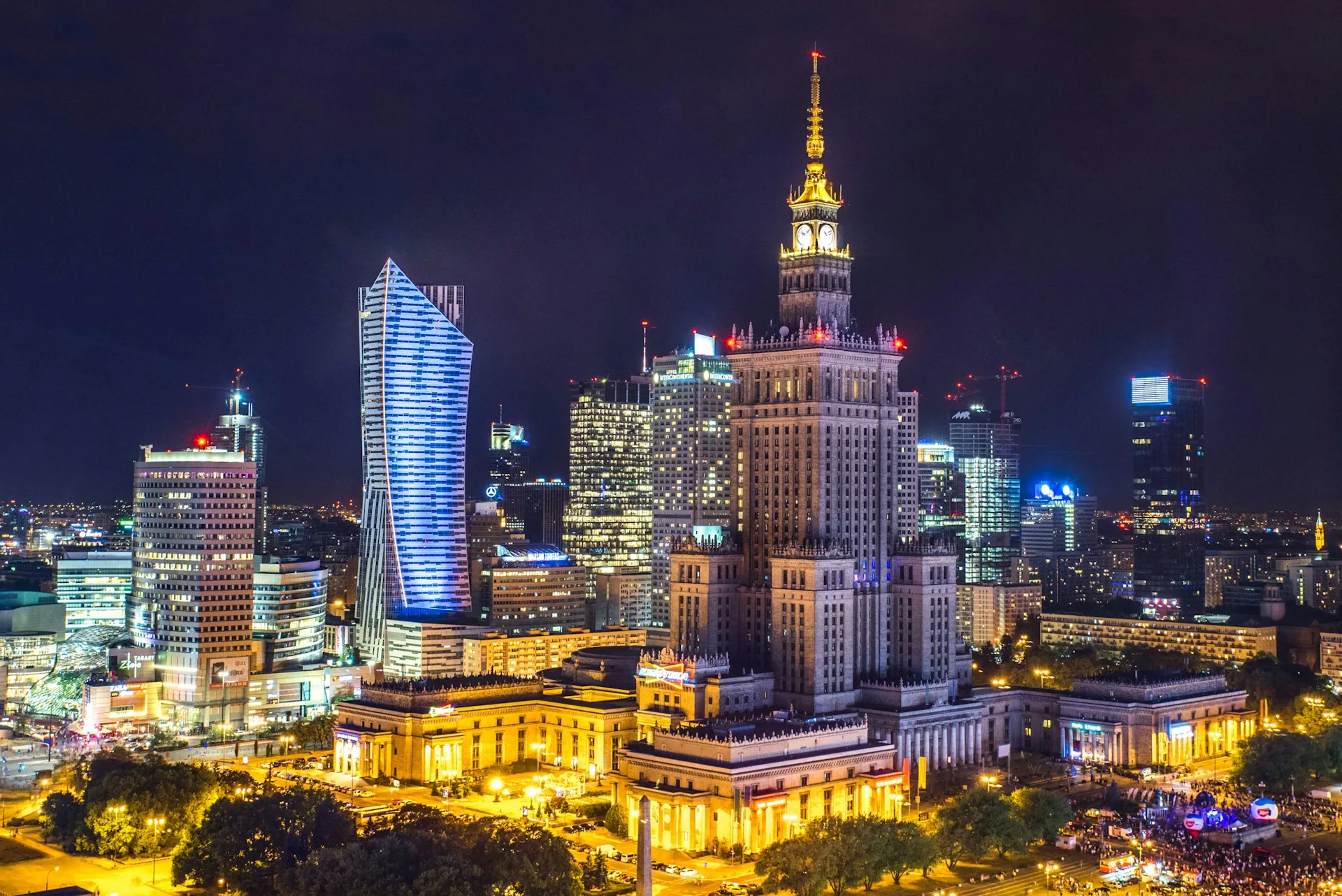
Poland offers one of the best quality-of-life-to-cost ratios in Europe for students. Your money stretches remarkably far — from affordable dormitories and legendary milk bars to cheap public transport and vibrant nightlife. Polish cities blend centuries of history with modern energy, and the student culture is among the most active in Europe.
This guide covers everything you need for a smooth transition to daily life in Poland.
Finding Housing
Housing is your single biggest living expense, but in Poland even this is affordable by European standards.
Housing Options
| Type | Monthly Cost (EUR) | Best For | Notes |
|---|---|---|---|
| University dormitory (akademik) | 80-150 | Budget-conscious, first-year students | Shared rooms (2-3 people), basic but social |
| Shared apartment (wspoldzielenie) | 200-400 | Independence, after first year | Split rent and bills with flatmates |
| Private studio | 350-600 | Privacy, couples | Most expensive option |
| Homestay | 250-400 | Cultural immersion, meals included | Less common in Poland than in some countries |
University Dormitories (Akademiki)
Most Polish universities have their own dormitories. These are the cheapest option and the easiest way to meet other students.
What to expect:
- Rooms are typically shared (2-3 students per room)
- Single rooms available at some universities for slightly higher cost
- Shared bathrooms and kitchens on each floor
- Basic furniture (bed, desk, wardrobe)
- Internet included
- Laundry facilities on site
How to apply: Submit your dormitory application through your university's housing office, usually at the same time as your study application or upon receiving your acceptance letter. Popular dormitories fill up quickly.
Private Accommodation
Where to search:
- OLX.pl — Poland's largest classifieds site; many rental listings
- Otodom.pl — Dedicated property search platform
- Gumtree.pl — Classifieds with room and apartment listings
- Facebook groups — Search for "[City name] pokoje / mieszkania dla studentow"
- University notice boards — Physical and online listings
What to know:
- Kaucja (deposit): Usually 1 month's rent, refundable
- Lease terms: Typically 10-12 months (academic year)
- Bills extra: Electricity, gas, water, internet — budget EUR 40-80/month shared
- Most landlords require a signed contract (umowa najmu)
Healthcare
EU/EEA Students
Your European Health Insurance Card (EHIC) gives you access to the Polish public healthcare system. Coverage includes emergency treatment, GP visits, hospital care, and prescriptions (with co-payment).
To use your EHIC:
- Register with a local GP (lekarz pierwszego kontaktu) at an NFZ-contracted clinic
- Present your EHIC when visiting
- Emergency treatment is available at any hospital emergency department (SOR)
Non-EU Students
Option 1: NFZ voluntary insurance — PLN 55/month (EUR 13) gives you the same coverage as Polish citizens. Enroll through ZUS after getting your PESEL number.
Option 2: Private insurance — EUR 20-40/month for faster access and English-speaking doctors.
Compare health insurance options for Poland
Finding a Doctor
- University health centres provide basic care for enrolled students
- Use the NFZ website (nfz.gov.pl) to find contracted doctors and clinics
- In emergencies, call 112 (European emergency number) or go to the nearest SOR (hospital emergency department)
Emergency numbers:
- 112 — General emergency (police, fire, ambulance)
- 999 — Ambulance
- 998 — Fire brigade
- 997 — Police
Transport
Poland has excellent public transport, and student discounts make it even more affordable.
City Transport
All major Polish cities have extensive bus and tram networks. Warsaw also has a two-line metro system.
| City | Transport Card | Student Monthly Pass (PLN) | Student Monthly Pass (EUR) |
|---|---|---|---|
| Warsaw | Karta Miejska | 55 | 13 |
| Krakow | Karta Miejska | 49 | 11 |
| Wroclaw | Urbancard | 44 | 10 |
| Gdansk | Karta Miejska | 46 | 11 |
| Poznan | PEKA | 47 | 11 |
| Lodz | Karta Miejska | 44 | 10 |
Getting your student discount: Present your student ID (legitymacja studencka) when buying a monthly pass. Students receive a 50% discount on all public transport in Poland.
Intercity Travel
| Transport | Booking | Typical Costs |
|---|---|---|
| PKP Intercity (trains) | intercity.pl | Warsaw-Krakow: PLN 50-120 (EUR 12-28) |
| Polregio (regional trains) | polregio.pl | Short distances: PLN 10-40 (EUR 2-9) |
| FlixBus | flixbus.pl | Major cities: PLN 20-60 (EUR 5-14) |
| PolskiBus | flixbus.pl | Budget option for many routes |
| BlaBlaCar | blablacar.pl | Ridesharing, very affordable |
Cycling
Polish cities are increasingly bike-friendly, with growing networks of cycle paths:
- Warsaw — Veturilo bike-share system
- Krakow — Wavelo (now Nextbike) bike-share
- Wroclaw — Nextbike bike-share
- Most cities have expanding dedicated cycling infrastructure
Food and Drink
Eating on a Budget
Polish food is hearty, delicious, and incredibly affordable:
Milk bars (bar mleczny) — Government-subsidised cafeterias serving traditional Polish food. A full meal (soup, main course, drink) costs PLN 10-18 (EUR 2-4). Found across every Polish city. Serving traditional dishes like pierogi, zurek, kopytka, and kotlet schabowy.
University canteens — Budget meals on campus for PLN 8-20 (EUR 2-5).
Cooking at home — Shop at Biedronka (cheapest), Lidl, Aldi, or Zabka (convenience). Weekly groceries: PLN 100-170 (EUR 25-40).
Eating out — A restaurant meal costs PLN 25-50 (EUR 6-12). Pizza delivery: PLN 25-35 (EUR 6-8).
Polish Dishes You Must Try
- Pierogi — Dumplings filled with potato and cheese (ruskie), meat, sauerkraut, or fruit
- Zurek — Sour rye soup, often served in a bread bowl
- Bigos — Hunter's stew with sauerkraut, meats, and mushrooms
- Kotlet schabowy — Breaded pork cutlet (Poland's answer to schnitzel)
- Zapiekanka — Open-faced baguette with mushrooms, cheese, and toppings
- Placki ziemniaczane — Potato pancakes
- Barszcz — Beetroot soup, served hot or cold
- Sernik — Polish cheesecake (made with twarog, a fresh farmer's cheese)
- Paczki — Filled doughnuts, especially popular on Fat Thursday
Coffee and Social Culture
Poland has a thriving specialty coffee scene, especially in Warsaw, Krakow, and Wroclaw. A coffee costs PLN 10-18 (EUR 2-4). Cafes are popular study and socialising spots.
Polish Culture and Social Life
Cultural Norms
- Punctuality matters — Being on time for classes and meetings is expected
- Formal greetings — Use "Pan" (Mr.) and "Pani" (Mrs.) with professors and in formal settings
- Shoe removal — Remove shoes when entering someone's home
- Name days — Poles celebrate their name day (imieniny) in addition to birthdays
- Hospitality — Poles are hospitable hosts; expect generous portions and insistence that you eat more
Student Nightlife
Poland has legendary student nightlife, especially in Krakow and Warsaw:
- Krakow — Hundreds of bars in medieval cellars around the Old Town and in the Kazimierz district
- Warsaw — Vibrant club scene from the Vistula riverfront bars to the Praga district
- Wroclaw — Lively bar scene around the Rynek (Market Square) and student areas
- Drinks are affordable — a beer costs PLN 8-15 (EUR 2-3.50), a cocktail PLN 20-35 (EUR 5-8)
Festivals and Events
- Open'er Festival (Gdynia, July) — One of Europe's biggest music festivals
- OFF Festival (Katowice, August) — Alternative music
- Krakow Film Festival (May-June) — Prestigious short film festival
- Wratislavia Cantans (Wroclaw, September) — Classical music festival
- Juwenalia (May) — Student festival celebrated at every university with concerts, parades, and events
Climate and Weather
| Season | Months | Temperature | What to Expect |
|---|---|---|---|
| Spring | March-May | 5-20°C | Warming, some rain, beautiful blossoms |
| Summer | June-August | 18-30°C | Warm, sunny, occasional thunderstorms |
| Autumn | September-November | 5-18°C | Cool, rainy, colourful foliage |
| Winter | December-February | -5 to -15°C | Cold, snow, short days |
What to pack:
- A serious winter coat, warm boots, gloves, hat, and scarf — Polish winters are cold
- Layers for spring and autumn
- Light clothing for summer
- Rain jacket for all seasons
Safety
Poland is one of the safest countries in Europe for students. Crime rates in major cities are low compared to Western European capitals.
Key safety tips:
- Normal urban precautions — Watch your belongings in crowded places and on public transport
- Avoid unlicensed taxis — Use apps like Uber, Bolt, or FreeNow, or order taxis by phone
- Drinking responsibly — Polish drinking culture can be intense; set your own pace
- Winter safety — Sidewalks can be icy; wear appropriate footwear
Essential Apps
- Jakdojade — Public transport navigation (all Polish cities)
- Uber / Bolt — Ride-hailing
- Pyszne.pl / Glovo — Food delivery
- mBank / IKO — Mobile banking
- Google Translate — Helpful for Polish text (camera translation works well)
- ISIC — Student discounts
Next Steps
- Understand costs and budget — Detailed financial breakdown
- Apply for your visa — Visa requirements and process
- Find work opportunities — Part-time jobs and career planning
- Browse programs — Compare universities and programs
Frequently Asked Questions
How much does student accommodation cost in Poland?
Is Poland safe for international students?
What is Polish food like?
How do I find housing in Poland?
What is public transport like in Poland?
Do I need to learn Polish?
What is the weather like in Poland?
How do I open a bank account in Poland?
Related Guides
Why Study in Poland
Poland combines genuinely affordable tuition, 800+ English-taught programs, centuries-old universities, and a booming tech economy — here's why over 85,000 international students choose it every year.
🗺️Plan Your Studies in Poland
A complete planning guide covering the Polish academic calendar, October and February intakes, credential recognition through NAWA, Polish language courses, and choosing between public and private universities.
🎓Programs & Universities in Poland
A comprehensive guide to Polish higher education institutions — top universities, technical universities, medical schools, private institutions, and the 800+ English-taught programs available.
📝Admissions & Application to Polish Universities
Navigate the Polish admissions process — the IRK online system, direct applications, required documents, sworn translations, and application timelines for international students.
💰Costs & Funding
A realistic breakdown of tuition, living costs, scholarships, and part-time work earnings — with city-by-city comparisons and budgeting examples.
🛂Visa & Arrival
Complete guide to the Australian student visa (Subclass 500) — requirements, Genuine Student test, processing times, and your first-week checklist after landing.
💼Work & Career in Poland
Your complete guide to working while studying in Poland — student work rights, finding jobs, post-graduation career pathways, and Poland's booming tech and BPO sectors.
Latest News
Australia Introduces New Measures for International Students – Study Abroad
Australia Introduces New Measures for International Students – Study Abroad
What to Expect when Studying Abroad in Fall 2020 – Study Abroad
What to Expect when Studying Abroad in Fall 2020 – Study Abroad
Aurora University Network, Among Others, Selected by European Commission to Officially Join European University Networks – Study Abroad
Aurora University Network, Among Others, Selected by European Commission to Officially Join European University Networks – Study Abroad
Latest Articles
10 Proven Tips for Learning German Before You Arrive
Master the basics of German with these practical tips and resources. From apps to language partners, discover the best ways to prepare for your studies in Germany.
Complete Student Budget Guide for Germany 2026
Realistic breakdown of monthly expenses, money-saving tips, and budget planning for international students in Germany. Learn how to live comfortably on a student budget.
How to Apply to German Universities: Complete Step-by-Step Guide
A comprehensive guide walking you through every step of the application process for German universities, from document preparation to receiving your admission letter.