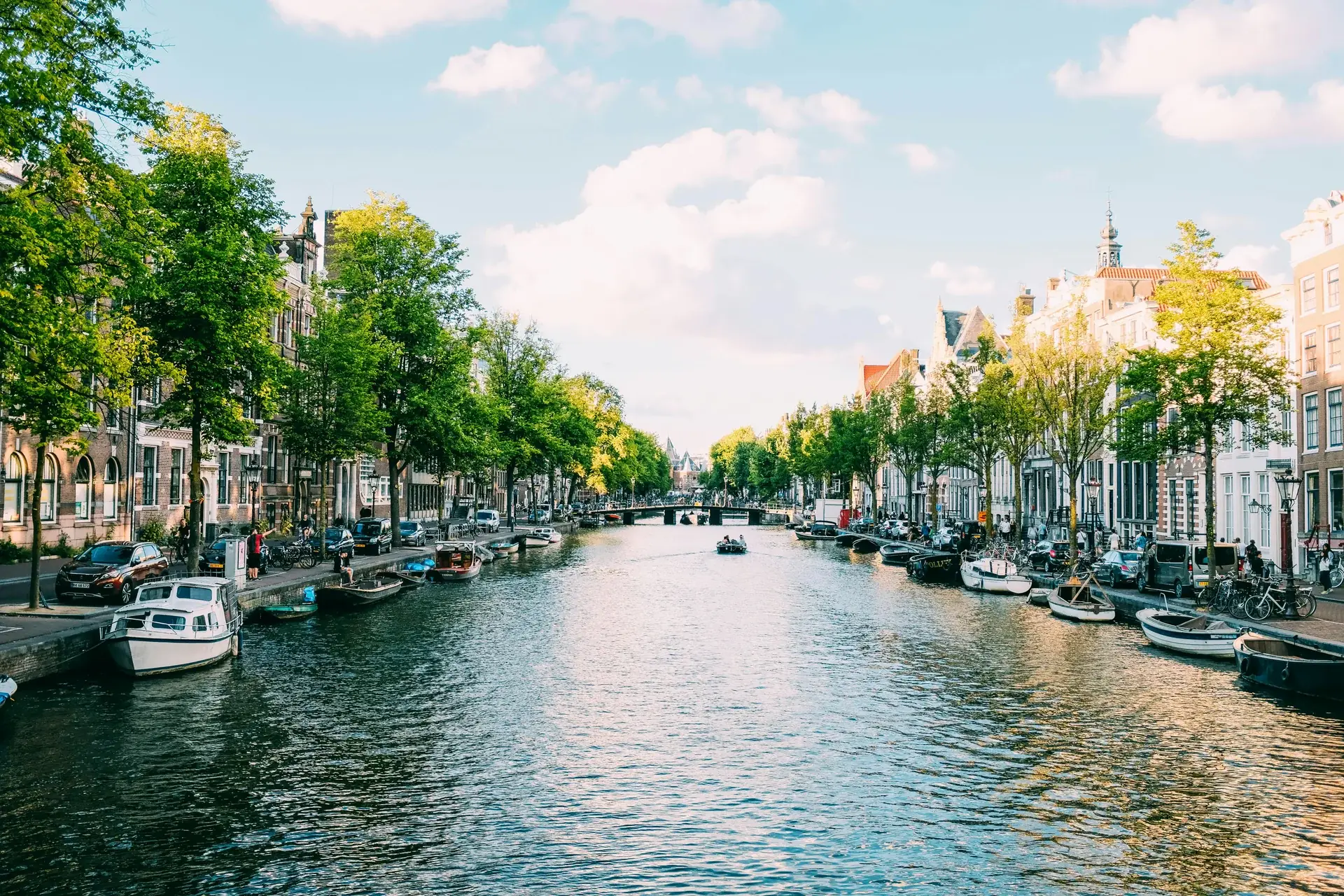
Why Study in the Netherlands
The Netherlands offers the most English-taught programs in continental Europe, innovative teaching methods, and a post-graduation orientation year — here's why 122,000+ international students choose it.
Why Study in the Netherlands
The Netherlands has steadily risen to become one of Europe's most sought-after study destinations for international students. More than 122,000 international students from over 160 countries are currently enrolled at Dutch universities — a number that has nearly doubled over the past decade. The reasons are clear: world-ranked universities, the largest selection of English-taught programs on the continent, innovative teaching methods, and a country that genuinely welcomes international talent.
If you are comparing your options and trying to decide whether the Netherlands is the right fit, this guide covers everything you need to know.
World-Ranked Universities in a Small Country
The Netherlands punches far above its weight in global rankings. Despite having a population of just 17.9 million, the country has all 13 of its research universities ranked in the world's top 250 — a consistency that no other country can match. Seven of those universities feature in the global top 100.
Dutch Research Universities — Global Rankings (2025–2026)
| University | QS World Ranking | THE World Ranking | City |
|---|---|---|---|
| University of Amsterdam (UvA) | 53 | 66 | Amsterdam |
| Delft University of Technology (TU Delft) | 47 | 48 | Delft |
| Utrecht University | 107 | 66 | Utrecht |
| Leiden University | 126 | 77 | Leiden |
| Wageningen University & Research | 83 | 59 | Wageningen |
| Erasmus University Rotterdam | 137 | 72 | Rotterdam |
| University of Groningen | 139 | 84 | Groningen |
| Eindhoven University of Technology (TU/e) | 109 | 119 | Eindhoven |
| Vrije Universiteit Amsterdam (VU) | 207 | 105 | Amsterdam |
| Radboud University | 222 | 130 | Nijmegen |
| Maastricht University | 246 | 131 | Maastricht |
| University of Twente | 210 | 184 | Enschede |
| Tilburg University | 351+ | 201+ | Tilburg |
What makes this remarkable is the consistency. In countries like the UK or the USA, a handful of elite institutions pull away from the rest. In the Netherlands, the quality is spread evenly — whichever research university you choose, you are getting a strong education backed by serious research output.
The Most English-Taught Programs in Continental Europe
This is the Netherlands' single biggest advantage for international students. Dutch universities offer over 2,100 programs taught entirely in English, spanning bachelor's, master's, and PhD levels. No other non-English-speaking country comes close.
English-Taught Programs by Country
| Country | English-Taught Programs | English Proficiency (EF Index) |
|---|---|---|
| Netherlands | 2,100+ | #1 globally |
| Germany | 1,800+ | #10 |
| Sweden | 1,000+ | #3 |
| Denmark | 600+ | #2 |
| France | 1,500+ | #34 |
The numbers only tell part of the story. The Netherlands also ranks #1 in the world for English proficiency according to the EF English Proficiency Index. Over 90% of the Dutch population speaks English well. This means that unlike in Germany or France, where you might struggle with daily tasks in English outside the university, life in the Netherlands is fully accessible in English from day one — at the supermarket, on public transport, at the doctor's office, and in social settings.
At the master's level, approximately 75% of all programs at Dutch research universities are taught in English. For many programs, especially in business, engineering, science, and social sciences, English is the default language of instruction.
Innovative Teaching Methods
Dutch education is not about sitting in large lecture halls and memorizing textbook content. The system is built around interactive, student-centered teaching that emphasizes critical thinking, collaboration, and practical application.
Problem-Based Learning (PBL)
The Netherlands is the European pioneer of problem-based learning, an approach where students work in small groups (typically 12–15 students) to solve real-world problems. Instead of a professor lecturing for two hours, a tutor guides the group through a structured process of identifying learning objectives, conducting independent research, and reconvening to discuss findings.
Maastricht University has used PBL as its core teaching method since its founding in 1976, and the approach has influenced teaching across all Dutch universities to varying degrees. The result is graduates who are strong communicators, effective collaborators, and independent thinkers — skills that employers value highly.
Other Teaching Characteristics
- Small class sizes: Seminars and tutorials typically have 15–30 students, even at large universities
- Project-based work: Many courses include real-world projects with companies or organizations
- Active participation: Students are expected to speak up, debate, and challenge ideas — including the professor's
- Flat hierarchy: Dutch academic culture is informal. Professors are approachable and often addressed by first name
- Technology integration: Dutch universities invest heavily in digital learning tools, online collaboration platforms, and hybrid teaching formats
International Atmosphere
With 122,000+ international students, the Netherlands has one of the most internationally diverse university systems in Europe. At many programs — particularly master's programs — international students outnumber Dutch students. This creates a genuinely multicultural learning environment where you work with classmates from 30, 40, or even 50 different countries.
Dutch universities actively support this international community through:
- International student associations and buddy programs
- Orientation weeks specifically designed for international students
- English-language student services including housing support, academic advising, and career counseling
- Cultural events and festivals celebrating the diversity of the student body
- International student organizations like ESN (Erasmus Student Network) with active chapters at every university
The international atmosphere extends beyond campus. The Netherlands has a long history as a trading nation and a crossroads of cultures. Amsterdam, Rotterdam, and The Hague are genuinely cosmopolitan cities where hearing four or five languages on a single tram ride is perfectly normal.
Quality of Life and Bike Culture
The Netherlands consistently ranks among the happiest countries in the world (typically in the top 5–7 on the World Happiness Report). For students, the quality of life is exceptional:
- Safety: Extremely low crime rates across all cities. Walking alone at night is normal and safe.
- Infrastructure: World-class public transport, cycling infrastructure, and digital services
- Healthcare: High-quality, accessible healthcare system (health insurance is mandatory but affordable)
- Work-life balance: The Dutch are famous for their commitment to work-life balance. This extends to university culture — there is a healthy respect for free time
- Sustainability: The Netherlands leads Europe in cycling, renewable energy, and environmental awareness
Cycling Culture
The Netherlands has more bicycles than people — roughly 23 million bikes for 17.9 million residents. In student cities like Groningen, Amsterdam, and Utrecht, the bicycle is the primary mode of transport. Cities are designed around cycling: flat terrain, dedicated bike lanes, bike traffic lights, and massive bike parking facilities at every train station.
For students, this means:
- No transport costs for daily commuting (a second-hand bike costs EUR 50–150)
- Easy access to campus, shops, nightlife, and friends' houses
- Exercise built into your daily routine without thinking about it
- Environmental friendliness — the Dutch cycling infrastructure is the most developed in the world
Tech and Innovation Hub
The Netherlands punches above its weight economically. It is home to some of the world's most important companies:
- ASML (Eindhoven) — The only company in the world that makes extreme ultraviolet lithography machines, essential for manufacturing advanced semiconductors
- Philips (Eindhoven) — Global leader in health technology
- Shell (The Hague) — One of the world's largest energy companies
- Unilever (Rotterdam) — Consumer goods giant
- Booking.com (Amsterdam) — Europe's largest tech company by some measures
- Adyen (Amsterdam) — Major fintech company
- NXP Semiconductors (Eindhoven) — Leading chip manufacturer
Beyond established companies, the Netherlands has a thriving startup ecosystem. Amsterdam is ranked among Europe's top 5 startup cities, and Eindhoven's Brainport region is a globally recognized high-tech hub. The government actively supports innovation through programs like the StartupVisa and the Dutch Startup Association.
For students, this means internship opportunities, graduate jobs, and a career ecosystem that values international talent.
Career Prospects and the Zoekjaar
One of the strongest reasons to study in the Netherlands is what comes after graduation. The Dutch government offers the zoekjaar (orientation year), a 1-year residence permit that allows graduates of Dutch universities to stay in the Netherlands and search for work.
Post-Study Work Options Compared
| Country | Post-Study Period | Key Conditions |
|---|---|---|
| Netherlands | 1 year (zoekjaar) | Must apply within 3 years of graduation |
| Germany | 18 months | Job must relate to degree |
| UK | 2 years (3 for PhD) | No employer sponsorship needed |
| France | 1 year (2 for master's) | Job must relate to degree |
| USA | 1 year (3 for STEM OPT) | Requires employer sponsorship for H-1B |
During the zoekjaar, you can work in any field without restrictions. Once you find a qualifying job, you can transition to the highly skilled migrant (kennismigrant) visa, which has a lower salary threshold for graduates of Dutch universities (approximately EUR 28,000/year instead of the standard EUR 40,000+).
The Netherlands also has a favorable tax arrangement for international workers called the 30% ruling, which can exempt 30% of your salary from income tax for up to 5 years — a significant financial benefit.
Potential Drawbacks — Being Honest
No study destination is perfect. Here are the challenges:
- Housing crisis: Finding affordable student housing is the single biggest challenge in the Netherlands. Cities like Amsterdam and Utrecht have severe housing shortages. Start your search 3–6 months early and register with your university's housing service immediately.
- Weather: The Netherlands has a maritime climate — expect grey skies, rain, and wind for much of the year (October through April). Summers are mild and pleasant but short.
- Cost for non-EU students: While EU students pay approximately EUR 2,530/year, non-EEA students face institutional fees of EUR 8,000–20,000/year — higher than Germany (often free) but lower than the UK or Australia.
- Dutch directness: The Dutch are famously direct. What might feel blunt or rude in other cultures is considered honest and efficient in the Netherlands. Most international students grow to appreciate this once they adjust.
- Bureaucracy: Dealing with Dutch bureaucracy (municipality registration, insurance, banking) can be slow and frustrating, particularly in the first few weeks.
Who Should Choose the Netherlands?
The Netherlands is an excellent fit if you:
- Want a high-quality European degree taught in English without needing to learn a new language
- Value interactive, discussion-based teaching over lecture-based education
- Plan to work in Europe after graduation and want a clear pathway through the zoekjaar
- Enjoy cycling, compact cities, and a high quality of life
- Want to study in a genuinely international environment with classmates from around the world
- Are interested in technology, engineering, business, or sustainability — fields where the Netherlands excels
It might be less ideal if you are on a very tight budget (consider Germany), want guaranteed sunshine (consider Spain or Australia), or prefer a large-campus American-style university experience.
Next Steps
Ready to explore further? Here is where to go next:
- Plan your studies — Build your timeline and understand the Dutch academic system
- Browse programs and universities — Compare WO research universities and HBO universities of applied sciences
- Understand costs and funding — Get a realistic picture of tuition, living costs, and scholarships
- Check visa requirements — Learn about MVV visas, residence permits, and arrival steps
Frequently Asked Questions
Why should I study in the Netherlands instead of the UK or Germany?
Are Dutch degrees recognized internationally?
Do I need to speak Dutch to study in the Netherlands?
How many international students are in the Netherlands?
Is the Netherlands expensive for international students?
Can I work after graduating in the Netherlands?
What is problem-based learning?
Is the Netherlands safe for international students?
Related Guides
Plan Your Studies in the Netherlands
A step-by-step planning guide covering the Dutch academic system, Studielink registration, credential evaluation, and timelines for starting your studies in the Netherlands.
🎓Programs and Universities in the Netherlands
A comprehensive guide to Dutch universities — from WO research universities like TU Delft and UvA to HBO institutions — including top programs, rankings, and how to choose.
📝Admissions and Application for Dutch Universities
Navigate the Dutch application process — from Studielink registration and Nuffic credential evaluation to numerus fixus selection and document requirements.
💰Costs and Funding for Studying in the Netherlands
A detailed breakdown of tuition fees, living costs, scholarships, and student finance options for studying in the Netherlands — for both EU and non-EU students.
🛂Visa and Arrival Guide for the Netherlands
Everything you need to know about MVV entry visas, VVR residence permits, health insurance, BSN registration, and settling in as an international student in the Netherlands.
🏡Living in the Netherlands as a Student
Your complete guide to student life in the Netherlands — from finding housing and navigating the bike culture to healthcare, public transport, and making the most of Dutch city life.
💼Work and Career in the Netherlands
Complete guide to working during and after your studies in the Netherlands — part-time work rules, the zoekjaar orientation year, highly skilled migrant visa, and top employers.
Latest News
Australia Introduces New Measures for International Students – Study Abroad
Australia Introduces New Measures for International Students – Study Abroad
What to Expect when Studying Abroad in Fall 2020 – Study Abroad
What to Expect when Studying Abroad in Fall 2020 – Study Abroad
Aurora University Network, Among Others, Selected by European Commission to Officially Join European University Networks – Study Abroad
Aurora University Network, Among Others, Selected by European Commission to Officially Join European University Networks – Study Abroad
Latest Articles
10 Proven Tips for Learning German Before You Arrive
Master the basics of German with these practical tips and resources. From apps to language partners, discover the best ways to prepare for your studies in Germany.
Complete Student Budget Guide for Germany 2026
Realistic breakdown of monthly expenses, money-saving tips, and budget planning for international students in Germany. Learn how to live comfortably on a student budget.
How to Apply to German Universities: Complete Step-by-Step Guide
A comprehensive guide walking you through every step of the application process for German universities, from document preparation to receiving your admission letter.