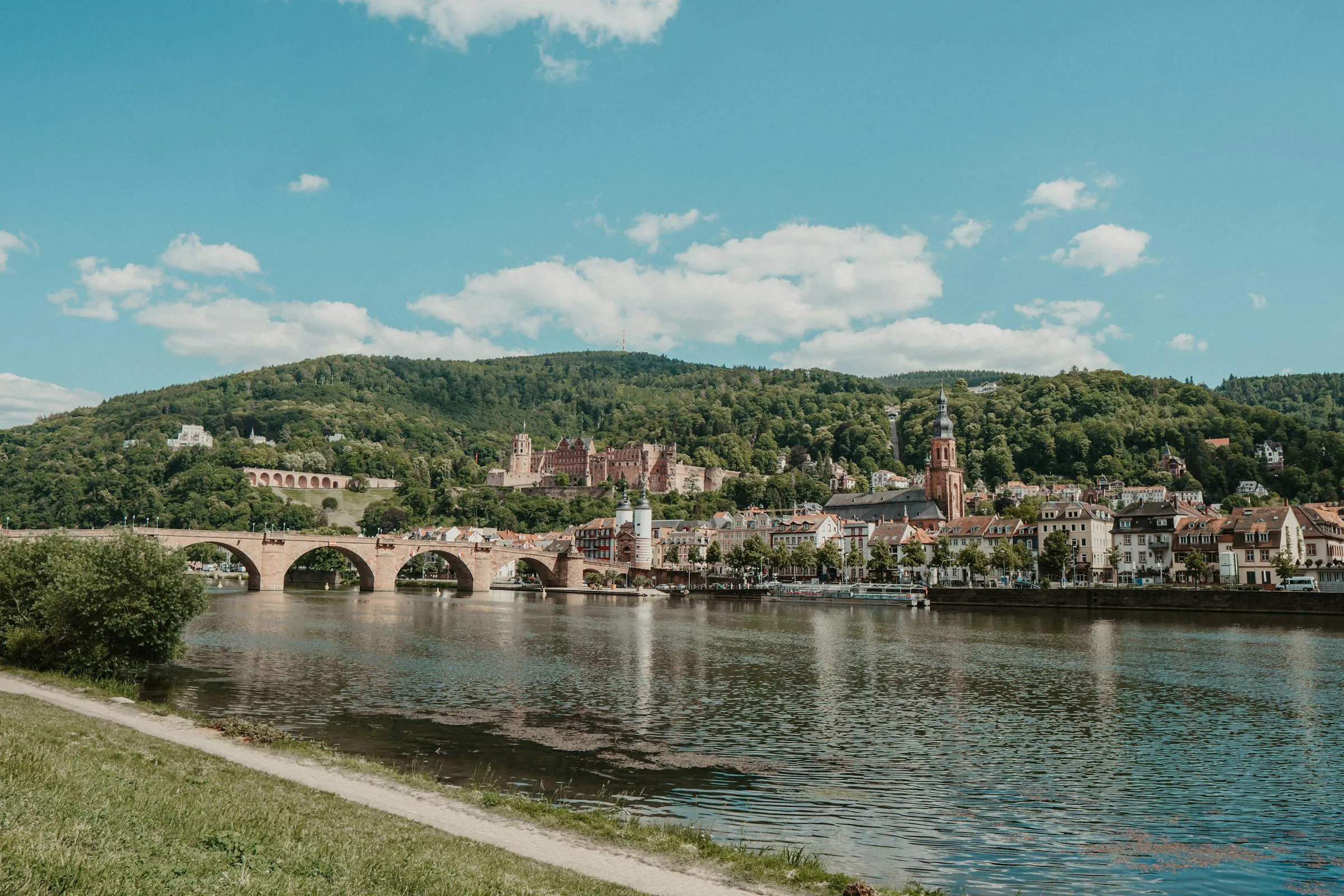
Why Study in Germany
Germany offers tuition-free public universities, world-class research, and strong career prospects — here's why over 400,000 international students choose it every year.
Why Study in Germany
Germany is the most popular non-English-speaking study destination in the world, and for good reason. With tuition-free public universities, globally ranked programs, and Europe's strongest economy waiting on the other side of graduation, over 400,000 international students have already made the move. Here's why you should consider joining them.
Tuition-Free Education at Public Universities
The single biggest reason students choose Germany is cost. Most public universities charge no tuition fees whatsoever — for both domestic and international students, at both Bachelor's and Master's level. This isn't a scholarship or a special deal. It's the standard policy at the vast majority of German public universities.
What you do pay is a semester contribution (Semesterbeitrag) of EUR 100-400 per semester. This covers:
- Student union services
- A semester ticket for free or discounted public transport (buses, trams, regional trains)
- Access to sports facilities and student counselling
- Administrative fees
That's it. Compare that to GBP 9,250/year for UK domestic students (or GBP 20,000-40,000 for international students), or USD 30,000-70,000/year at US universities, and the savings are enormous.
One exception to know about: The state of Baden-Württemberg introduced tuition fees of EUR 1,500 per semester for non-EU/EEA international students in 2017. Universities in this state include Heidelberg, Stuttgart, Freiburg, and Tübingen. Still far cheaper than the UK or US, but worth factoring in.
| Cost comparison | Germany (public) | UK | US (public, out-of-state) |
|---|---|---|---|
| Annual tuition | EUR 0 (+ EUR 200-800 semester fees) | GBP 20,000-40,000 | USD 25,000-45,000 |
| 3-year Bachelor's total tuition | EUR 600-2,400 | GBP 60,000-120,000 | USD 75,000-135,000 |
| 2-year Master's total tuition | EUR 400-1,600 | GBP 40,000-80,000 | USD 50,000-90,000 |
World-Class Universities and Research
Germany isn't just cheap — it's academically excellent. The country is home to several prestigious university alliances:
TU9 — Germany's Leading Technical Universities
The TU9 alliance includes nine top technical universities known for engineering, natural sciences, and technology:
- RWTH Aachen University
- TU Berlin
- TU Braunschweig
- TU Darmstadt
- TU Dresden
- Leibniz Universität Hannover
- Karlsruhe Institute of Technology (KIT)
- TU München (TUM)
- Universität Stuttgart
TU München and RWTH Aachen consistently rank among the world's top 50 engineering universities.
U15 — Germany's Research-Intensive Universities
The U15 alliance represents 15 major research universities including:
- LMU München
- Humboldt-Universität zu Berlin
- Freie Universität Berlin
- Universität Heidelberg
- Georg-August-Universität Göttingen
- Universität Hamburg
These universities receive substantial government research funding and are deeply connected to Germany's scientific community, including the Max Planck, Fraunhofer, and Helmholtz research institutes.
Excellence Strategy
Germany's Excellence Strategy (Exzellenzstrategie) is a federal funding program that awards billions of euros to top universities and research clusters. Universities with "Excellence University" status include TU München, LMU München, Heidelberg, RWTH Aachen, TU Berlin, TU Dresden, Universität Hamburg, Universität Bonn, and Universität Konstanz.
Over 2,000 English-Taught Programs
A common misconception is that you need fluent German to study in Germany. While German-taught programs still dominate at the Bachelor's level, the number of English-taught programs has grown dramatically:
- Over 2,000 degree programs are taught entirely in English
- Master's level has the widest English-taught selection, with hundreds of programs in engineering, business, computer science, natural sciences, and social sciences
- Bachelor's level has a growing number of English-taught options, though still more limited
- Many programs are bilingual, starting in English and transitioning to German
You can search the full database of international programs on the DAAD website (daad.de/en), filtering by language, subject, and degree level.
Europe's Strongest Economy and Career Prospects
Germany has the largest economy in the EU and the fourth largest in the world. For students, this translates directly into career opportunities:
- 18-month post-study job seeker visa — after graduating, non-EU students can stay for 18 months to find employment related to their degree
- EU Blue Card — once you find a job, the Blue Card gives you a fast track to permanent residency (you can qualify with a salary of approximately EUR 45,300/year, or EUR 41,000 for shortage occupations)
- Strong demand for skilled workers — Germany faces labour shortages in engineering, IT, healthcare, mathematics, and natural sciences
- Home to global companies — Siemens, BMW, Volkswagen, SAP, BASF, Bosch, Deutsche Bank, Allianz, and many more are headquartered in Germany
During your studies, you can work 120 full days or 240 half days per year — enough to gain valuable experience and supplement your income.
What graduates earn
| Field | Average starting salary (EUR/year) |
|---|---|
| Engineering | 48,000-55,000 |
| Computer Science / IT | 47,000-54,000 |
| Business / Finance | 42,000-50,000 |
| Natural Sciences | 42,000-48,000 |
| Humanities / Social Sciences | 35,000-42,000 |
Central European Location
Germany sits at the heart of Europe, giving you easy access to neighbouring countries for travel and professional networking:
- 9 bordering countries — France, Netherlands, Belgium, Luxembourg, Austria, Switzerland, Czech Republic, Poland, Denmark
- Budget airlines and trains — FlixBus and FlixTrain connect German cities to destinations across Europe for as little as EUR 10-30
- Schengen Area — with a German student residence permit, you can travel freely across 27 Schengen countries without additional visas
- ICE high-speed trains — Berlin to Prague in 4 hours, Munich to Vienna in 4 hours, Frankfurt to Paris in under 4 hours
Many students use semester breaks to explore Europe — an option that's far more expensive from the US, Australia, or Asia.
Quality of Life
Germany consistently ranks high on quality-of-life indices, and student life here has some distinct advantages:
- Excellent public transport — most cities have efficient bus, tram, U-Bahn (subway), and S-Bahn (suburban rail) networks; your semester ticket covers most of it
- Affordable healthcare — public student health insurance costs approximately EUR 120/month and covers everything from GP visits to hospital stays
- Safe cities — low crime rates, even in larger cities
- Green spaces — Germany takes its parks, forests, and outdoor recreation seriously
- Cultural scene — museums, concerts, theatres, and festivals with generous student discounts
- Diverse food scene — from traditional German food to international cuisine, plus very affordable student cafeterias (Mensa) serving meals for EUR 2-5
Student-friendly cities
| City | Character | Monthly living costs |
|---|---|---|
| Munich | High-tech, Bavarian culture, expensive | EUR 1,000-1,400 |
| Berlin | Creative, multicultural, start-up hub | EUR 800-1,200 |
| Hamburg | Maritime, media industry, cultural | EUR 800-1,100 |
| Cologne | Lively, social, media and arts | EUR 750-1,050 |
| Dresden | Baroque, affordable, strong tech scene | EUR 650-900 |
| Leipzig | Artistic, very affordable, growing | EUR 600-850 |
| Heidelberg | Historic, compact, research-focused | EUR 750-1,000 |
| Freiburg | Sustainable, sunny, student-friendly | EUR 750-1,050 |
World-Leading Research Infrastructure
Germany's research ecosystem extends far beyond the university lecture hall. The country maintains four major non-university research organizations that employ thousands of researchers and frequently collaborate with university programs:
- Max Planck Society — 86 institutes focused on fundamental research in natural sciences, life sciences, and humanities. Max Planck institutes are considered among the best in the world, and many university programs include research opportunities at Max Planck facilities.
- Fraunhofer Society — 76 institutes specializing in applied research. Fraunhofer is Europe's largest applied research organization, with strong partnerships in engineering, IT, and materials science. If you're an engineering or computer science student, Fraunhofer connections can lead to internships and thesis projects.
- Helmholtz Association — 18 centres focused on large-scale research in energy, earth and environment, health, key technologies, matter, and aeronautics. Helmholtz centres operate some of the most advanced scientific equipment in Europe.
- Leibniz Association — 97 institutes covering topics from economics to spatial sciences to educational research.
As a student at a German university, you'll have access to collaborative research projects, shared laboratories, and in some cases, funded research assistant positions at these institutes. This level of research infrastructure is virtually unmatched outside the United States.
A Diverse International Student Community
With over 400,000 international students, Germany has one of the most diverse student populations in Europe. The top sending countries include India, China, Syria, Turkey, Austria, Iran, Cameroon, Italy, and the United States. This diversity means:
- International student support offices at every major university, offering orientation programs, buddy systems, and dedicated counselling
- Active international student organizations like ESN (Erasmus Student Network), which organize social events, city tours, language tandems, and cultural exchanges
- Multicultural cities — Berlin, Munich, Frankfurt, and Hamburg have large international communities with restaurants, cultural centres, and social groups from around the world
- Language tandem programs — pair with a German student to practice each other's languages; offered at most universities for free
Many students find that Germany's international community creates a supportive network that makes the transition to a new country much easier than expected.
A Culture of Academic Freedom
German universities operate on a principle of academic freedom (Akademische Freiheit). Compared to more structured systems in the US or UK, you'll have:
- More flexibility in choosing courses within your program
- Greater emphasis on independent study and self-directed learning
- Fewer mandatory attendance requirements (varies by program)
- Access to world-class research facilities and libraries
This approach develops strong critical thinking and self-management skills, but it does require discipline. Students who thrive in Germany tend to be self-motivated and comfortable taking initiative.
Is Germany Right for You?
Germany is an excellent choice if:
- You want high-quality education without massive debt — tuition-free study is the headline, and it's real. A full Master's degree can cost under EUR 25,000 total including living expenses, compared to GBP 40,000-80,000 in the UK or USD 50,000-90,000 in the US
- You're interested in STEM, engineering, or business — these are Germany's strongest fields, backed by world-class research infrastructure and direct industry partnerships
- You want to work in Europe after graduation — the 18-month job seeker visa and Blue Card path make this feasible, and Germany's strong economy means actual job availability
- You're willing to learn some German — even A2-B1 level makes a huge difference in daily life and career options. German courses are available at every university, often free or subsidized
- You value independence — German academic culture rewards self-directed learners who take initiative in their studies and career planning
- You enjoy cultural diversity — Germany's central location and large international community create a genuinely multicultural experience
Germany might not be the best fit if:
- You want a fully guided, structured university experience with small class sizes (consider the Netherlands or Denmark instead)
- You're not willing to deal with some bureaucracy — Germany loves its paperwork, and processes like visa applications, city registration, and university enrolment require patience and organization
- You need a fully tropical climate — German winters are cold and grey, with limited daylight from November to February. However, the country has beautiful summers and all four seasons
- You're looking for a campus-style university experience — most German universities are integrated into cities without a traditional enclosed campus. Student life revolves around the city, not a campus quad
Next Steps
Ready to start planning? Here's your path forward:
- Plan your studies — build a timeline, understand requirements, and choose your intake
- Explore programs and universities — find the right program from over 20,000 options
- Understand costs and funding — build a realistic budget and find scholarships
- Prepare your application — learn the process, deadlines, and required documents
Frequently Asked Questions
Is studying in Germany really free?
Can I study in Germany in English?
Is Germany a good choice for engineering students?
How does Germany compare to the UK or US for international students?
Do I need to speak German to study in Germany?
What is the job market like after graduating in Germany?
Is Germany safe for international students?
How many international students are currently studying in Germany?
Related Guides
Plan Your Studies in Germany
Start planning 12-18 months ahead with this step-by-step timeline covering intakes, language tests, credential checks, and application deadlines.
🎓Programs & Universities in Germany
From TU9 engineering powerhouses to creative Kunsthochschulen, find the right German university and program for your goals with this comprehensive guide.
📝Admissions & Application for Germany
Master the German university application process — from uni-assist and VPD to required documents, deadlines, and how to write a strong motivation letter.
💰Costs & Funding
A realistic breakdown of tuition, living costs, scholarships, and part-time work earnings — with city-by-city comparisons and budgeting examples.
🛂Visa & Arrival in Germany
Non-EU students need a national visa (D-visa) to study in Germany. Here's the complete process — documents, blocked account, timelines, and what to do in your first weeks.
🏡Living in Germany as a Student
Everything you need to know about student housing, city registration, health insurance, banking, transport, and daily life in Germany.
💼Work & Career in Germany
From student jobs and Werkstudent positions to the 18-month post-study job seeker visa and EU Blue Card — your complete guide to working during and after studying in Germany.
Latest Articles
Best Countries for Post-Graduation Work Visas 2026
Canada offers 3-year PGWP, UK 2-year Graduate Route, Germany 18 months: every post-study work visa compared for international graduates.
Best Countries for STEM Students in 2026
Germany offers free tuition at TU9 universities, Switzerland has ETH Zürich (#7 QS), USA dominates top 10: STEM destinations compared.
Countries with Free Tuition for International Students 2026
Germany, Norway, and Austria charge €0–€726/year: every tuition-free country ranked by total cost, visa rules, and language.