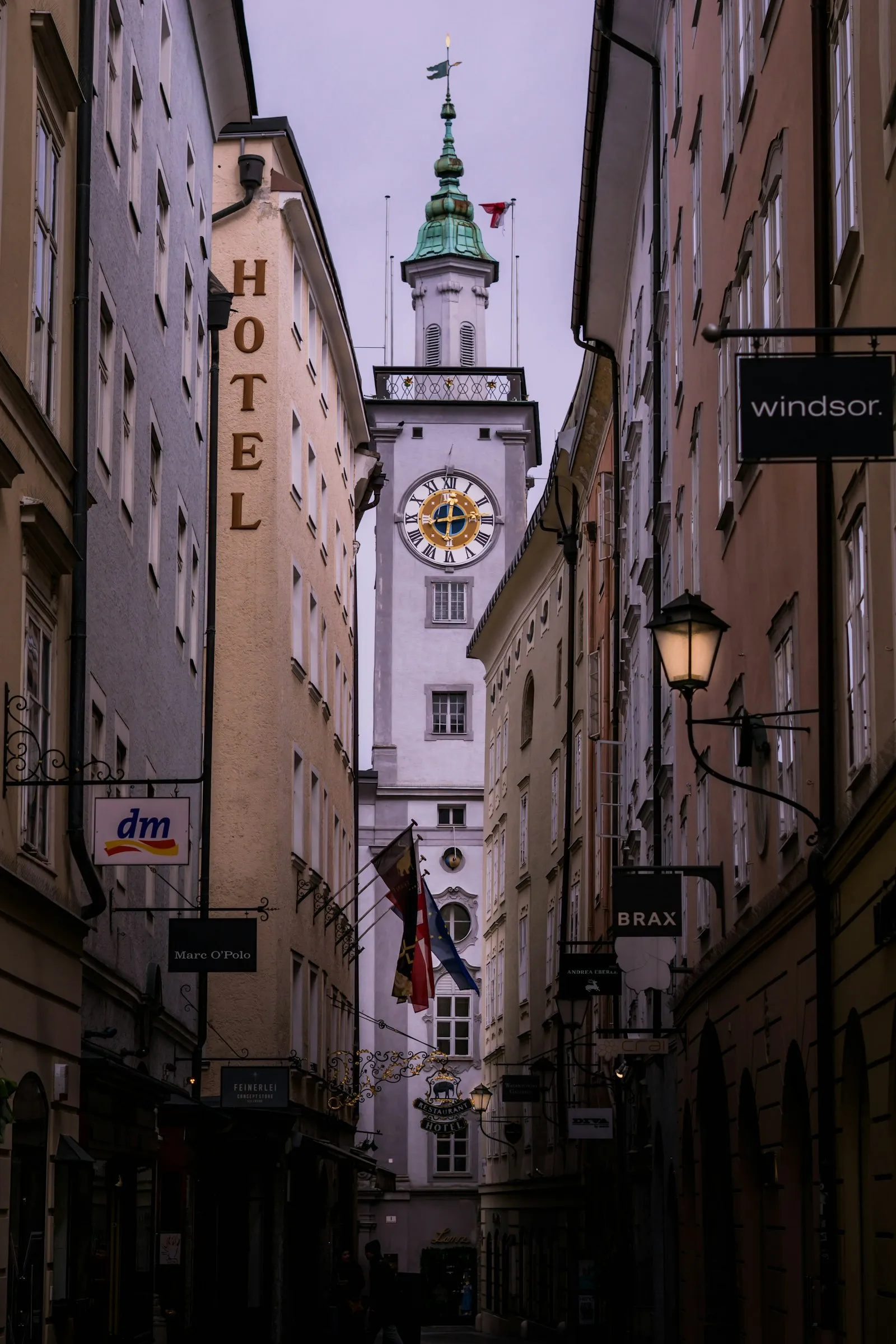
Best Student Cities in Austria 2026
Vienna, Graz, Salzburg, Innsbruck, Linz, Klagenfurt compared: rent, universities, student life, transport, and monthly costs.
Austria has six major university cities. Vienna is the largest, with 200,000+ students across 9 public universities. Graz follows as Austria's student capital by density — 60,000 students in a city of 290,000. Salzburg, Innsbruck, Linz, and Klagenfurt each offer distinct advantages. This guide compares all six on rent, student life, universities, transport, and monthly costs to help you choose the right city for 2026.
Quick City Comparison
| City | Students | Monthly Budget | WG Rent | Top University |
|---|---|---|---|---|
| Vienna | ~200,000 | €1,000–1,400 | €450–650 | Uni Wien, TU Wien, WU Wien |
| Graz | ~60,000 | €800–1,100 | €350–500 | Uni Graz, TU Graz |
| Salzburg | ~25,000 | €900–1,200 | €400–600 | Uni Salzburg, Mozarteum |
| Innsbruck | ~35,000 | €900–1,200 | €400–580 | Uni Innsbruck, MCI |
| Linz | ~25,000 | €800–1,100 | €350–480 | JKU Linz, Kunstuniversität |
| Klagenfurt | ~12,000 | €750–1,000 | €300–430 | Uni Klagenfurt |
Vienna (Wien)
Vienna is Austria's capital and by far its largest student city. Nine public universities, several Fachhochschulen, and private institutions serve over 200,000 students. The city ranks consistently among the top in global quality-of-life surveys.
Universities
The University of Vienna (Uni Wien) is Austria's oldest and largest university, founded in 1365. Over 90,000 students across 15 faculties. Strong in humanities, social sciences, law, and natural sciences. The TU Wien (Technical University) is Austria's leading engineering school with 28,000 students. WU Wien (Economics and Business) holds triple accreditation (AACSB, EQUIS, AMBA) — one of only ~100 business schools worldwide.
Other options: BOKU Wien (natural resources and life sciences), Vetmed Wien (veterinary medicine), Akademie der bildenden Künste (fine arts), and MDW (music and performing arts).
Cost of Living
Vienna is Austria's most expensive city. A WG room in the 10th district (Favoriten) costs €420–500. In the 7th district (Neubau), expect €550–700. Student dormitories from OeAD or STUWO run €300–450/month. The Semesterticket covers the entire Wiener Linien network (U-Bahn, tram, bus) for €75 per semester.
Monthly budget: €1,000–1,400. A student in a dormitory eating mostly at home can manage on €1,000. Living in a private flat and eating out regularly pushes it toward €1,400.
Student Life
Vienna offers unmatched cultural access. Student-priced concerts at the Musikverein start at €6. The Museumsquartier has free events. The Donaukanal bars and the area around the Naschmarkt are nightlife centers. Every district has its own character — from the hipster cafés of Neubau to the multicultural food scene in Ottakring.
The downside: Vienna can feel large and anonymous compared to smaller cities. Making friends takes more effort. International student groups and faculty events help. The ÖH runs regular welcome events and language tandems.
Graz
Graz is Austria's second-largest city (290,000 residents) and calls itself the Studentenstadt — student city. With 60,000 students, roughly one in five residents is a student. The city center is a UNESCO World Heritage Site.
Universities
The University of Graz (Uni Graz) has 30,000+ students and strong programs in natural sciences, law, and humanities. The TU Graz (Technical University) focuses on engineering, computer science, and architecture. The two universities cooperate through NAWI Graz (natural sciences) and BioTechMed Graz (biomedical engineering), allowing you to take courses at both. The FH Joanneum adds applied programs in journalism, health sciences, and IT.
Cost of Living
Graz is 20–30% cheaper than Vienna. A WG room in Jakomini or Geidorf costs €350–430. Student dorms run €250–370. A Kebab at a Jakomini stand costs €4.50. The Semesterticket covers all Holding Graz trams and buses for €60/semester.
Monthly budget: €800–1,100. Most students in Graz manage comfortably on €900.
Student Life
Graz punches above its weight in student culture. The Univiertel (university quarter) around Universitätsplatz is packed with bars and cafés. The annual Elevate Festival combines music, art, and political discourse. The Schlossberg hill in the city center offers free views and evening concerts in summer. Graz has a smaller-town feel with big-city amenities — you run into people you know regularly.
Cycling is the main student transport. The city is flat, compact, and well-connected by bike lanes. Most students skip public transport entirely.
Salzburg
Salzburg is smaller (155,000 residents) but culturally outsized. The city is Mozart's birthplace and home to the Salzburg Festival. About 25,000 students study here.
Universities
The Paris Lodron University of Salzburg (Uni Salzburg) is the main institution with 18,000 students. Strong faculties in law, Catholic theology, natural sciences, and cultural studies. The Mozarteum University is one of Europe's top music academies. The FH Salzburg in Puch/Urstein (20 minutes by S-Bahn) offers applied programs in IT, business, and health sciences.
Cost of Living
Salzburg sits between Vienna and Graz in cost. WG rooms in Nonntal (near the university) cost €400–520. Student dorms: €280–400. The city is walkable — many students live within 15 minutes of campus on foot. Salzburg's proximity to Germany means some students commute from Freilassing or Bad Reichenhall across the border, where rent is 20% cheaper.
Monthly budget: €900–1,200.
Student Life
Salzburg's compact old town feels like a stage set. The Salzach river divides the city into the Altstadt (old town) and the Neustadt. Student bars cluster around Rudolfskai and Anton-Neumayr-Platz. Skiing is 30 minutes away at Untersberg or Obertauern. The city's main drawback: it is small. After a few semesters, some students feel they have seen everything. Weekend trips to Munich (90 minutes by train) are popular.
Innsbruck
Innsbruck sits in the Alps at 574 meters elevation. The city of 130,000 hosts 35,000 students — making it Austria's most student-dense city relative to population.
Universities
The University of Innsbruck (Uni Innsbruck) is Austria's third-largest university with 28,000 students. Strong in natural sciences, medicine, law, and engineering. The Medical University of Innsbruck (MUI) is a separate institution for medicine and dentistry. The MCI (Management Center Innsbruck) offers applied business and engineering programs with strong industry ties.
Cost of Living
Innsbruck is comparable to Salzburg. WG rooms: €400–580. Dorms: €280–400. The city is compact enough to walk or cycle everywhere. The Semesterticket (€60) covers IVB buses and trams. Some students live in Hall in Tirol (10 minutes by train), where rent drops by €80–100/month.
Monthly budget: €900–1,200.
Student Life
Innsbruck is the city for outdoor enthusiasts. Ski lifts operate within the city limits (Nordkette). Mountain biking, hiking, and climbing are 15 minutes away. The student scene concentrates around Bogenmeile in the old town — a stretch of bars and restaurants under the Innbrücke arches. The drawback: Innsbruck is a valley city. Winter days are short, and the mountains block sunlight from November through February.
Linz
Linz is Austria's third-largest city (210,000 residents) and its industrial and tech center. About 25,000 students study here. The city has transformed from a steel town into a hub for digital arts and technology.
Universities
The Johannes Kepler University (JKU) is the main institution with 21,000 students. Strong in law, business, social sciences, engineering, and computer science. JKU has Austria's only dedicated AI and Data Science faculty. The Kunstuniversität Linz (University of Art and Design) specializes in industrial design, media, and fine arts. The FH Oberösterreich (Upper Austria UAS) has campuses in Linz and nearby cities.
Cost of Living
Linz matches Graz in affordability. WG rooms: €350–480. Dorms near JKU: €250–370. The JKU campus is on the Linz outskirts — dorms near campus are cheaper than city-center flats. The Semesterticket (€60) covers LINZ AG trams and buses.
Monthly budget: €800–1,100.
Student Life
Linz's student scene centers on the JKU campus and the Altstadt. The Ars Electronica Center (museum of the future) is a landmark. The Posthof hosts concerts and events. The Donaulände (Danube riverbank) is the summer gathering spot. Linz feels more industrial than Graz or Salzburg, but it is rapidly evolving. The Tabakfabrik (former tobacco factory) now houses startups, creative studios, and event spaces.
Klagenfurt
Klagenfurt is Austria's southernmost university city (100,000 residents, 12,000 students). Located on Wörthersee, one of Europe's warmest Alpine lakes. The most affordable option on this list.
Universities
The University of Klagenfurt (Uni Klagenfurt) is a smaller, focused institution. Strong departments in computer science, cultural studies, management, and education. The university runs Austria's only dedicated Lakeside Science & Technology Park directly on campus. The FH Kärnten adds applied programs in engineering, health, and management.
Cost of Living
Klagenfurt is Austria's cheapest university city. WG rooms: €300–430. Dorms: €230–350. A studio apartment costs €450–550. Food prices are comparable to Graz. The bus network covers the city, but most students cycle — the city is flat and compact.
Monthly budget: €750–1,000. This is the most budget-friendly option in Austria.
Student Life
Klagenfurt revolves around the lake. Swimming, beach volleyball, and paddleboarding at Wörthersee from May to September. The Uni campus sits just 2 km from the lake shore. Nightlife is limited compared to Vienna or Graz — but the relaxed atmosphere and outdoor lifestyle compensate. Klagenfurt's proximity to Italy (30 minutes to the border) and Slovenia (1 hour to Ljubljana) adds weekend trip options.
How to Choose Your City
| Priority | Best Choice |
|---|---|
| Lowest cost of living | Klagenfurt (€750–1,000/month) |
| Best career prospects | Vienna (largest job market) |
| Best student atmosphere | Graz (1 in 5 residents is a student) |
| Outdoor sports & nature | Innsbruck (Alps at your doorstep) |
| Music & performing arts | Salzburg (Mozarteum, Salzburg Festival) |
| Tech & innovation | Linz (JKU AI faculty, Ars Electronica) |
For more on Austrian university life, explore our Study in Austria country page, the living in Austria guide, or read about the full cost breakdown for 2026. You can also compare programs and universities across all Austrian institutions.
Frequently Asked Questions
Which Austrian city is cheapest for students?
Klagenfurt is the most affordable. Monthly budgets of €750–1,000 are realistic. WG rooms start at €300. Graz and Linz follow at €800–1,100. Vienna is the most expensive at €1,000–1,400.
Is Vienna worth the higher cost?
For career-focused students, yes. Vienna has Austria's largest job market, most internship opportunities, and strongest international connections. The universities are Austria's highest-ranked globally. If your budget allows €1,100+/month, Vienna offers unmatched cultural and professional access.
How many students live in Graz?
About 60,000 students live in a city of 290,000. That means roughly 20% of Graz's population is enrolled in higher education. This density creates a strong student community with affordable prices and a lively social scene.
Can I study in English in all Austrian cities?
English-taught programs exist in Vienna (broadest selection), Graz, Innsbruck, and Linz. Salzburg and Klagenfurt have fewer English options. Master programs are more likely to be offered in English than bachelor programs. Most daily life outside Vienna still requires basic German.
Is Innsbruck only for winter sports fans?
Skiing is a highlight, but Innsbruck offers strong academics, a tight-knit student community, and year-round outdoor activities (hiking, climbing, mountain biking in summer). The university is Austria's third-largest. The city suits anyone who values nature alongside their studies.
Which city has the best public transport for students?
Vienna has the most extensive network (U-Bahn, tram, bus) with the Semesterticket at €75/semester. All other cities offer Semestertickets at €60/semester. Graz, Innsbruck, and Klagenfurt are compact enough that cycling replaces public transport for most daily trips.
Can I commute between Austrian cities for classes?
Commuting works for nearby cities. Graz students sometimes live in Leibnitz (30 min by train). Salzburg students commute from Freilassing, Germany (10 min). Linz-to-Wels commuting is common (20 min). Vienna-to-other-city commuting is impractical due to distance. The Klimaticket (€821/year student rate) covers all public transport nationwide.
Which city is best for international students?
Vienna has the largest international student community and the most English-speaking infrastructure. Graz ranks second with strong international programs at TU Graz and Uni Graz. Smaller cities require more German in daily life but offer easier integration into local communities.
Related Articles
Best Student Cities in Australia 2026: Complete Guide
Comprehensive guide to the best student cities in Australia 2026: Sydney, Melbourne, Brisbane, Perth, Adelaide, Canberra, Gold Coast — rankings, costs, universities.
Student Life in Sydney vs Melbourne vs Brisbane: A Complete Comparison (2026)
Sydney vs Melbourne vs Brisbane for international students — rent, universities, nightlife, weather, transport, jobs, and graduate salaries compared for 2026.
10 Best Cities for International Students in Germany (2026)
Ranked guide to Germany's top 10 student cities with 2026 costs (€650-€1,400/month), universities, career prospects, and quality of life compared.