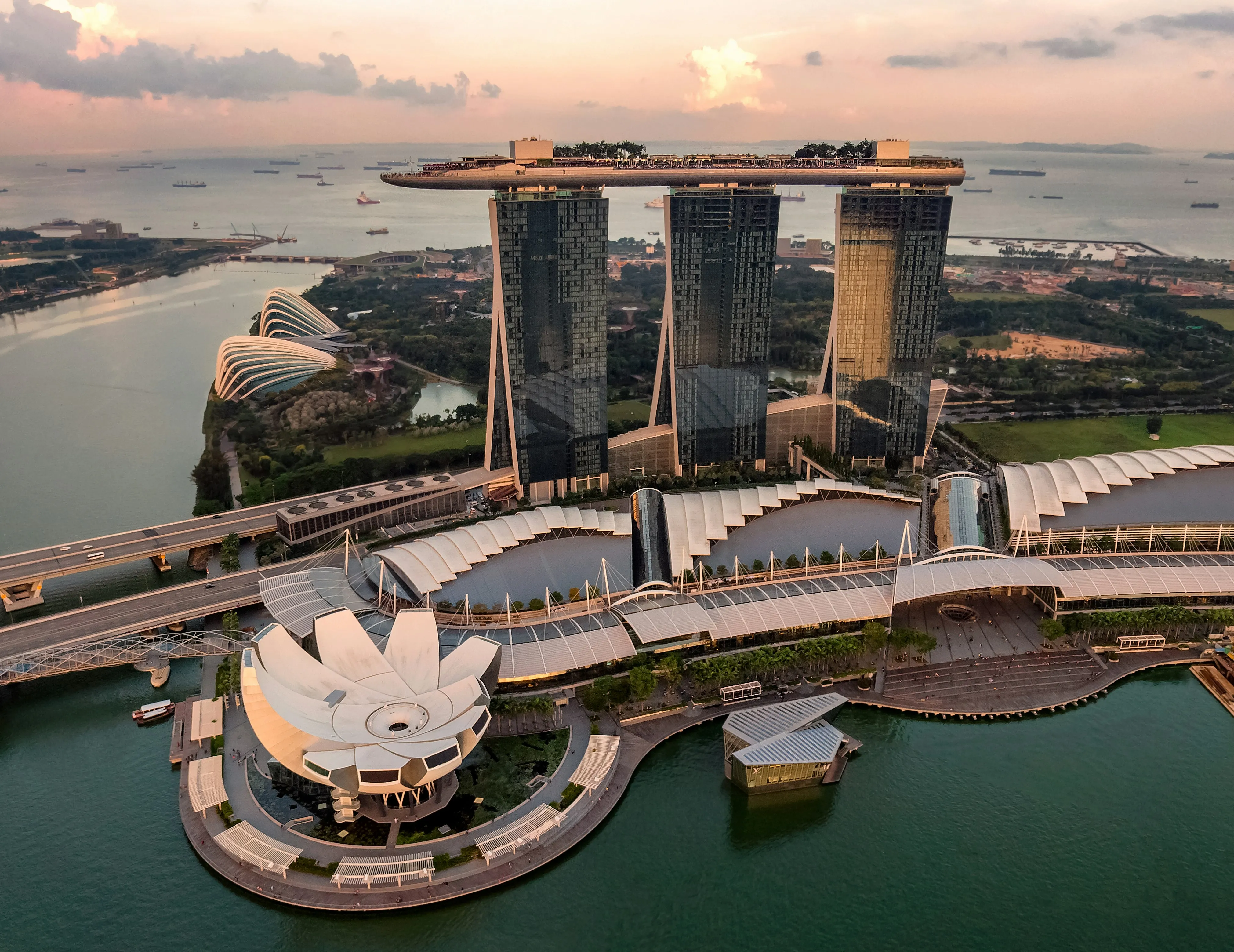
Living in Singapore as a Student - Study in Singapore
Housing options (halls, HDB, condos), food, transport (EZ-Link, MRT, buses), healthcare, daily life, safety, climate, and cultural tips for international students in Singapore.
Living in Singapore as a Student
Singapore is compact, efficient, and safe — living here is less about navigating chaos and more about making good daily choices. Here's the practical guide to student life, from housing to weather to Singlish.
Housing: On-Campus vs Off-Campus
On-Campus (Halls, Residential Colleges, Hostels)
Most international students live on-campus in their first year. Universities guarantee housing for year 1 and run a lottery or application process.
NUS options:
- Residential Colleges (RCs) — themed living-learning communities (Tembusu, Cinnamon, Ridge View, etc.) with built-in academic programs; SGD 650-900/month with dining plan
- Halls of Residence — traditional student halls (King Edward VII, Sheares, Raffles, Kent Ridge, etc.); SGD 400-700/month
- Prince George's Park Residences (PGP) — largest residence complex, self-cooked or dining plan; SGD 450-650/month
NTU options:
- 23 halls of residence — spread across the Jurong West campus; SGD 300-550/month
- Crescent and Pioneer Halls — newer halls with better facilities; SGD 450-650/month
SMU has limited on-campus housing — most SMU students live off-campus (Bugis, Little India, Chinatown).
SUTD halls in Changi: SGD 400-650/month.
Off-Campus (HDB and Condos)
From year 2 onwards, many students move off-campus.
| Housing type | Monthly rent (shared room) | Amenities |
|---|---|---|
| HDB flat (shared, fan only) | SGD 650-850 | Kitchen, common area |
| HDB flat (shared, aircon) | SGD 800-1,200 | Kitchen, common area, A/C in bedroom |
| HDB master bedroom (aircon, private bath) | SGD 1,000-1,500 | Kitchen, common area, private bath |
| Condo shared room | SGD 1,200-1,800 | Pool, gym, security, kitchen |
| Condo master bedroom | SGD 1,700-2,500 | Pool, gym, private bath |
| Entire HDB studio/1BR | SGD 1,800-2,800 | Full private unit |
Popular student neighbourhoods:
- Near NUS — Clementi, Kent Ridge, Dover, Buona Vista, Queenstown
- Near NTU — Jurong West, Boon Lay, Choa Chu Kang, Pioneer
- Near SMU / downtown — Bugis, Rochor, Chinatown, Outram, Little India
- Near SUTD — Tampines, Expo, Simei
How to find off-campus housing:
- PropertyGuru, 99.co, SRX — main rental portals
- Facebook groups — "Singapore Expat Housing", "NUS/NTU off-campus rent"
- University accommodation offices — partner lists and noticeboards
Rental rules:
- Most leases are 12-24 months
- Deposit: 1-2 months' rent
- You'll sign a Tenancy Agreement (stamped by IRAS, SGD 1-50 stamp duty)
- Landlords usually include basic utilities; aircon and internet sometimes extra
Public Transport: MRT, Buses, and Grab
Singapore's public transport is legendary. You can reach almost any point on the island in under 45 minutes.
- MRT (metro) — 200+ stations, trains every 2-5 minutes, operating 5:30am-midnight
- Buses — 300+ routes; slower than MRT but cover more neighbourhoods
- Grab/TADA/Gojek — ride-hailing apps; typical 10-20 minute journey SGD 10-18
- Taxis — metered, SGD 3.50 flagdown + SGD 0.70/km; surcharges at night
Student concession pass: SGD 52/month unlimited MRT and bus rides. Apply at any TransitLink office with passport, Student's Pass, and matriculation card.
Without the pass: Adult fares are SGD 0.99-2.50 per journey (MRT) and SGD 0.90-2.15 per journey (bus). Tap your EZ-Link card or contactless credit card at the gate.
Food: Hawker Centres, Food Courts, and Cafes
Singapore's food scene is one of the world's best — and student budgets fit beautifully.
| Setting | Typical meal cost (SGD) | What you get |
|---|---|---|
| Hawker centre | 4-6 | Local dishes: chicken rice, laksa, char kway teow, nasi lemak |
| University canteen | 3-5 | Basic rice/noodle sets, mixed rice |
| Food court (mall) | 5-8 | Same dishes as hawkers, aircon, mall setting |
| Casual restaurant | 15-30 | Western, Korean, Japanese, themed chains |
| Cafe | 10-18 | Coffee + light meal |
| Starbucks, bubble tea | 5-8 per drink | Yes, it adds up |
Must-try hawker dishes:
- Chicken rice (SGD 4-5) — Singapore's national dish
- Laksa (SGD 4-6) — spicy coconut noodle soup
- Char kway teow (SGD 4-6) — stir-fried flat noodles
- Nasi lemak (SGD 3.50-5) — coconut rice with chicken, egg, peanuts
- Satay (SGD 0.60-0.80 per stick) — grilled skewers with peanut sauce
- Roti prata (SGD 1-2 per piece) — flaky flatbread with curry
Supermarkets for groceries:
- FairPrice — mainstream, biggest chain
- Sheng Siong — cheaper, local favourite
- Giant — budget-friendly
- Cold Storage — pricier, more Western imports
- Redmart, Amazon Fresh — online delivery
Monthly food budget: SGD 300-500 if you eat mostly hawker + cook some. SGD 500-800 if you include cafes and occasional restaurants.
Healthcare
Singapore's healthcare is world-class. The system mixes public and private providers.
For students:
- University clinic — NUS and NTU have on-campus health centres with GPs, covered by student insurance
- Private GPs — SGD 40-80 per consultation, insurance usually covers
- Polyclinics — government-subsidised but not covered by most student insurance plans
- Hospitals — NUH, SGH, Mount Elizabeth, Raffles; insurance is essential here
Mental health:
- University counselling services (free for students)
- Samaritans of Singapore (SOS) — 24/7 hotline (1767)
- Mindline.sg — government-supported resource
- Private therapists: SGD 150-300 per session
Health insurance: NUS and NTU include a basic plan in the fee package (SGD 150-300/year) covering most GP and hospital costs. Check the coverage carefully — some plans require co-payment.
Climate and What to Pack
Singapore is 1° north of the equator — tropical and consistent.
| Month | Weather notes |
|---|---|
| January-February | Cooler (24-30°C), less rain, Chinese New Year celebrations |
| March-May | Hotter (27-33°C), pre-monsoon transition |
| June-September | Drier season, slightly less humid |
| October-November | Inter-monsoon, frequent thunderstorms |
| December | Northeast Monsoon peak, wettest month |
Pack for Singapore:
- Lightweight T-shirts, shorts, dresses (cotton, linen)
- One sweater or light jacket (for aggressive indoor AC)
- Comfortable walking sandals + one pair of closed shoes
- Umbrella (rain is frequent but short)
- UK-style 3-pin plug adapter (230V)
Do not bring heavy winter clothing — you'll never wear it.
Safety and Laws
Singapore is remarkably safe — but the laws are strict. Key things to know:
- Drugs: Possession, trafficking, or use of illegal drugs carries extremely severe penalties — including the death penalty for trafficking. Do not experiment with drugs in Singapore.
- Alcohol: Legal 18+, widely available. No drinking in public places between 10:30pm and 7am.
- Smoking: Banned in nearly all public spaces. Fines up to SGD 1,000. Vaping is illegal — don't bring e-cigarettes.
- Chewing gum: Import is restricted. Medical/dental gum is allowed. Spitting gum on the street is heavily fined.
- Jaywalking: SGD 50-500 fine if caught crossing outside a designated crossing within 50m of one.
- Littering: Fines SGD 300-2,000 for first offence; corrective work orders for repeat offences.
- Eating/drinking on MRT: SGD 500 fine.
For students who follow these basic rules, none of this matters in daily life. Just don't carry illegal drugs, don't vape, and cross at the crossing.
Culture, Language, and Social Life
Singapore is multi-ethnic — Chinese (~74%), Malay (~13%), Indian (~9%), and others. Four official languages: English, Mandarin, Malay, Tamil.
Singlish — Singapore's local English variant — mixes English with Malay, Mandarin, and Hokkien. You'll hear "lah", "leh", "lor", "can can", and "shiok" (meaning delicious/awesome). You don't need to learn it, but basic phrases help you connect socially.
Cultural calendar:
- Chinese New Year (January-February) — major public holiday, many shops close
- Hari Raya Puasa (end of Ramadan) — Malay-Muslim celebration
- Deepavali (October-November) — Indian festival of lights, Little India is lit up
- National Day (August 9) — fireworks and parade
- Mid-Autumn Festival — mooncakes everywhere
- Christmas — Orchard Road is decked out
Student social life:
- On-campus clubs — 100+ at NUS and NTU (sports, arts, cultural, academic)
- International student associations — by country/region
- Nightlife — Clarke Quay, Holland Village, Dempsey Hill, Haji Lane, Geylang
- Outdoors — Gardens by the Bay, East Coast Park, MacRitchie Reservoir, Pulau Ubin (for nature)
- Islands and beaches — Sentosa (touristy) or day trips to Tioman or Batam
Travel from Singapore
Singapore is a launchpad into Southeast Asia. Most students travel 3-5 times a year during semester breaks:
- Johor Bahru (Malaysia) — 30-min bus from Woodlands; cheap food, shopping
- Kuala Lumpur — 5-hour bus or 1-hour flight; SGD 60-120 return flights
- Bangkok, Bali, HCMC — 2-3 hour flights, SGD 100-250
- Tokyo, Seoul, Taipei — 5-7 hour flights, SGD 400-800
Next Steps
- Work and career — part-time work, internships, and EP after graduation
- Costs and funding — lock in your monthly budget
- The 10-step guide — full roadmap
Frequently Asked Questions
Where do international students live in Singapore?
How expensive is rent in Singapore?
Is it easy to use public transport in Singapore?
What's the food scene like for students?
Do I need health insurance in Singapore?
Is Singapore hot year-round?
How safe is Singapore for students?
How is the student social life in Singapore?
Latest Articles
How to Write a Statement of Purpose in 2026
A strong Statement of Purpose opens doors. Learn the exact paragraph structure, STEM and humanities examples, and the 5 rejection mistakes.
Studying Abroad with Your Family: Complete Guide 2026
Partner visa, family insurance, school enrollment, 3-bedroom rent — what families need for an international degree, with 2026 numbers.
Dating While Studying Abroad: 2026 Guide
Roughly 40% of international students form a romantic relationship within 12 months abroad. Apps, culture, visas, safety — the honest guide.