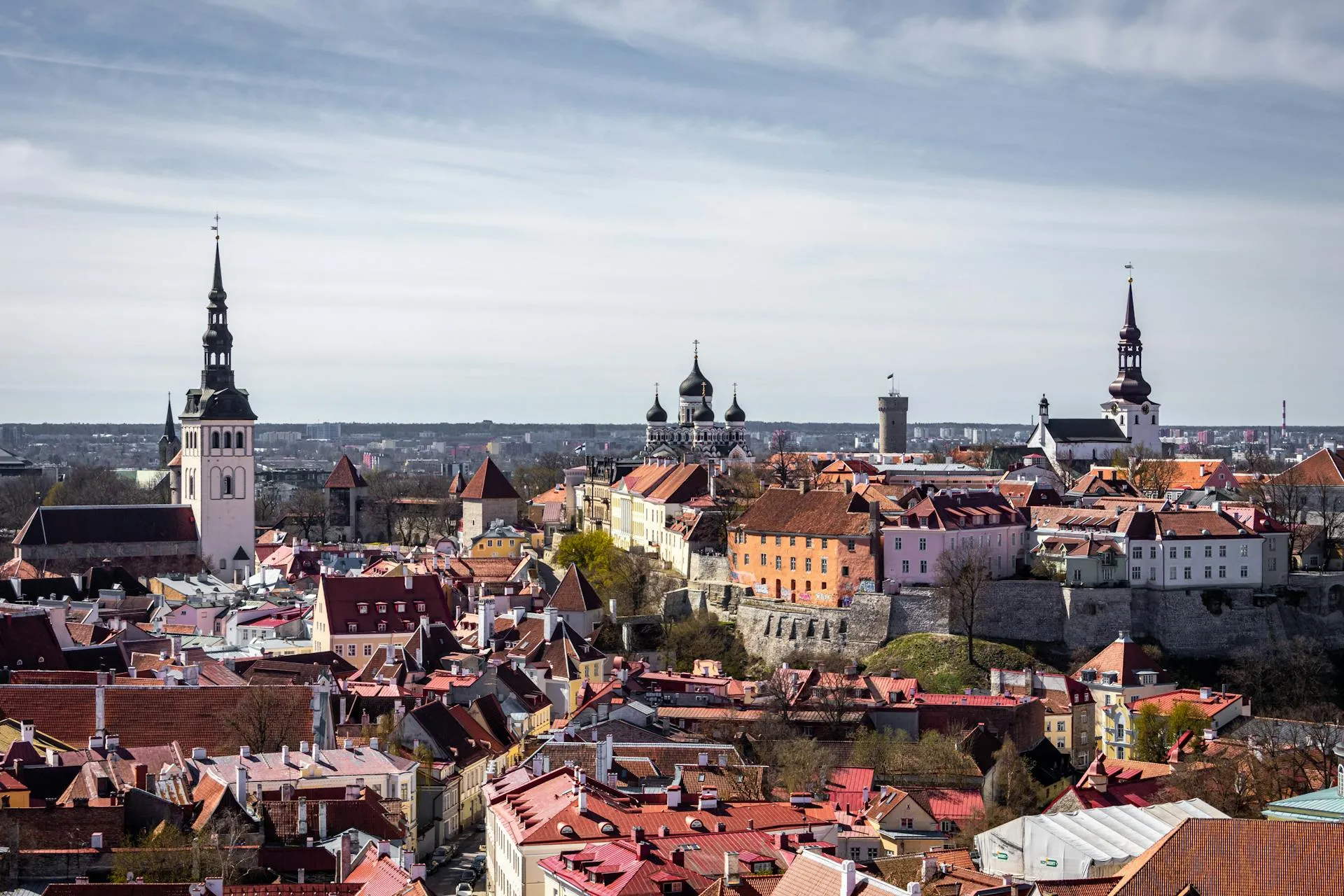
Why Study in Estonia
Estonia offers affordable English-taught degrees, a world-leading digital society, and direct access to Europe's startup ecosystem — here's why over 5,000 international students choose it.
Why Study in Estonia
Estonia is small — 1.3 million people — but it's one of Europe's most interesting places to study. Over 5,000 international students from more than 100 countries are already here. They come for the affordable tuition, the English-taught programs, and the chance to live inside a genuinely digital society. Here's the honest case for Estonia.
Affordable Tuition That Actually Stays Affordable
Cost is the first thing most international students check, and Estonia holds up well.
| Student type | Annual tuition |
|---|---|
| EU/EEA students (Estonian-taught) | EUR 0 (state-funded places) |
| EU/EEA students (English-taught) | EUR 1,500-7,500 |
| Non-EU students (Bachelor's, English) | EUR 1,500-5,500 |
| Non-EU students (Master's, English) | EUR 2,500-7,500 |
Specific examples:
- TalTech — International Business BA is around EUR 4,200/year; Cyber Security MSc around EUR 6,000/year
- University of Tartu — IT Systems Development MSc around EUR 5,500/year; Semiotics MSc around EUR 3,800/year
- Tallinn University — Human-Computer Interaction MSc around EUR 4,000/year
Compare that to the UK (GBP 20,000-40,000/year), Ireland (EUR 15,000-30,000), or the US (USD 30,000-70,000). Even Germany's private universities cost more.
Scholarships are available. The Estonian government funds Dora Plus grants for international students, covering tuition and living costs for Master's and PhD students. Most universities also offer their own merit-based tuition waivers of 20-100%.
Over 150 English-Taught Programs
Language barrier? Not really. Estonia's universities made a strategic push into English-taught programs over the past decade:
- Bachelor's — about 30 programs, heavy on IT, business, international relations, and law
- Master's — over 100 programs, including cyber security, software engineering, e-governance, data science, semiotics, educational technology, and international business
- PhD — most doctoral programs are conducted in English at the top universities
Popular English-taught Master's programs include:
- TalTech Cyber Security — one of Europe's top cyber security degrees, linked to the NATO CCDCOE in Tallinn
- University of Tartu Software Engineering — joint program with TalTech, strong industry partnerships
- University of Tartu Semiotics — globally respected, draws students from 50+ countries
- TalTech Design and Engineering — combines industrial design with practical engineering
- Tallinn University Human-Computer Interaction — research-focused, strong UX career outcomes
A Genuinely Digital Society
Estonia is not just "tech-friendly." It's the most digital state in Europe — possibly the world — and this shapes daily student life.
- Digital ID card — every resident gets a chip-enabled ID card that functions as physical ID, digital signature, travel document within the EU, and login for all government services
- 99% of public services online — register your address, check health records, vote, sign rental contracts, and file taxes from your laptop
- E-prescriptions — your doctor sends prescriptions directly to any pharmacy, no paper
- i-Voting — Estonians vote online in national elections, a world first
- X-Road — the backbone that securely connects public and private databases; you never fill out the same form twice
As a student, you'll get your ID card within weeks of arriving. From then on, registering with the university, signing rental contracts, opening a bank account, and enrolling in the national health system become genuinely simple — not the bureaucratic nightmare they are in Germany, France, or Italy.
Home to Europe's Densest Startup Scene
Estonia has more unicorns per capita than almost any country on earth:
- Skype — founded in 2003 in Tallinn, acquired by eBay and later Microsoft
- Wise (formerly TransferWise) — Nasdaq-listed fintech, valued at over USD 10 billion
- Bolt — ride-hailing and food delivery, operating in 45+ countries
- Pipedrive — sales CRM, acquired by Vista Equity for USD 1.5 billion
- Veriff — identity verification, major venture backing
For students, this means:
- Internship opportunities at unicorns and Series A/B startups
- Part-time developer work — even undergrad CS students can land EUR 1,500-2,500/month positions
- Hackathons and meetups — Garage48, Latitude59, and sTARTUp Day bring the ecosystem together
- Spin-off paths — Estonia's e-Residency makes it trivial to register your own company while studying
Central European Access via Schengen
Estonia is in the EU, the eurozone, and Schengen. Your student residence permit (non-EU students) or free movement rights (EU students) let you travel freely across 29 European countries without additional visas.
From Tallinn you can reach:
- Helsinki — 2 hours by ferry (EUR 20-40 return)
- Riga — 4 hours by bus (EUR 15-25)
- Stockholm — overnight ferry (EUR 50-100)
- Berlin — 2-hour flight (EUR 40-120 round trip with budget airlines)
- St. Petersburg — 7 hours by bus (when geopolitics allows — check current status)
Air Baltic, Ryanair, and Wizz Air connect Tallinn to most European capitals for EUR 30-80 round trip.
Affordable Student Life in Tallinn and Tartu
Living costs in Estonia are higher than Poland or Romania, but lower than Germany, Scandinavia, or the UK.
| Monthly expense | Tallinn | Tartu |
|---|---|---|
| Student dorm room | EUR 200-350 | EUR 150-280 |
| Shared apartment (room) | EUR 300-500 | EUR 200-400 |
| Groceries | EUR 200-300 | EUR 180-270 |
| Public transport | EUR 0 (free for residents in Tallinn) / EUR 25 in Tartu | — |
| Mobile + internet | EUR 15-25 | EUR 15-25 |
| Entertainment/social | EUR 100-200 | EUR 80-150 |
| Total | EUR 700-1,000 | EUR 550-850 |
Tallinn residents get free public transport — one of the city's most famous quirks. Register your address with the city, and buses, trams, and trolleys are free. This alone saves EUR 300+ per year.
Safe, Compact, Green
Estonia is small, and its student cities are smaller still:
- Tallinn — 460,000 people, medieval old town, modern tech district, 30 minutes end to end
- Tartu — 95,000 people, university city vibe, bohemian and intellectual
Both cities are walkable, bike-friendly in summer, and surrounded by forest. Over 50% of Estonia is forested — national parks like Lahemaa and Soomaa are an hour away. Winter is long and dark (December daylight is under 7 hours), but summer compensates with 18+ hours of daylight and white nights in June.
Is Estonia Right for You?
Estonia is an excellent choice if:
- You want an affordable English-taught degree — tuition from EUR 1,500/year with full living costs under EUR 12,000/year
- You're interested in IT, cyber security, or startups — TalTech and University of Tartu are serious players, and Tallinn's ecosystem is ready to hire you
- You value efficient bureaucracy — no paper forms, no waiting in offices, no fax machines
- You want a gateway to the EU and Schengen — weekend trips to Helsinki, Stockholm, Berlin, or Riga are easy and cheap
- You like small, safe, walkable cities — Tallinn and Tartu are manageable and friendly
Estonia might not be the best fit if:
- You want large-campus US-style university life with fraternities, massive stadiums, or 30,000-student cohorts
- You can't handle long, dark winters — December-February is brutal if you're unprepared
- You need a very wide range of humanities programs — the catalogue is narrower than Germany, France, or the UK
- You're set on a specific language environment — Estonian takes time, and while English works, it's not the national language
Next Steps
Ready to dig deeper?
- Admissions and application — deadlines, documents, and application portals
- Programs and universities — detailed guide to the University of Tartu, TalTech, and Tallinn University
- Costs and funding — tuition, living expenses, and scholarships
- Visa and arrival — residence permits, registration, and your first weeks in Estonia
- Living in Estonia — housing, healthcare, transport, and culture
- Work and career — part-time jobs, internships, and post-study employment
- The 10-step guide — your full roadmap from decision to enrolment
Frequently Asked Questions
Is studying in Estonia cheap?
Can I study in Estonia in English?
Is Estonia a good choice for IT and tech students?
Do I need to speak Estonian to live there?
What is e-Residency, and do students get it?
Is Estonia safe for international students?
How cold is Estonia in winter?
Can I stay in Estonia after graduation?
Latest Articles
How to Write a Statement of Purpose in 2026
A strong Statement of Purpose opens doors. Learn the exact paragraph structure, STEM and humanities examples, and the 5 rejection mistakes.
Studying Abroad with Your Family: Complete Guide 2026
Partner visa, family insurance, school enrollment, 3-bedroom rent — what families need for an international degree, with 2026 numbers.
Dating While Studying Abroad: 2026 Guide
Roughly 40% of international students form a romantic relationship within 12 months abroad. Apps, culture, visas, safety — the honest guide.