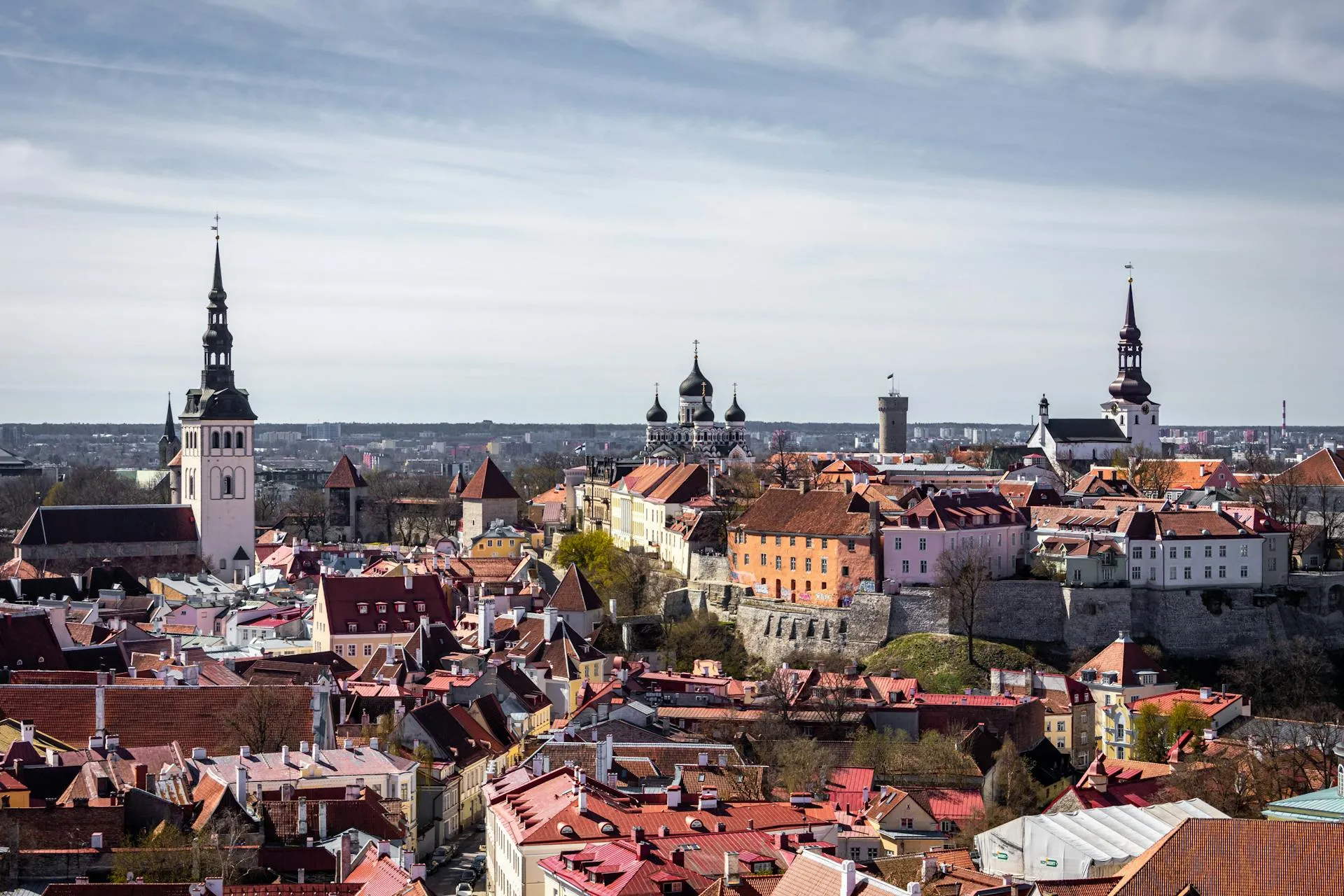
Living in Estonia as a Student - Study in Estonia
How to find housing, set up healthcare, get around Tallinn and Tartu, and navigate Estonian culture — practical student life in Europe's most digital country.
Living in Estonia as a Student
Estonia is compact, digital, and surprisingly affordable. This guide covers the practical side of student life — housing, healthcare, transport, food, and culture. By the end, you'll know what to expect from your first year on the ground.
Finding Housing
Option 1 — University dorms (cheapest)
Student dorms are the most affordable option. Cost, location, and quality vary:
| University | Dorm cost | Notes |
|---|---|---|
| University of Tartu | EUR 150-280/month | Most dorms within walking distance of campus |
| TalTech | EUR 200-350/month | Mustamäe campus dorms; 15 min by tram to centre |
| Tallinn University | EUR 250-350/month | Centrally located |
Dorm rooms are typically:
- Shared rooms — cheapest, EUR 150-220/month
- Single rooms with shared bathroom/kitchen — mid-range, EUR 220-300/month
- Single rooms with private bathroom — most expensive, EUR 300-400/month
Apply as early as possible — dorms fill up by June for a September start. Dorm applications are usually opened through DreamApply or a separate university housing portal.
Option 2 — Shared apartments
Shared flats (korteriühistu) are popular among international students who prefer more independence:
- Where to search: kv.ee and city24.ee (the two main Estonian rental sites)
- Typical cost: EUR 200-500/month for a room in a 2-3 bedroom flat
- Contract: Minimum 6-12 months usual
- Deposit: Usually one month's rent plus the first month paid upfront
Join university Facebook groups and student Telegram channels — many rooms are rented through word of mouth.
Option 3 — Private studio or one-bedroom
For more privacy, expect:
- Tallinn studio: EUR 500-800/month (older areas like Lasnamäe cheaper; Kadriorg and Old Town pricier)
- Tartu studio: EUR 350-550/month
- Utilities: EUR 80-150/month on top of rent (higher in winter due to heating)
Heating is expensive in winter. Some flats have communal heating (cheaper); others use electric or gas. Always ask about heating costs before signing.
Public Transport
Tallinn
Free for registered residents. This is one of Tallinn's signature policies. Register your address at the population registry (rahvastikuregister) and you get:
- Free buses, trams, and trolleybuses within Tallinn
- Access via green card (contactless) — tap on and off
- Fine for not registering: full fare (EUR 2/ride or EUR 23/month)
Tallinn is compact — most of the city is reachable within 30 minutes by public transport or 45 minutes by bike.
Tartu
Less generous but cheap:
- Student monthly pass: EUR 25
- Single ride: EUR 1.50 (via app) or EUR 2 (driver)
- Bus-only — no trams in Tartu
Tartu is small enough to walk or cycle most places.
Between cities
- Elron trains (elron.ee) — Tallinn to Tartu in 2 hours, EUR 10-16 one way
- Buses (bussireisid.ee) — similar time, EUR 8-15 one way; operators include Lux Express, Sebe, and Taisto
- Car sharing — Bolt Drive in Tallinn and Tartu (register with your driver's licence and app)
Healthcare
Who's covered automatically
Full-time international students in state-funded programs get automatic Estonian Health Insurance Fund coverage — free. This includes GP visits, specialist care, hospital care, and emergencies.
Who needs their own coverage
- Tuition-paying full-time students — either buy private insurance (EUR 200-400/year) or voluntarily join the state fund for EUR 16/month
- Part-time students — private insurance required
- EU/EEA students — use EHIC for basic care; consider supplemental insurance
How the system works
- Register a family doctor (perearst) — your main point of contact for non-emergency healthcare. Free to switch if you're unhappy
- For specialists — you usually need a referral from your family doctor
- For emergencies — go directly to an EMO (emergency department) or call 112
- E-prescriptions — your doctor sends prescriptions digitally; pick them up at any pharmacy with your ID card
- Dental care — not fully covered by state insurance; basic preventive care is subsidized but fillings and complex work are out-of-pocket (EUR 40-80 per filling)
Food and Groceries
Supermarkets
The main chains:
- Maxima — budget, widest coverage
- Rimi — mid-range, better quality produce
- Prisma — Finnish chain, good bulk shopping
- Selver — Estonian, often with strong bakery and meat sections
- Coop Konsum — smaller, neighbourhood stores
Typical monthly groceries: EUR 200-300 for home-cooked meals.
Student cafeterias
University ülikooli sööklad serve cheap, solid meals:
- Meal price: EUR 3-5 for a full lunch (soup, main, drink)
- Opening hours: Usually 11:30-14:30, Monday-Friday
- Quality: Surprisingly good — home-style Estonian, vegetarian options, rotating menus
Eating out
- Student-friendly lunch — EUR 8-12 at casual cafés
- Mid-range dinner — EUR 15-25 per person
- Fine dining — EUR 40-80 per person
- Coffee — EUR 2-4 at independent cafés
Popular Tallinn student hangouts: Telliskivi Creative City (for cafes and food trucks), Balti Jaama Turg (food hall), and the cafés around Old Town.
Estonian Culture (and How to Fit In)
Communication style
Estonians are reserved by default but warm once you know them. Key cultural notes:
- Small talk is minimal — don't expect chatty cashiers or elevator conversations
- Silence is okay — not every pause needs to be filled
- Direct but polite — Estonians say what they mean without excessive softening
- Punctuality matters — being 5 minutes late is noticed; 15 minutes late is rude
- Personal space is respected — physical contact with strangers is limited
This isn't coldness — it's a cultural baseline. Once you've had one sauna with an Estonian friend, you're in.
Sauna culture
Estonia has over 2,000 public and private saunas for a population of 1.3 million. Sauna is social, relaxing, and a regular part of student life:
- Public saunas — most neighbourhoods have one; entry EUR 5-10
- Smoke saunas (suitsusaun) — traditional, UNESCO-listed heritage in South Estonia
- University dorm saunas — most dorms include a bookable sauna
- Etiquette: Go nude (single-gender saunas) or wear swimwear (mixed). Shower before entering. Sauna cycles are 10-15 min inside, cold shower, repeat 2-3 times
Winter survival
November-March is genuinely tough if you're from a warmer climate:
- Invest in winter gear — a proper coat (-20°C rated), waterproof boots, wool socks, hat, gloves. Budget EUR 200-400 for the full kit
- Vitamin D supplements — most Estonians take them in winter
- Embrace saunas, candles, and hygge — the indoor social season is vibrant
- Daylight lamps — therapeutic light lamps are widely available at Apotheka pharmacies
Summer compensates
June through August are magnificent:
- 18-20 hours of daylight in June (white nights)
- 20-25°C typical daytime temperatures
- Midsummer (Jaanipäev) on June 23-24 — Estonia's biggest holiday; students head to the countryside for bonfires
- Islands and nature — Saaremaa, Hiiumaa, Lahemaa National Park, Soomaa, coastal beaches
Safety
Estonia is one of Europe's safest countries for students:
- Low violent crime — Tallinn and Tartu have low crime rates by European standards
- Petty theft — watch for pickpockets in Old Town Tallinn and on crowded transport
- Winter safety — icy sidewalks in winter are the biggest everyday hazard; wear proper boots
- Emergency number: 112 (police, ambulance, fire)
Social Life and Integration
- ESN (Erasmus Student Network) — active chapters in Tallinn and Tartu; weekly events, city tours, weekend trips
- University student unions — sports clubs, music groups, volunteer activities
- Language exchanges — Tandem partnerships for Estonian-English swaps are common
- International student buddy programs — most universities pair incoming students with local mentors
Estonians are reserved but sincere. Making close local friends takes patience, but the friendships last.
Next Steps
- Visa and arrival — pre-arrival and first-week essentials
- Costs and funding — detailed budget planning
- Work and career — part-time jobs and internships
- Programs and universities — still choosing your university?
Frequently Asked Questions
How do I find student housing in Estonia?
Is Tallinn expensive for students?
How does healthcare work for international students?
What's the food scene like in Estonia?
Do I need to speak Estonian to live there?
How cold is winter, and is it bearable?
What do Estonians do for fun?
Is Estonia LGBTQ+-friendly?
Latest Articles
How to Write a Statement of Purpose in 2026
A strong Statement of Purpose opens doors. Learn the exact paragraph structure, STEM and humanities examples, and the 5 rejection mistakes.
Studying Abroad with Your Family: Complete Guide 2026
Partner visa, family insurance, school enrollment, 3-bedroom rent — what families need for an international degree, with 2026 numbers.
Dating While Studying Abroad: 2026 Guide
Roughly 40% of international students form a romantic relationship within 12 months abroad. Apps, culture, visas, safety — the honest guide.