
Learning German: 10 Proven Tips for Students in 2026
Learn German effectively: reach B1 in 6-12 months with proven strategies. Apps (Duolingo, Anki), courses (VHS €200-400), tandem partners and immersion.
Learning German is the single most impactful investment you can make before and during your studies in Germany. Even if your degree program is taught entirely in English, you will need German to sign a rental contract, open a bank account, navigate the Ausländerbehörde (immigration office), decode supermarket labels, and — most importantly — build genuine friendships with locals. With consistent daily practice and the right strategy, most students reach B1 level in 6 to 12 months, enough for comfortable everyday conversations, basic workplace communication, and the cultural confidence that transforms a foreign stay into a true home. This guide presents 10 proven strategies, realistic timelines, the best free and paid resources, and a clear roadmap from your first "Hallo" to a confident "Ich komme gut zurecht." Whether you are still in your home country or already settling into your WG in Berlin, Munich, or a smaller university town, these tips will help you learn German faster, retain more, and actually enjoy the process.
Why You Need German — Even in English-Taught Programs
Germany hosts more than 400,000 international students, and the number of fully English-taught master's programs has surpassed 2,000. It is tempting to believe you can get by without German. In practice, however, the language gap catches students off guard in three critical areas: daily life, career prospects, and social integration.
Daily Life
German bureaucracy — from Anmeldung (city registration) to Rundfunkbeitrag (broadcasting fee) — runs almost exclusively in German. Official letters arrive in German, landlords communicate in German, and the person at the pharmacy counter may not speak English. Without at least A2-level German, simple tasks like calling your internet provider, reading a doctor's referral, or understanding a train delay announcement become stressful hurdles. Students who speak basic German report significantly lower stress and higher life satisfaction in surveys conducted by the DAAD and Studierendenwerk.
Career Prospects
Germany's job market rewards German proficiency, even in international companies. A 2025 Stepstone survey found that 78 percent of job postings in Germany require at least B2 German — including many positions in engineering and IT. If you plan to stay after graduation using the 18-month post-study work visa, employers will expect you to communicate with German-speaking colleagues, clients, and regulators. Starting your language journey now gives you a decisive advantage during Werkstudent applications and graduate job interviews.
Social Integration
The difference between being a tourist and actually belonging in a community comes down to language. Germans are famously reserved at first, but once you speak their language — even imperfectly — doors open remarkably fast. Joining a Sportverein (sports club), chatting with your neighbor in the hallway, or simply ordering a Brötchen at the bakery in German signals respect and effort. Many international students report that their social life improved dramatically once they reached B1 level. Language is the bridge between cultural adjustment and genuine belonging.
CEFR Levels Explained — From A1 to C2
The Common European Framework of Reference for Languages (CEFR) is the standard used across Germany for university admissions, visa requirements, and job postings. Understanding the levels helps you set realistic targets and communicate your ability to employers and institutions. Here is a practical overview:
| Level | Description | What You Can Do | Approx. Hours to Reach | Typical Use Case |
|---|---|---|---|---|
| A1 | Beginner | Greetings, basic questions, simple forms | 80–120 h | Spouse visa requirement |
| A2 | Elementary | Shopping, directions, short conversations | 200–250 h | Daily survival in Germany |
| B1 | Intermediate | Opinions, travel plans, workplace basics | 350–450 h | Studienkolleg, many Werkstudent jobs |
| B2 | Upper intermediate | Complex discussions, professional emails, lectures | 500–650 h | German-taught university programs, most jobs |
| C1 | Advanced | Academic writing, nuanced arguments, humor | 700–900 h | DSH/TestDaF requirement for many programs |
| C2 | Mastery | Near-native fluency, literary texts, professional translation | 1,000–1,200 h | Academic careers, interpreting, law |
For most international students, B1 is the practical minimum for a comfortable life in Germany, and B2 is the sweet spot for career opportunities after graduation. If your degree program requires DSH or TestDaF, you are typically aiming at C1. The 10 strategies below are designed to get you from zero to B1 as efficiently as possible — and to give you a strong foundation for continuing toward B2 and beyond.
10 Proven Strategies to Learn German Fast
1. Take an Intensive Language Course
Nothing accelerates your progress like a structured, in-person intensive course. Germany offers several excellent options at every price point. Volkshochschulen (VHS) — community colleges found in every city — charge between €200 and €400 per semester for multi-week courses, making them the most affordable option. The Goethe-Institut is the gold standard internationally, with courses ranging from €800 to €1,200 for an 8-week intensive program; the certificates are recognized everywhere. Most universities also run a Sprachzentrum (language center) that offers free or heavily subsidized German courses exclusively for enrolled students — check your university's website immediately after enrollment.
An intensive course typically meets four to five days per week for three to four hours, exposing you to 15–20 contact hours weekly. At that pace, you can move from A1 to A2 in as little as six to eight weeks. The classroom setting also forces you to speak, listen, and respond in real time — skills that self-study alone cannot fully develop. If you are still in your home country, consider an online intensive course from the Goethe-Institut or DeutschAkademie to arrive in Germany already at A1 level.
2. Find a Language Tandem Partner
A Tandem is a language exchange where you spend half the time speaking German and the other half speaking your native language with a German partner. It is free, social, and incredibly effective for building conversational fluency. Most German universities have an official tandem program through their international office or Sprachzentrum — sign up during orientation week. Apps like Tandem and HelloTalk connect you with partners digitally if you prefer flexibility.
The key to a successful tandem is structure: set a regular weekly meeting (coffee shops work well), agree on topics in advance, and correct each other gently but consistently. Many long-lasting friendships and even professional networks emerge from tandem partnerships. Your partner benefits equally — they practice your language while you practice German — which keeps the dynamic balanced and sustainable. Aim for at least one tandem session per week, ideally two, each lasting 60 to 90 minutes.
3. Use Language Apps Strategically
Language apps are perfect for daily habit-building and vocabulary reinforcement, but they should supplement — not replace — real interaction. Duolingo gamifies basic vocabulary and grammar and is ideal for absolute beginners (free, with an optional premium tier). Anki, a spaced-repetition flashcard app, is the most powerful tool for long-term vocabulary retention; download community-shared German decks or create your own cards from words you encounter daily. Babbel focuses on practical conversation skills with speech recognition and costs roughly €7 per month on an annual plan.
The most effective approach is to combine apps: use Duolingo or Babbel for 15 minutes in the morning to introduce new material, then review with Anki for 10 minutes in the evening. This dual exposure — learning plus spaced review — dramatically improves retention compared to using a single app alone. Track your streaks to build consistency, but do not confuse app time with actual speaking practice. Apps build the foundation; real conversations build fluency.
4. Immerse Yourself in German Media
Surround your ears and eyes with German as much as possible. Podcasts are especially effective because you can listen during commutes, workouts, or cooking. Start with Easy German (clear, slow speech with transcripts), then graduate to Slow German mit Annik Rubens and eventually native-speed podcasts like Lage der Nation (politics) or Fest & Flauschig (pop culture). Deutsche Welle offers free learning-oriented podcasts at every CEFR level, complete with exercises and vocabulary lists.
On Netflix, switch the audio language to German on shows you already know (familiar plots reduce cognitive load) and use German subtitles — not English ones. Excellent German-language series include Dark, How to Sell Drugs Online (Fast), Barbaren, and Kleo. YouTube channels like Easy German (street interviews), MrWissen2go (current events), and Dinge Erklärt – Kurzgesagt (science) provide entertaining content at intermediate levels. The goal is passive exposure — even background German trains your brain to recognize patterns, intonation, and common phrases over time.
5. Build Daily Immersion Habits
Immersion does not require moving to Germany — you can create a German-language environment anywhere. Change your phone, laptop, and social media accounts to German. Write your grocery list in German. Label objects in your room with sticky notes: der Spiegel (mirror), die Lampe (lamp), das Kissen (pillow) — including the article, which trains grammatical gender automatically. Set a "German hour" each evening where you read, watch, or listen to something in German.
Once you are in Germany, immersion becomes natural — but only if you actively resist the English bubble. Order in German at restaurants, even if the server switches to English. Read the free 20 Minuten newspaper on the U-Bahn. Shop at local markets where small talk happens. These micro-interactions accumulate: 10 short German exchanges per day add up to 70 per week, which builds comfort and automaticity faster than any textbook. Living in Germany is the ultimate immersion environment — use it deliberately.
6. Tackle Grammar Early and Systematically
German grammar has a reputation for being difficult, and the cases (Nominativ, Akkusativ, Dativ, Genitiv), gendered nouns, and separable verbs can feel overwhelming at first. The secret is to front-load grammar study rather than avoid it. Spending two to three weeks early on mastering the case system, verb conjugation patterns, and basic sentence structure pays enormous dividends because every sentence you encounter afterward becomes easier to parse.
Use a systematic textbook like Menschen (Hueber Verlag) or Netzwerk Neu (Klett) alongside a dedicated grammar reference like Hammer's German Grammar and Usage. Practice grammar through exercises on Deutsche Welle and Schubert Verlag (free online). The most important early concepts to nail are: present tense conjugation, accusative and dative cases, word order (verb-second rule and subordinate clauses), and the most common prepositions with their required cases. Once these click, you have the scaffolding to express nearly any basic idea.
7. Speak From Day One
Many language learners fall into the trap of endless preparation: "I'll start speaking once I reach A2." This approach backfires because speaking is a separate skill from reading or listening — it requires activating vocabulary under time pressure, and the only way to develop it is through practice. Speak German from your very first lesson, even if it is just "Hallo, ich heiße…" and "Ich möchte einen Kaffee, bitte."
If you are not yet in Germany, book affordable one-on-one sessions with native speakers on iTalki (community tutors from €8–15 per hour) or Preply. In Germany, every interaction is a speaking opportunity — the bakery, the Mensa (university cafeteria), the Bürgerbüro (citizen's office). Expect mistakes. Germans are generally patient and appreciative when foreigners try. The embarrassment of a wrong article fades quickly; the confidence built from real conversations lasts. Aim for at least 15 minutes of active speaking practice every single day.
8. Use a Flashcard System with Spaced Repetition
Vocabulary is the fuel that powers all other language skills. Without enough words, you cannot understand what you hear, read what you see, or say what you think. Spaced repetition systems (SRS) are scientifically proven to be the most efficient method for moving vocabulary into long-term memory. Anki is the gold standard: it is free on desktop and Android (paid on iOS), fully customizable, and supported by a massive community of shared decks.
Create your own cards from words you encounter in class, media, or daily life — personal context makes recall stronger. Always include the article with nouns (der Tisch, not just Tisch), an example sentence, and ideally an image. Review your Anki deck every morning — the algorithm shows you cards just before you would forget them, maximizing retention per minute spent. Start with 10 new cards per day and increase gradually. Within six months, you will have internalized 1,500–2,000 words, which covers roughly 85 percent of everyday German conversation.
9. Join German-Speaking Groups and Activities
Classroom German and real-world German are different creatures. Joining activities where German is the natural language of communication — not the subject being studied — exposes you to colloquial speech, humor, regional dialects, and the kind of spontaneous interaction that textbooks cannot replicate. Germany's Verein (club) culture is the perfect entry point: there are registered clubs for hiking, chess, photography, cooking, choir, football, and virtually every hobby imaginable.
University Hochschulsport (campus sports) programs offer another low-barrier option. Sign up for a team sport where communication happens naturally during play. Volunteering (Ehrenamt) is also excellent — food banks, refugee support organizations, and environmental groups always need help and operate in German. Even joining a regular Stammtisch (informal pub gathering) organized by your department or student association gives you recurring, low-pressure speaking practice in a social setting. The friendships you build in these contexts tend to be deeper than those formed in English-only international circles.
10. Set Specific Milestones and Track Progress
Vague goals like "get better at German" lead to vague results. Instead, set concrete milestones tied to the CEFR framework: "Reach A2 by March," "Pass the B1 Goethe-Zertifikat by September," "Give my first presentation in German by December." Write these goals down, break them into weekly targets (for example, learn 70 new words per week, complete two textbook chapters, have three tandem sessions), and review your progress every Sunday evening.
Taking a formal exam — even if it is not required — provides powerful motivation and an objective benchmark. The Goethe-Zertifikat exams (A1 through C2) cost between €100 and €300 depending on the level and location. telc exams are a widely accepted and often slightly cheaper alternative. Many VHS and Goethe-Institut courses include exam preparation. The preparation process itself (practicing all four skills: reading, writing, listening, speaking) ensures balanced development. Celebrate each milestone — reaching a new CEFR level is a genuine achievement that opens doors in both your personal and professional life.
Best Resources for Learning German
The table below compiles the most effective resources for international students, organized by type. All prices reflect 2026 figures and may vary by location.
| Resource | Type | Cost | Best For |
|---|---|---|---|
| Volkshochschule (VHS) | In-person course | €200–400/semester | A1–B2, affordable structured learning |
| Goethe-Institut | In-person / online course | €800–1,200/course | All levels, internationally recognized certificates |
| University Sprachzentrum | In-person course | Free or included in semester fees | Enrolled students, A1–C1 |
| Deutsche Welle (DW) | Online course / media | Free | A1–C1, self-paced with exercises |
| Duolingo | App | Free (Premium ~€7/mo) | A1–A2, habit building, gamified learning |
| Babbel | App | ~€7/month (annual plan) | A1–B1, practical conversation focus |
| Anki | Flashcard app (SRS) | Free (desktop/Android), ~€25 (iOS) | All levels, long-term vocabulary retention |
| iTalki | Online tutoring | €8–30/hour | All levels, 1-on-1 speaking practice |
| Easy German (YouTube/Podcast) | Media | Free | A2–B2, authentic street interviews |
| Menschen (Hueber Verlag) | Textbook series | €15–20/book | A1–B1, structured classroom or self-study |
| Tandem / HelloTalk | Language exchange app | Free | All levels, finding conversation partners |
| Schubert Verlag (online exercises) | Grammar exercises | Free | A1–C1, systematic grammar practice |
Realistic Timeline — From Zero to B1
Reaching B1 from absolute zero requires approximately 350 to 450 hours of focused study and practice, according to the Goethe-Institut and CEFR guidelines. How quickly you accumulate those hours depends on your daily commitment, native language (speakers of English, Dutch, or Scandinavian languages tend to progress faster), and access to immersion. Below is a realistic timeline for a motivated student investing one to two hours per day:
| Phase | Timeframe | Target Level | Key Activities |
|---|---|---|---|
| Foundation | Months 1–2 | A1 | Intensive course or app-based learning, basic grammar, 500 core words, Anki daily, phone in German |
| Building blocks | Months 3–4 | A2 | Continue course, start tandem partner, Easy German podcast, German Netflix with subtitles, 1,000 words |
| Breakthrough | Months 5–8 | B1 | VHS or Goethe course, daily speaking practice, German media without subtitles, join a Verein, 2,000+ words |
| Consolidation | Months 9–12 | Solid B1 | Exam preparation (Goethe-Zertifikat B1 or telc B1), read German news, write short texts, presentations in German |
Several factors can accelerate this timeline. If you take a full-time intensive course (20+ hours per week), you can reach B1 in as little as four to five months. Living in Germany and actively avoiding English outside of class shaves weeks off each phase. Having a romance language, English, or another Germanic language as your native tongue also helps, because cognates and similar grammar structures reduce learning time for vocabulary and sentence construction.
Conversely, progress slows if you rely solely on apps without real interaction, skip daily practice, or spend most of your social time in English-speaking groups. Consistency matters more than intensity: 45 minutes every day beats three hours on Saturday and nothing else. The students who reach B1 fastest are those who make German an integral part of their daily routine — not a separate "study session" they have to motivate themselves for.
Frequently Asked Questions
Is German really necessary if my program is 100% in English?
For academics, no. For everything else — housing, bureaucracy, social life, part-time jobs, and post-graduation employment — yes. Over 75 percent of job listings in Germany require German, and daily life operates in German. Investing in even A2-level German dramatically improves your quality of life and career prospects.
How long does it take to reach B1 from zero?
With consistent daily practice (one to two hours), most learners reach B1 in 6 to 12 months. Full-time intensive courses can get you there in four to five months. The Goethe-Institut estimates 350 to 450 guided learning hours for B1. Your native language, learning environment, and daily commitment are the biggest variables.
What is the best free resource for learning German?
Deutsche Welle (dw.com/learn-german) is the most comprehensive free resource, offering structured courses from A1 to C1 with videos, exercises, and podcasts. Combine it with Anki (free on desktop and Android) for vocabulary and Easy German on YouTube for listening practice.
Should I learn grammar first or just start speaking?
Both — simultaneously. Spend the first two to three weeks learning core grammar patterns (cases, verb conjugation, word order) so your sentences have structure, but start speaking from day one even with simple phrases. Grammar without speaking produces passive knowledge; speaking without grammar produces fossilized errors. The combination is most effective.
Are Duolingo and Babbel enough to learn German?
Apps are excellent supplements but insufficient on their own. They build vocabulary and basic grammar but cannot replace real conversation, listening to native speakers at natural speed, or the feedback you get from a teacher or tandem partner. Use apps as your daily warm-up (15–20 minutes), then invest the rest of your study time in courses, speaking practice, and media immersion.
How much do German courses cost in Germany?
VHS courses cost €200–400 per semester (the best value). University Sprachzentrum courses are typically free for enrolled students. Goethe-Institut intensive courses run €800–1,200 for eight weeks. Private language schools like DeutschAkademie or Berlitz charge €500–1,000 per course. iTalki community tutors offer one-on-one sessions from €8 per hour.
What German level do I need for a Werkstudent job?
It depends on the role. International companies in tech and engineering sometimes accept B1 or even English-only. Most German employers expect at least B2 for client-facing or administrative roles. Having B1 opens the door to many positions, while B2 makes you competitive for the majority of Werkstudent listings. Check job postings on Stepstone, Indeed, and WG-Gesucht (for student assistant roles at universities).
Can I learn German entirely online before arriving?
You can reach A1–A2 entirely online using a combination of Goethe-Institut online courses, Deutsche Welle, apps, and iTalki tutoring sessions. This is an excellent strategy — arriving in Germany at A2 puts you months ahead of students who start from zero. However, progressing beyond B1 typically requires in-person immersion, because real-world communication skills (handling accents, background noise, social cues) are difficult to develop in a controlled online environment.
Related Articles
- Living in Germany — Comprehensive Guide for Students
- Cultural Adjustment in Germany: What to Expect
- Best Cities for Students in Germany 2026
Start Your German Journey Today
Every word you learn before arriving in Germany is an investment in your comfort, career, and community. Download Anki, sign up for a Deutsche Welle course, and commit to 30 minutes per day. Six months from now, you will be glad you started today. Explore our Living in Germany guide for more practical tips on settling into student life.
Related Articles
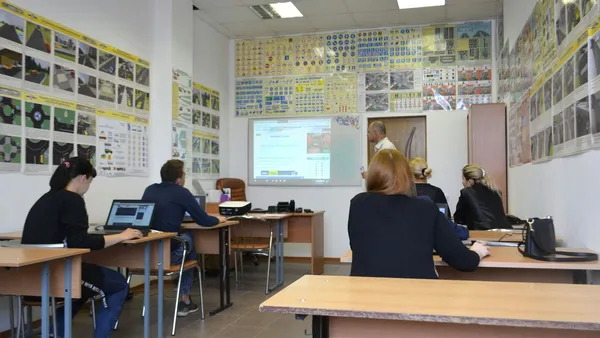
Learning German in Austria 2026
Learn German in Austria 2026: Austrian German vs Hochdeutsch, ÖSD certificate, Vorstudienlehrgang, Wienerisch, and free courses.

Learning German or French in Switzerland
Switzerland has four official languages. Swiss German vs. Hochdeutsch, French regions, university courses, and tips for choosing your study region.

Learning Chinese: Guide for Students 2026
Learn Chinese (Mandarin) 2026: HSK levels 1-6, character learning strategies, Confucius Institute courses, best apps, and immersion tips for students.