
Homesickness Abroad: How to Cope in 2026
Most students feel homesick within the first 3 weeks abroad. Here's what's normal, when to seek help, and 12 practical strategies that actually work.
On this page
Roughly 70% of international students experience significant homesickness in their first semester abroad — and most don't talk about it because everyone else looks fine on Instagram. Homesickness typically peaks in weeks 2–6, often resurfaces around exam season, and usually resolves within 3 months with the right strategies. This guide tells you what to expect, what helps, and when to reach out for professional support.
What Homesickness Actually Feels Like
Homesickness isn't just missing your mum's cooking. It's a real psychological response to loss — loss of your familiar routines, your social network, your sense of competence in a familiar environment. Common symptoms include:
- Persistent low mood or irritability
- Difficulty concentrating on coursework
- Social withdrawal — avoiding events you'd normally enjoy
- Disrupted sleep (too much or too little)
- Idealising home — "everything was better there"
- Counting down to holidays
- Physical symptoms: headaches, stomach aches, fatigue
A student in Edinburgh spending her first December away from family described it as "a background sadness that sits on everything." That's exactly what it is — not depression, not a sign that you made a mistake, just grief for what you've left behind, mixed with the hard work of building something new.
The Four Stages of Culture Shock
Culture shock is homesickness's close cousin and follows a predictable pattern, first described by anthropologist Kalervo Oberg in 1960:
| Stage | Timing | What It Feels Like |
|---|---|---|
| Honeymoon | Weeks 1–4 | Excited, everything is novel and interesting |
| Frustration | Weeks 4–12 | Small irritations pile up; systems seem stupid; loneliness kicks in |
| Adjustment | Months 3–6 | Things start to make sense; you develop routines; mood stabilises |
| Adaptation | 6+ months | You feel comfortable; you have a local life; home feels slightly distant |
Most students get stuck in Stage 2 without realising it's temporary. Knowing it's a stage — not a permanent state — is itself useful. You're not failing. You're on schedule.
12 Strategies That Actually Work
1. Build a Weekly Routine Within the First 10 Days
Routine is an antidote to disorientation. Pick a regular coffee shop, a time to go shopping, a day to video-call home. Predictability reduces anxiety. A student in Tokyo found that cooking one specific Japanese dish per week gave her a project to focus on — and something to look forward to.
2. Give Yourself Permission to Miss Home
Trying to suppress homesickness makes it worse. Acknowledge it: "I miss my friends and that's completely understandable." Don't shame yourself for feeling it. Studies show that people who accept their negative emotions experience them less intensely than those who fight them.
3. Schedule Contact With Home — Don't Just React
Unstructured contact with home can become a crutch. Instead of texting family constantly, schedule a weekly video call. This lets you fully engage with life in between calls rather than perpetually hovering between two worlds. A fixed Sunday evening call with your family works better than 20 anxious messages per day.
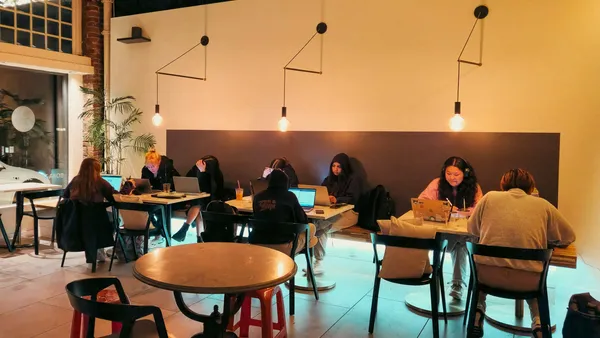
4. Find a Third Place
In sociology, "third places" are the spaces between home and university where community happens — a café, a climbing gym, a library regular table, a Sunday market. Pick one and go regularly. Familiarity builds belonging even without deep friendships.
5. Exercise Three Times a Week
This is consistently the highest-impact self-care intervention in peer-reviewed homesickness research. Thirty minutes of aerobic exercise three times a week reduces symptoms significantly. Most universities offer free or cheap gym access. If nothing else, walk 30 minutes every morning before your first class.
6. Engage With One Thing That Connects You to Home
Find a restaurant that serves food from home. Join an international students' association from your country. Follow a local sports team from your home city. This isn't retreating — it's maintaining a thread to your identity while you build a new one.
7. Make One Local Friend Within the First Month
Not ten new friends — one. A local student who can show you how the place works, where the good supermarket is, how public transport functions. This person doesn't need to become your best friend. They're an anchor. For strategies on where to find them, see our guide to making friends abroad.
8. Limit Social Media from Home
Watching your friends' lives continue at home makes it hard to invest in your new one. This doesn't mean cutting contact — it means giving yourself 30–60 minute windows per day for home social media rather than checking continuously throughout the day.
9. Explore Your New City Like a Tourist for One Day Per Month
When you're studying in a city, you often only see the campus-to-flat route. Book one day per month to visit somewhere new: a museum, a different neighbourhood, a day trip to a nearby town. Rediscovering curiosity about your surroundings breaks the negativity loop.
10. Keep a Specific Gratitude Journal
Not generic ("I'm grateful for sunshine") but specific: "The baker at the corner shop remembered my order today" or "I understood a full lecture without translating." Specificity trains your brain to notice novelty and progress rather than just absence.
11. Mark Milestones
First month completed? Get a nice dinner. Passed your first exam? Tell someone at home. First local friend? Note it down. Progress is invisible when you're in it. Marking milestones makes it visible.
12. Accept That Your First 6 Weeks Are the Worst
If you know the hardest period is finite, you can endure it. Week 2–6 is usually the trough. Most students who get to month 3 report feeling genuinely settled. Month 6 and most feel they belong. Hold that timeline when week 3 feels impossible.
When Is It Normal vs. When to Seek Help
Homesickness is normal. Clinical depression or anxiety is not — and the two can overlap and escalate. Seek professional support if:
- Low mood persists beyond 4–6 weeks with no improvement
- You're missing classes or unable to complete assignments
- You're sleeping more than 10 hours or less than 5 consistently
- You're using alcohol or other substances to cope
- You're having thoughts of harming yourself
- Eating has changed significantly — either very little or compulsively
All major universities have counselling services. In Germany, the Studierendenwerk offers psychological counselling services at every university location (Psychologische Beratungsstelle). In the UK, university counselling services are free and confidential. In Australia, international students can access university health services included in their OSHC coverage. Don't wait until you're in crisis — a single counselling session can give you tools you didn't have before.
Homesickness and Academic Performance
Homesickness has a direct impact on academic performance. A 2019 study published in the Journal of International Students found that students with high homesickness scores were 40% more likely to report poor academic performance in their first semester. The mechanism is attention — when your mind is occupied with longing and worry, there's less bandwidth for complex thinking.
If you notice your grades slipping, address the homesickness directly rather than just studying harder. A calmer mind processes information more effectively than an anxious one grinding through extra hours.
Different Cultures Experience It Differently
Research suggests students from collectivist cultures (common in many parts of Asia, Africa, and Latin America) may experience more intense homesickness because the social unit is more tightly integrated. A student from China who has never lived away from family may experience first-semester homesickness more intensely than a student from the Netherlands who has been independent since 17.
Neither experience is "worse." Both are valid. But if you're from a culture where family interdependence is the norm, be especially patient with yourself — you're adapting to a significantly different social structure, not just a new city.
Homesickness on Return: Reverse Culture Shock
Interestingly, many students experience a form of homesickness in reverse when they return home after a year abroad. You've changed; home hasn't. Things that used to feel comfortable now feel constraining. Former friends may seem uninterested in what you've experienced. This is reverse culture shock, and it's almost universal among long-term study abroad students.
Knowing it's coming helps. Plan to keep in touch with your abroad network, give yourself time to readjust, and resist the urge to idealise either place.
Frequently Asked Questions
How long does homesickness typically last?
For most students: intense homesickness peaks in weeks 2–6 and significantly reduces by month 3. A mild background version may resurface at predictable times — holidays, exam pressure, bad weeks — but rarely with the same intensity after the first semester.
Should I go home to visit during my first semester?
This depends on the distance and cost, but many student counsellors recommend against a first-semester visit home if possible. Leaving and returning extends the adjustment period and can restart the culture shock clock. Push through to at least month 3 before visiting if you can manage it practically and financially.
Is it normal to feel lonely even when surrounded by people?
Yes. Loneliness is about the quality of connection, not the quantity. Being surrounded by acquaintances in lectures or at orientation events doesn't satisfy the need for genuine intimacy. Building those deeper connections takes time — usually 3–6 months of regular contact with the same people.
Does everyone feel this way, or am I particularly struggling?
About 70% of international students report significant homesickness in their first semester. The students who appear fine often aren't — they're just better at hiding it or have had more practice being away from home. You're not uniquely struggling. You're normally struggling.
What if I genuinely made the wrong choice and my university or country isn't right for me?
Give it 6 months before making a major decision. Homesickness colours everything during the first semester. A decision made at week 4 is almost never better than a decision made at month 6 with a clearer head. If after 6 months you genuinely feel the fit is wrong, that's legitimate — and there are options including transfers and deferrals.
My family is calling me constantly and making it worse. What do I do?
This is more common than people admit. Have an honest conversation with them: "I need you to trust that I'm okay and give me space to adjust. Let's schedule specific call times." Most parents respond well to a specific plan because it reassures them that contact won't disappear — it'll just be structured.
Are there apps or tools that help with homesickness?
Headspace and Calm offer meditations specifically for loneliness and transition. The app Woebot uses CBT-based techniques for low mood. Marco Polo (video messaging app) works well for family updates that feel more personal than texts. None of these replaces human connection, but they can help between interactions.
Related Articles
Working as a Student in Austria 2026
Student work in Austria 2026: 20hrs/week, Geringfügigkeitsgrenze €518.44/month, Beschäftigungsbewilligung, Kollektivvertrag pay rates.

Student Accommodation in Australia 2026: Complete Guide
Australia student housing 2026: on-campus from $200/week, PBSA, shared houses, rent by city, bond rules, lease tips and best booking platforms.

Cultural Adjustment in Australia: What International Students Need to Know (2026)
Navigate Australian culture as an international student — from laid-back attitudes and Aussie slang to multiculturalism, safety, sports, and making friends.