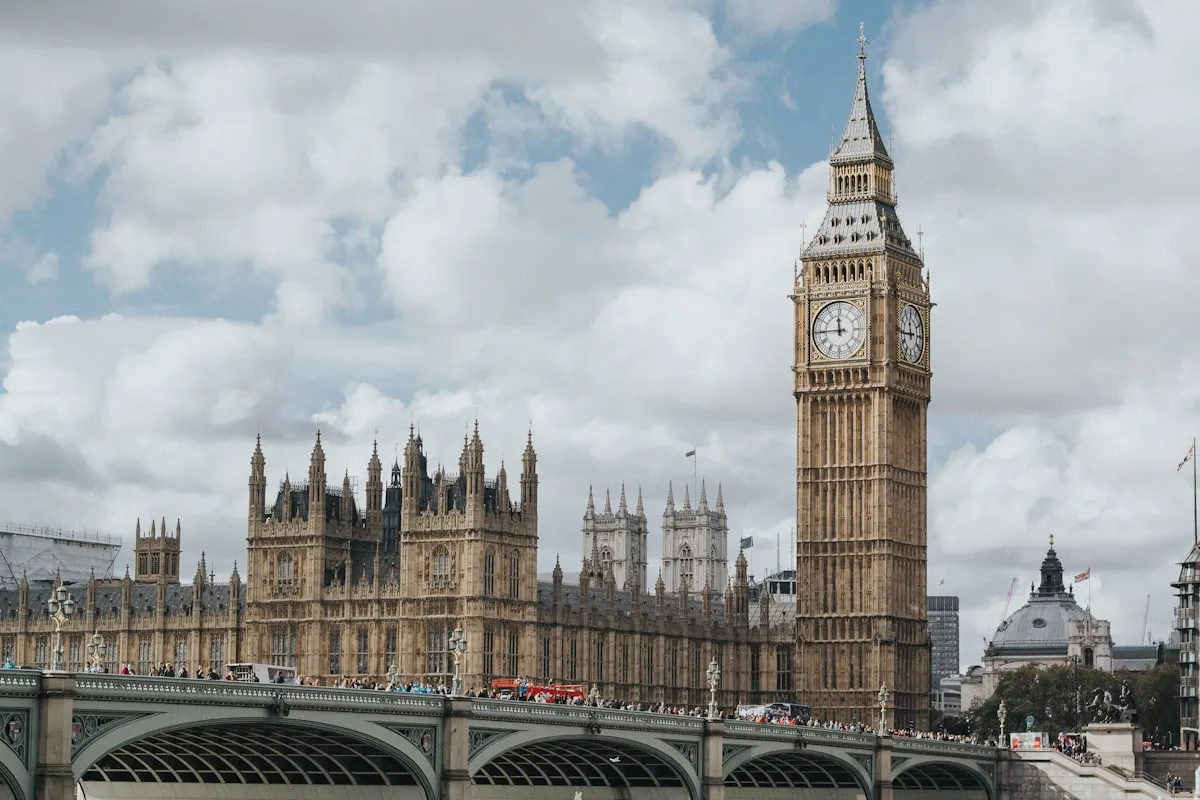
Germany vs UK: Where Should You Study Abroad in 2026?
Free tuition in Germany vs £9,250+ in the UK: compare costs, visas, post-study work rights, teaching styles, and career prospects to find your ideal 2026 study destination.
On this page
- Tuition Fees: Free Education vs Premium Pricing
- Living Costs: Monthly Budget Compared
- Visa Requirements: Getting In
- Post-Study Work: What Happens After Graduation?
- University Rankings and Academic Reputation
- Teaching Style and Academic Culture
- Language Requirements: English vs German
- Student Life and Culture
- Application Process: How to Get In
- Healthcare: Staying Healthy Abroad
- Who Should Choose Germany?
- Who Should Choose the UK?
- Scholarship and Funding Opportunities
- Quick Decision Matrix
- Frequently Asked Questions
- Final Thoughts
Germany and the United Kingdom are two of Europe's most popular study destinations for international students, yet the experience they offer could hardly be more different. Germany's public universities charge no tuition fees to international students in most states, while UK universities charge international undergraduates between £9,250 and £38,000 per year. Germany's programmes often run four years at the bachelor's level and two at the master's; UK bachelor's degrees take three years and most taught master's programmes just one. Germany offers an 18-month post-study work visa; the UK offers a two-year Graduate Route. Both countries host world-class research universities, vibrant student cities, and strong graduate employment markets — but they appeal to fundamentally different types of students.
This guide compares Germany and the UK across every dimension that matters: tuition fees, living costs, visa requirements, post-graduation career pathways, language considerations, academic culture, and student life. Whether you are a budget-conscious student attracted by Germany's free education or an English-speaking applicant drawn to the UK's globally ranked institutions, we will help you weigh the trade-offs and make an informed decision for 2026. For deeper country-specific research, explore our full guides on studying in Germany and studying in the UK.
Tuition Fees: Free Education vs Premium Pricing
Tuition is where the gap between Germany and the UK is widest. Germany's public universities, which enrol the vast majority of students, do not charge tuition fees to anyone — domestic or international — in 15 of 16 federal states. The exception is Baden-Württemberg, which charges non-EU students €1,500 per semester (€3,000/year). Every student pays a semester contribution (Semesterbeitrag) of roughly €150–€400, which covers student services, a public transport ticket, and administrative fees. For a full breakdown, see our Germany costs and financing guide.
The UK operates on an entirely different model. Universities set their own international tuition rates, and these have risen steadily over the past decade:
| Subject Area | Germany (Annual) | UK (Annual, International) |
|---|---|---|
| Humanities & Social Sciences | €300–€600 (semester fee only) | £15,000 – £25,000 |
| Engineering & Sciences | €300–€600 (semester fee only) | £18,000 – £32,000 |
| Business & MBA | €300–€3,000 (varies by state) | £20,000 – £45,000+ |
| Medicine | €300–€600 (semester fee only) | £30,000 – £58,000 |
Total Degree Cost Comparison
Because Germany's programmes typically take longer, the comparison is not as simple as multiplying annual costs. Here is a realistic total-cost picture:
| Degree Level | Germany (Total Tuition) | UK (Total Tuition) |
|---|---|---|
| Bachelor's | €1,200–€2,400 (3–4 years) | £45,000–£100,000+ (3 years) |
| Master's | €600–€1,200 (1.5–2 years) | £15,000–£45,000 (1 year) |
| PhD | €600–€1,200 (3–5 years) | £18,000–£27,000/year (3–4 years) |
Even when you factor in Germany's longer bachelor's degree, the total tuition saving is enormous — often €50,000–€100,000 or more over the full programme. For students from countries without generous scholarship traditions, Germany's tuition-free model is transformative.
Living Costs: Monthly Budget Compared
While tuition in Germany is essentially free, living costs are a real expense in both countries. Germany is generally cheaper, but the gap is narrower than many students expect — especially in cities like Munich, Hamburg, and Frankfurt, where rent rivals mid-tier UK cities. London, of course, is in a category of its own.
| Expense Category | Germany (Monthly) | UK (Monthly) |
|---|---|---|
| Rent (shared flat/student housing) | €350–€750 | £500–£1,100 |
| Food & groceries | €200–€300 | £200–£350 |
| Transport | €0–€50 (Semesterticket often included) | £50–£150 |
| Health insurance | €110–€120 (mandatory student rate) | £0 (NHS via IHS, paid upfront with visa) |
| Phone & internet | €20–€40 | £30–£50 |
| Personal & social | €100–€200 | £100–£200 |
| Total monthly budget | €780–€1,460 | £880–£1,850 |
A key German advantage is the Semesterticket, which gives students unlimited public transport across an entire city or region for roughly €100–€200 per semester. Since the Deutschlandticket costs only €49/month, many universities now integrate it into the semester fee. In the UK, transport costs add up quickly: a monthly bus pass in London costs around £80, and a railcard still means significant commuting expenses.
For Germany's visa application, you must prove €11,904 in a blocked account (Sperrkonto), which works out to €992/month. This is a reasonable estimate of living costs outside of Munich and Berlin. UK Student Route visa applicants must show £1,023/month for London or £821/month outside London for nine months.
Visa Requirements: Getting In
Both countries have structured student visa systems, but the application processes and requirements differ significantly:
| Visa Factor | Germany | UK |
|---|---|---|
| Visa type | National Visa + Residence Permit | Student Route (formerly Tier 4) |
| Financial proof | €11,904 Sperrkonto | £1,023/mo (London) or £821/mo + tuition |
| Health insurance | Mandatory German health insurance (€110–120/mo) | IHS surcharge (£776/year, paid upfront) |
| Work rights (during studies) | 240 half-days or 120 full days/year | 20 hours/week term time, unlimited vacations |
| Language requirement | Varies by programme (German or English proof) | IELTS 6.0–7.0 or equivalent |
| Processing time | 6–12 weeks | 3–6 weeks |
For more details on the German student visa process, see our Germany visa and entry guide. For UK visa specifics, check our UK student visa guide.
Post-Study Work: What Happens After Graduation?
Post-study work rights are a critical factor for students planning to build a career abroad. Here is how the two countries compare:
| Factor | Germany | UK |
|---|---|---|
| Post-study work visa | 18-month job-seeker visa (§20 AufenthG) | 2-year Graduate Route (3 years for PhD) |
| Job-relatedness requirement | Must find job related to qualification | No restriction — any job, any level |
| Work during job search | Any job allowed during 18-month search | Any job allowed during 2 years |
| Path to permanent residency | 2 years skilled work → Settlement Permit | 5 years Skilled Worker visa → ILR |
| Employer sponsorship needed? | EU Blue Card or residence permit (straightforward) | Skilled Worker visa requires sponsor licence |
Germany's path to permanent residency is notably faster. After two years of skilled employment following your degree, you can apply for a Settlement Permit (Niederlassungserlaubnis). In the UK, permanent settlement (Indefinite Leave to Remain) requires five continuous years on a qualifying visa. Germany also introduced the Chancenkarte (Opportunity Card) in 2024, a points-based system that makes it even easier for skilled graduates to stay. For a deep dive, see our Germany working and career guide.
University Rankings and Academic Reputation
The UK dominates global university rankings in a way that Germany does not, but rankings tell only part of the story.
| Ranking Metric | Germany | UK |
|---|---|---|
| Universities in QS World Top 100 | 3 (TU Munich, LMU Munich, Heidelberg) | 17 (Oxford, Cambridge, Imperial, UCL, etc.) |
| Universities in QS World Top 300 | 16 | 38 |
| Total universities | ~400 (mostly public) | ~160 (mix of public and private) |
| Nobel laureates (affiliated) | ~115 | ~135 |
Germany's university system is deliberately egalitarian. While TU Munich, LMU Munich, and Heidelberg lead the rankings, the quality gap between Germany's top 50 and top 200 universities is much smaller than in the UK. A degree from a mid-ranked German university carries strong recognition within Europe and in engineering, manufacturing, and technology globally. The UK's ranking advantage is most meaningful for students targeting careers in finance, consulting, law, and other fields where employer recruiting is heavily concentrated at “target” universities.
Teaching Style and Academic Culture
The academic experience in Germany and the UK feels genuinely different:
| Aspect | Germany | UK |
|---|---|---|
| Degree structure | Bologna system (3+2 years, increasingly modular) | 3-year bachelor's, 1-year master's |
| Teaching approach | Lecture-heavy, research-oriented, independent | Seminars, tutorials, structured reading lists |
| Assessment | Heavy exam weighting, fewer coursework components | Mix of exams, essays, presentations |
| Student autonomy | Very high — you build your own schedule | Moderate — more prescribed modules |
| Professor accessibility | More formal, office hours often limited | More accessible, personal tutors common |
| Class sizes | Large lectures (200–500+), smaller tutorials | Smaller lectures (50–200), intimate seminars |
German universities emphasise Selbstständigkeit (self-reliance). Students are expected to organise their own study schedules, navigate bureaucracy independently, and take initiative in finding resources. The UK system provides more scaffolding: personal tutors, structured reading lists, regular feedback on coursework, and smaller group teaching. If you thrive with independence and self-direction, Germany suits you well; if you prefer structured guidance, the UK is likely a better fit.
Language Requirements: English vs German
The language question is often the deciding factor. All UK programmes are taught in English, making it straightforward for English-speaking students. Germany offers a growing number of English-taught programmes — currently over 2,000 at master's level and around 200 at bachelor's level — but the majority of bachelor's programmes are still taught in German.
| Scenario | Germany | UK |
|---|---|---|
| Teaching language | German (most bachelor's), English (many master's) | English (all programmes) |
| Language proof needed | TestDaF/DSH (German) or IELTS/TOEFL (English) | IELTS 6.0–7.0 or equivalent |
| Daily life language | German essential for bureaucracy and social life | English sufficient everywhere |
| Career language | German usually needed for most jobs | English sufficient for most jobs |
Even if you study an English-taught programme in Germany, you will need at least basic German (A2–B1) for everyday life: signing rental contracts, dealing with authorities, shopping at local markets, and socialising with German students. For career purposes, most employers expect at least B2 German. The language investment pays off — German is the most widely spoken native language in the EU — but it is a commitment that adds to your study timeline. For tips, see our guide to learning German. For English-taught programmes specifically, check our guide on best English-taught programs in Germany.
Student Life and Culture
Student life in Germany and the UK offers two distinct flavours of European living:
| Aspect | Germany | UK |
|---|---|---|
| Campus culture | City-integrated, no traditional “campus” | Mix of campus and city universities |
| Student organisations | Fachschaften, student councils, sports clubs | Student unions, 100+ societies, sports teams |
| Accommodation style | Shared flats (WGs) or Studentenwerk housing | University halls (year 1), private rentals after |
| Social scene | Beer gardens, Mensa (canteen), house parties | Pubs, student unions, nightlife, formal events |
| Working culture | Werkstudent jobs common (20 hrs/week) | Part-time retail/hospitality jobs common |
| Travel opportunities | Central Europe: easy access to 9+ countries | Close to Europe by budget flights |
Germany's Wohngemeinschaft (WG) culture is a defining feature of student life. Most students live in shared flats with three to five flatmates, which keeps costs low and builds social connections. The university Mensa (canteen) serves subsidised meals for €2–€4. Germany's central location in Europe makes weekend trips to Paris, Prague, Amsterdam, or Vienna affordable via FlixBus or Deutsche Bahn.
The UK's student union culture is arguably richer in terms of organised activities. Most universities have 100+ societies covering everything from debating to quidditch, plus strong sports programmes. First-year students typically live in university-managed halls of residence, which provides a built-in social network. The UK's pub culture and formal events (balls, May Week) create traditions that many graduates remember fondly. For more on daily life in Germany, see our living in Germany guide.
Application Process: How to Get In
The mechanics of applying to each country differ significantly:
| Aspect | Germany | UK |
|---|---|---|
| Central application system | uni-assist or direct to university | UCAS (undergraduate), direct (postgraduate) |
| Application fee | €75 via uni-assist; free for some universities | £27.50 via UCAS (up to 5 choices) |
| Number of applications | Unlimited (apply to as many as you like) | 5 choices via UCAS (undergraduate) |
| Key deadlines | July 15 (winter), January 15 (summer) | January 31 (most), October 15 (Oxbridge/medicine) |
| Selection criteria | Grades and qualifications (mostly formulaic) | Grades, personal statement, references |
| Interviews | Rare (except restricted programmes) | Common at selective universities |
Germany's admissions process is generally more straightforward and grades-based. If you meet the minimum GPA and language requirements, you are likely to receive an offer. UK admissions, especially at competitive universities, involve a more holistic review of your personal statement, predicted grades, and references. For a step-by-step German application walkthrough, see our Germany admission and application guide.
Healthcare: Staying Healthy Abroad
Both countries provide comprehensive healthcare for international students, but through different mechanisms:
Germany: All students must have German health insurance. Students under 30 can enrol in the statutory student health insurance (gesetzliche Krankenversicherung) for approximately €110–€120/month. This provides full medical, dental, and mental health coverage with minimal co-pays. The system is comprehensive and well-regarded.
UK: International students pay the Immigration Health Surcharge (IHS) of £776/year as part of their visa application, which grants full access to the National Health Service (NHS). NHS coverage includes GP visits, hospital treatment, and emergency care, though dental and optical care require separate arrangements. The IHS is paid as a lump sum upfront — for a three-year degree, that is £2,328.
Who Should Choose Germany?
- Budget-conscious students: If minimising total cost is your priority, Germany is unbeatable. Zero tuition plus lower living costs can save you £50,000–£150,000 compared to the UK.
- Engineering, STEM, and technical students: Germany's reputation in engineering, automotive, manufacturing, and applied sciences is world-class, and the industry connections are strong.
- Students open to learning German: If you are willing to invest in learning a new language, the career returns are significant — German is the EU's most spoken native language.
- Those seeking a faster path to permanent residency: Germany's two-year pathway to a Settlement Permit is one of the fastest in Europe.
- Independent learners: If you thrive with autonomy and prefer less hand-holding, the German academic system will suit you.
- Students interested in a European base: Germany's central location makes it the ideal hub for exploring the continent.
Who Should Choose the UK?
- English-only speakers: If you do not want to learn another language, the UK is the obvious choice — everything operates in English.
- Students targeting top global rankings: With 17 universities in the QS Top 100, the UK offers more options at the very highest tier.
- Fast degree seekers: A three-year bachelor's and one-year master's means you can have a full education in four years — the same time as a German bachelor's alone.
- Career-focused students in finance, law, or consulting: London is a global hub for these industries, and UK university career services in these sectors are unmatched.
- Students who want structured support: Personal tutors, structured curricula, and regular feedback make the UK system more supportive.
- Those who value the Graduate Route: Two years of unrestricted work rights (any job, any level) is more flexible than Germany's 18-month job-seeker visa.
Scholarship and Funding Opportunities
Because Germany does not charge tuition, the scholarship landscape looks different:
| Funding Source | Germany | UK |
|---|---|---|
| Government scholarships | DAAD (extensive, 15+ programmes) | Chevening, Commonwealth, Marshall |
| University scholarships | Deutschlandstipendium (€300/mo), merit-based | Varies widely — £2,000–full tuition |
| Living cost support | DAAD provides €934–€1,300/mo stipends | Most scholarships cover tuition only |
| Need-based aid | Limited for international students | Limited for international students |
The DAAD (German Academic Exchange Service) is one of the world's largest scholarship organisations, funding over 100,000 students and researchers annually. Since Germany has no tuition, DAAD scholarships focus on covering living expenses, which means the total value often exceeds UK scholarships that primarily offset tuition. For options in Germany, see our scholarship opportunities guide.
Quick Decision Matrix
| Your Priority | Better Choice |
|---|---|
| Lowest total cost | Germany (by a wide margin) |
| Fastest degree completion | UK (3+1 vs 4+2 years) |
| Top global rankings | UK (17 in QS Top 100 vs 3) |
| Post-study work flexibility | UK (2 years, any job) |
| Path to permanent residency | Germany (2 years vs 5 years) |
| Engineering/STEM career | Germany (industry connections) |
| Finance/consulting career | UK (London hub) |
| English-only environment | UK |
| Central Europe location | Germany |
| Student support systems | UK |
Frequently Asked Questions
Is studying in Germany really free for international students?
Yes, in 15 of 16 German states. Public universities charge no tuition fees to international students. You pay only a semester contribution of €150–€400, which covers student services and often includes a public transport pass. The sole exception is Baden-Württemberg, where non-EU students pay €1,500/semester. Private universities do charge tuition, but they enrol a small minority of Germany's student population.
Can I study in Germany without speaking German?
Yes, but with limitations. Germany offers over 2,000 English-taught master's programmes and around 200 English-taught bachelor's programmes. However, daily life (housing, bureaucracy, socialising) is much easier with German. Most career paths in Germany require at least B2 German proficiency. For the best options, see our guide on English-taught programmes in Germany.
Which country has better career prospects after graduation?
It depends on your field. Germany is stronger for engineering, automotive, manufacturing, IT, and applied sciences, with direct industry connections through universities. The UK is stronger for finance, consulting, law, creative industries, and academia, particularly through London's global position. Germany's lower cost of living and faster path to permanent residency are additional career advantages.
How does the post-study work visa compare?
The UK's Graduate Route (2 years) is longer than Germany's 18-month job-seeker visa and has no job-relatedness restriction. However, Germany's path from job-seeker visa to permanent residency is faster (2 years of skilled work vs 5 years in the UK). Germany also offers the Chancenkarte (Opportunity Card) as an additional pathway for skilled graduates.
Are German degrees recognised internationally?
Absolutely. German degrees are recognised worldwide, particularly in engineering, sciences, and technology. Germany's TU9 universities (the nine leading technical universities) are especially well-regarded by global employers. In fields like automotive engineering and manufacturing, a German degree often carries more weight than a UK degree outside of Oxbridge and Imperial.
Is the UK worth the higher cost?
For some students, yes. The UK offers shorter degree programmes (saving living costs), English-only instruction, stronger global rankings, and a more flexible post-study work visa. If you are targeting a career in London's financial or creative sectors, or if you value the structured British tutorial system, the premium can be justified. But for cost-conscious students, Germany's tuition-free model is hard to beat.
Can I apply to universities in both countries simultaneously?
Yes. The application systems are completely independent. Many students apply to German universities via uni-assist and UK universities via UCAS at the same time. Deadlines differ (German winter semester applications typically close July 15; UCAS closes January 31), so plan your timeline accordingly.
Which country is safer for international students?
Both Germany and the UK are safe countries for international students. Germany consistently ranks among the safest countries in Europe, with low violent crime rates. The UK is also generally safe, though some cities have higher crime rates than German equivalents. Both countries have well-established support systems for international students, including university counselling services and emergency support.
Final Thoughts
Germany and the UK represent two fundamentally different approaches to higher education. Germany offers free tuition, a research-intensive environment, and a fast track to European residency, but requires language investment and independent navigation. The UK offers world-leading rankings, English instruction, shorter degrees, and a flexible post-study work visa, but at a significantly higher price.
The right choice depends on your priorities. If you are a budget-conscious engineering student willing to learn German and excited about building a European career, Germany is transformative. If you are an English-speaking student targeting a top-ranked university with structured support and planning a career in London's financial district, the UK delivers clear value. Many students also consider doing their bachelor's in one country and their master's in the other — combining Germany's free bachelor's with the UK's fast one-year master's is an increasingly popular strategy.
Whatever you decide, start early. Both German and UK applications require months of preparation, financial documentation, and language testing. For comprehensive guidance, explore our full country guides for Germany and the UK, and browse our Germany application guide for step-by-step help.
Related Articles

Germany vs Canada: Tuition, Jobs & Visa Compared for 2026
Free tuition in Germany vs CAD $20,000-40,000 in Canada: compare post-grad work permits, PR pathways, living costs, and English-taught programs for 2026.
UK vs USA 2026: Where Should You Study Abroad?
Side-by-side comparison of UK and USA universities in 2026: tuition (£9,250-£38,000 vs $30,000-$80,000), 3-year vs 4-year degrees, visa routes, and post-study work options analysed.

USA vs Canada 2026: Where Should International Students Study?
Compare studying in the USA and Canada: tuition ($20K-$65K vs $15K-$40K CAD), post-study work (H-1B lottery vs PGWP+PR), campus culture, and immigration pathways.