Student Life in Sydney vs Melbourne vs Brisbane: A Complete...
Sydney vs Melbourne vs Brisbane for international students — rent, universities, nightlife, weather, transport, jobs, and graduate salaries compared for 2026.
On this page
- Cost of Living: The Numbers That Matter
- Universities: Rankings, Strengths, and Reputations
- Nightlife and Social Scene
- Beaches and Natural Environment
- Weather and Climate
- Public Transport
- Job Market and Part-Time Work
- Graduate Outcomes and Career Prospects
- Lifestyle: What Each City Feels Like
- Which City Should You Choose?
- Frequently Asked Questions
Sydney, Melbourne, and Brisbane are the three cities where most international students in Australia study, and the choice between them shapes your experience more than almost any other decision you will make. Together, these three cities account for roughly 70% of all international student enrollments in Australia, and each offers a genuinely different version of Australian life. Sydney is the most iconic and expensive, with its harbor, beaches, and global-city energy. Melbourne is the cultural capital, with its coffee, arts, and sports obsession. Brisbane is the emerging contender, warmer and cheaper than both, and growing faster than either.
The comparison is not straightforward because the "best" city depends entirely on what you prioritize. If you want the highest-ranked university at any cost, Melbourne and Sydney are your primary options. If you want the best balance of quality and affordability, Brisbane makes a compelling case. If nightlife and cultural diversity matter most, Melbourne leads. If beaches and natural beauty are non-negotiable, Sydney wins without contest. This guide breaks down every major dimension of student life across all three cities, with verified 2026 data, so you can make a choice based on substance rather than postcards.
For broader context on studying in Australia, see our guides on studying in Australia, costs and funding, and daily life. This article focuses specifically on comparing these three cities for international students.
Cost of Living: The Numbers That Matter
Cost of living is the dimension where the three cities differ most dramatically, and it is the factor that most frequently determines where budget-conscious students end up. The following table compares the major cost categories based on 2026 data:
| Expense Category | Sydney | Melbourne | Brisbane |
|---|---|---|---|
| Shared room (inner city, per week) | AUD$280-380 | AUD$220-320 | AUD$180-260 |
| Studio apartment (inner city, per week) | AUD$450-600 | AUD$380-500 | AUD$300-420 |
| Groceries (monthly) | AUD$350-450 | AUD$320-400 | AUD$300-380 |
| Public transport (monthly pass) | AUD$180-220 | AUD$160-200 | AUD$140-180 |
| Dining out (mid-range, main course) | AUD$25-40 | AUD$22-35 | AUD$20-32 |
| Coffee (flat white) | AUD$5.00-6.00 | AUD$4.50-5.50 | AUD$4.50-5.50 |
| Gym membership (monthly) | AUD$60-90 | AUD$50-80 | AUD$45-70 |
| Total monthly estimate | AUD$2,000-2,600 | AUD$1,800-2,400 | AUD$1,500-2,000 |
The gap between Sydney and Brisbane is substantial — roughly AUD$500-600 per month, or AUD$6,000-7,200 per year. Over a three-year degree, that difference adds up to AUD$18,000-21,600, which is enough to cover nearly an entire year of tuition at some universities. Melbourne sits in the middle, closer to Sydney's pricing than Brisbane's but with meaningful savings, particularly in housing.
Rent: The Biggest Variable
Housing is the single largest expense in all three cities and the area where your choices have the most impact on your total budget. In Sydney, the inner-city suburbs popular with students — Ultimo, Chippendale, Redfern, Newtown, Surry Hills — are expensive, and vacancy rates are low. Competition for affordable shared housing is fierce, and it is not uncommon for landlords to receive 20-30 applications for a single room. Students who live further from the CBD (Parramatta, Bankstown, Strathfield) can save AUD$50-100 per week on rent but add 30-60 minutes to their commute.
In Melbourne, the inner suburbs (Carlton, Fitzroy, Brunswick, Collingwood, Richmond) are the student heartland. Rent is lower than equivalent Sydney neighborhoods by roughly 15-20%, and the supply of student-suitable housing is somewhat better because Melbourne's apartment building boom over the past decade has added significant stock. The tram network, which is free in the CBD zone, makes commuting from slightly further suburbs (Footscray, Northcote, Thornbury) convenient and affordable.
In Brisbane, affordable housing is the norm rather than the exception. Inner suburbs like South Brisbane, West End, Toowong, and St Lucia (home to UQ) offer shared rooms at prices that would be impossible in inner Sydney. The trade-off is that Brisbane's public transport network is less extensive than Sydney's or Melbourne's, so living further out can mean inconvenient bus schedules rather than simple train or tram rides.
Universities: Rankings, Strengths, and Reputations
All three cities host Go8 universities, which means access to Australia's academic elite is not a differentiator — it is available everywhere. But the character and strengths of the universities differ significantly.
| City | Go8 Universities | Other Notable Universities | QS Top Rank (City) |
|---|---|---|---|
| Sydney | University of Sydney (#18), UNSW (#19) | UTS (#88), Macquarie (#140), Western Sydney | #18 |
| Melbourne | University of Melbourne (#13), Monash (#37) | RMIT (#123), Deakin, La Trobe, Swinburne | #13 |
| Brisbane | University of Queensland (#40) | QUT (#189), Griffith (#230) | #40 |
Melbourne holds the strongest overall university position, with the University of Melbourne consistently ranked as Australia's best and Monash providing a strong second option. The depth of Melbourne's university system — RMIT for design and technology, Deakin for applied programs, La Trobe for health sciences — means that almost every discipline is well-served.
Sydney has the highest concentration of globally ranked institutions, with both the University of Sydney and UNSW in the top 20 globally, and UTS continuing to climb rapidly. Sydney's university system is particularly strong in business, engineering, health sciences, and law. The city's economic weight means that industry connections, internships, and graduate recruitment programs are concentrated here.
Brisbane has one Go8 university (UQ) and two strong non-Go8 options (QUT and Griffith). UQ's campus, academic quality, and value for money make it competitive with any university in Australia. QUT is one of the country's best universities of technology, with particular strengths in creative industries, IT, and business. Brisbane's university system is smaller than Sydney's or Melbourne's but punches above its weight on quality-to-cost ratio.
Nightlife and Social Scene
Nightlife is one of the most divisive topics in the Sydney-Melbourne-Brisbane comparison, and the answer depends on what you consider a good night out.
Melbourne is widely regarded as Australia's nightlife capital. The laneway bar scene — hidden bars in narrow alleys, often with no visible signage — is a Melbourne institution. Live music venues are abundant, from large concert halls to intimate pub stages. The Fitzroy and Collingwood strip hosts dozens of bars within walking distance, and the comedy scene is the strongest in Australia (the Melbourne International Comedy Festival is the world's third-largest). Melbourne's nightlife is diverse, with options spanning craft cocktail bars, warehouse dance parties, jazz clubs, comedy nights, and late-night food markets. Importantly, Melbourne has no lockout laws, meaning venues can admit patrons until their license expires (typically 3am-5am).
Sydney has recovered from the lockout laws that devastated its nightlife from 2014 to 2021. The Kings Cross era may be over, but the city has rebuilt around new hubs — the inner west (Newtown, Enmore, Marrickville), Darlinghurst, and the CBD itself. Sydney's nightlife tends to be more polished and expensive than Melbourne's, with rooftop bars, harbor-view venues, and upscale clubs featuring more prominently. The live music scene has recovered but has not recaptured its pre-lockout strength. Sydney's advantage is the outdoor social scene — beach barbecues, harbor picnics, and rooftop drinks with city views create a social life that extends well beyond traditional nightlife.
Brisbane has the most relaxed social scene of the three. Fortitude Valley is the nightlife district, with a concentration of bars, clubs, and live music venues along Brunswick and Ann Streets. The scene is less pretentious than Sydney and less sprawling than Melbourne, which some students find refreshing and others find limiting. Brisbane's outdoor social life — rooftop bars overlooking the river, barbecues at South Bank, and weekend trips to the coast — is as important as its indoor nightlife. The legal drinking and going-out culture is less intense than in the southern cities, partly because Brisbane's subtropical climate encourages daytime socializing.
Beaches and Natural Environment
Sydney is the undisputed winner here. Bondi, Coogee, Manly, Bronte, Tamarama, and Cronulla are all accessible by public transport, and the coastal walks connecting them are among the best urban walks in the world. The Bondi to Coogee walk is a rite of passage for every international student in Sydney. The harbor itself — with its swimming spots at Balmoral, Nielsen Park, and Camp Cove — adds another dimension of water access. The Blue Mountains, a World Heritage-listed national park, are a 90-minute train ride from the CBD and offer hiking, abseiling, and canyoning.
Brisbane compensates for its lack of inner-city surf beaches with proximity to the Gold Coast (one hour south) and the Sunshine Coast (one hour north). These are genuine, world-class surf beaches, and many Brisbane students make weekend trips to the coast a regular part of their routine. Within the city, the man-made Streets Beach at South Bank provides a central swimming option, and Moreton Bay — accessible by ferry — offers island beaches and snorkeling. The surrounding hinterland (Springbrook, Lamington, Tamborine Mountain) provides subtropical rainforest walks within an hour of the CBD.
Melbourne is the least "beachy" of the three. St Kilda beach is the most accessible, but it is a calm bay beach rather than a surf beach. Surf beaches on the Mornington Peninsula (Portsea, Sorrento) and the Great Ocean Road (Bells Beach, Torquay) are day-trip destinations rather than after-class options. Melbourne compensates with an outstanding parks and gardens system — the Royal Botanic Gardens, the Yarra River trails, and the Dandenong Ranges provide excellent green-space options — but it cannot compete with Sydney on water access.
Weather and Climate
| Climate Factor | Sydney | Melbourne | Brisbane |
|---|---|---|---|
| Climate type | Temperate/Subtropical | Temperate/Oceanic | Subtropical/Humid |
| Average summer high | 26°C (79°F) | 26°C (79°F) | 30°C (86°F) |
| Average winter low | 8°C (46°F) | 6°C (43°F) | 11°C (52°F) |
| Annual sunny days | ~236 | ~185 | ~261 |
| Annual rainfall | ~1,215mm | ~648mm | ~1,028mm |
| Climate summary | Warm, sunny, occasional heavy rain | "Four seasons in one day" — variable | Warm year-round, humid summers |
Brisbane has the best weather for students who want warmth and sunshine. The city averages more sunny days per year than any other Australian capital, and even winter days are typically mild enough for outdoor activity. The trade-off is humidity — Brisbane summers are hot and sticky, and air conditioning becomes a necessity rather than a luxury. Thunderstorms in summer can be dramatic but usually pass quickly.
Sydney has arguably the most pleasant overall climate — warm enough for the beach from November to April, cool enough in winter to justify a jacket but rarely truly cold. Rain can be heavy when it comes (Sydney has more total rainfall than Melbourne despite its sunnier reputation), but wet days are less frequent than in Melbourne.
Melbourne is famous for its variable weather. The phrase "four seasons in one day" is not an exaggeration — a morning that starts at 14°C and sunny can become 28°C by noon and then drop to 16°C with rain by evening. This variability is Melbourne's most discussed characteristic and the one that divides opinion most sharply. Students from stable-climate countries find it genuinely challenging, while those from northern European or similar climates feel at home. The key is to always carry layers and an umbrella.
Public Transport
Sydney has the most extensive public transport network in Australia, with trains, buses, ferries, and the expanding light rail system all connected under the Opal card. The train network reaches well into the western suburbs, and the ferry system — particularly the Manly Ferry — is one of the most scenic commutes in the world. Downsides include crowding during peak hours, occasional service disruptions, and the fact that bus services in some suburbs are infrequent outside commuting hours.
Melbourne has the world's largest tram network, which is free within the CBD zone and covers an extensive area of the inner and middle suburbs. The train network complements the trams for longer distances, and the myki card provides integrated ticketing. Melbourne's transport strength is the tram system's density in inner suburbs — if you live within the tram network, you may never need to take a train. The weakness is coverage in outer suburbs, where bus services are less reliable.
Brisbane has a functional but less comprehensive system. The train network connects the CBD to major suburban hubs, and the busway system (dedicated bus lanes) provides fast connections along key corridors. The ferry (CityCat) service along the Brisbane River is efficient and scenic. The go card provides integrated ticketing. Brisbane's main transport challenge is coverage in newer suburban developments, where bus services can be infrequent, and the absence of a tram or light rail system in the inner city (though Cross River Rail, opening in phases, is improving connectivity).
Job Market and Part-Time Work
International students on student visas can work up to 48 hours per fortnight during semester and unlimited hours during scheduled breaks. The availability and quality of student jobs vary significantly by city.
| Employment Factor | Sydney | Melbourne | Brisbane |
|---|---|---|---|
| Hospitality/retail jobs | Abundant | Abundant | Good |
| Professional internships | Strongest | Strong | Growing |
| Average student hourly rate | AUD$25-32 | AUD$24-30 | AUD$24-29 |
| Key industries | Finance, tech, consulting, media | Arts, tech, education, manufacturing | Mining services, health, tourism, government |
| Graduate median salary | AUD$68,000-75,000 | AUD$63,000-70,000 | AUD$60,000-67,000 |
Sydney offers the strongest job market for both part-time student work and post-graduation careers. The concentration of corporate headquarters, financial institutions, and consulting firms means that professional internships and graduate programs are most abundant here. Sydney's hospitality and retail sectors also provide extensive casual employment opportunities, though the cost of commuting to work can eat into lower-wage earnings.
Melbourne's job market is broad and diverse, with particular strength in the creative industries, education, technology, and the startup ecosystem. The city hosts a growing number of tech companies, and its reputation as Australia's cultural capital creates opportunities in media, publishing, and the arts that are less available in other cities. Melbourne's hospitality sector is enormous, driven by the city's food and coffee culture.
Brisbane's job market is smaller but growing rapidly. The city is Australia's fastest-growing capital, and the 2032 Olympics are driving massive infrastructure investment that is creating construction, engineering, and services jobs. The mining and resources sector provides well-paying opportunities for engineering and geology students. Brisbane's smaller size means less competition for jobs relative to the applicant pool, and many students report that finding part-time work is easier here than in Sydney or Melbourne.
Graduate Outcomes and Career Prospects
Post-graduation career prospects are heavily influenced by which city you study in, because many graduates stay in their study city for at least the first few years of their career. The latest Graduate Outcomes Survey data shows the following patterns:
Sydney graduates earn the highest starting salaries in Australia, reflecting the city's concentration of high-paying industries (finance, consulting, law, technology). The median full-time starting salary for bachelor's degree graduates in Sydney is approximately AUD$72,000 per year. Sydney also has the highest proportion of graduates employed in their field of study within four months of completion.
Melbourne graduates earn slightly less than their Sydney counterparts on average (median approximately AUD$67,000), but the gap narrows significantly when adjusted for cost of living. Melbourne's graduate employment rate is strong, and the city's diverse economy means that graduates in creative fields, education, and the social sciences have better prospects here than in Sydney, where the economy skews more heavily toward finance and corporate services.
Brisbane graduates earn median starting salaries of approximately AUD$63,000, the lowest of the three cities in absolute terms but the highest in purchasing-power terms given Brisbane's lower cost of living. Brisbane's graduate job market is tighter in traditional corporate roles but strong in health, engineering, education, and government — sectors that provide stable employment with good conditions.
Lifestyle: What Each City Feels Like
Sydney: The Spectacle
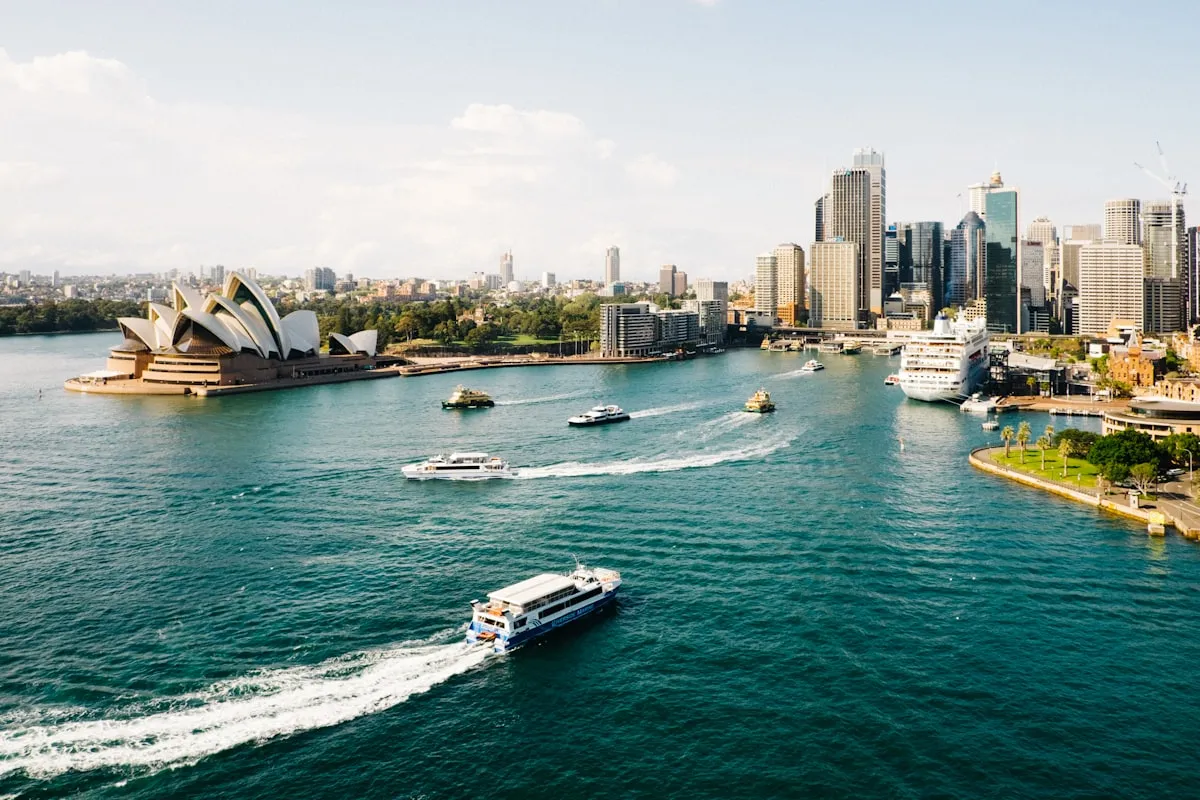
Sydney is a city that looks impressive and feels impressive. The harbor, the Opera House, the Harbour Bridge, the beaches — these are not just tourist attractions but the backdrop to daily life. Walking across the Harbour Bridge on a sunny morning, taking the ferry to Manly, swimming at Bronte at sunrise — these experiences are available to residents, not just visitors, and they give Sydney a cinematic quality that no other Australian city matches. The downside is that Sydney's beauty comes at a premium. The city is expensive, competitive, and fast-paced. Social life can feel stratified by suburb and income in ways that are less pronounced in Melbourne or Brisbane.
Melbourne: The Culture
Melbourne is Australia's most European-feeling city — dense, walkable inner suburbs, strong cafe culture, world-class arts and music, and a population that takes food, fashion, and ideas seriously. The city rewards exploration, with hidden bars, street art, independent bookshops, and galleries tucked into laneways that you walk past three times before discovering. Melbourne's social fabric is more egalitarian than Sydney's, with less emphasis on postcodes and appearances and more emphasis on what you do and what you think. The trade-off is weather variability and a less dramatic natural setting.
Brisbane: The Warmth
Brisbane is the city that grows on you. First impressions can be underwhelming compared to Sydney's spectacle or Melbourne's cool, but the warmth — both meteorological and social — accumulates. The South Bank precinct, with its man-made beach, riverside parklands, and cultural institutions, is genuinely lovely. The pace of life is slower, which some students find boring and others find liberating. Brisbane residents are notably friendly, even by Australian standards, and international students consistently report that making social connections here is easier than in the southern cities. The city is changing rapidly — the 2032 Olympics are reshaping infrastructure and ambition — and students studying here now are positioned to benefit from a decade of growth.
Which City Should You Choose?
| If You Prioritize... | Best City | Why |
|---|---|---|
| Academic prestige | Melbourne | University of Melbourne is Australia's top-ranked; Monash is strong second |
| Career prospects (finance, consulting) | Sydney | Concentration of corporate HQs, banks, and consulting firms |
| Affordability | Brisbane | 20-30% cheaper than Melbourne; 30-40% cheaper than Sydney |
| Nightlife and culture | Melbourne | Laneway bars, live music, comedy, diverse food scene |
| Beaches and outdoors | Sydney | Bondi, Manly, Coogee; coastal walks; harbor swimming |
| Weather | Brisbane | Subtropical; warm year-round; 261 sunny days per year |
| Making friends easily | Brisbane | Friendly locals; smaller, more connected student community |
| Public transport | Melbourne | Free CBD trams; extensive tram and train network |
| Value for money (quality/cost ratio) | Brisbane | UQ is Go8 quality at the lowest living costs of the three cities |
Frequently Asked Questions
Which city is cheapest for international students?
Brisbane is the most affordable of the three by a significant margin. Monthly living costs average AUD$1,500-2,000 compared to AUD$1,800-2,400 in Melbourne and AUD$2,000-2,600 in Sydney. The savings over a three-year degree can exceed AUD$20,000 compared to Sydney.
Which city has the best universities?
Melbourne has the highest-ranked university (University of Melbourne, QS #13), but Sydney has two Go8 universities in the top 20 (Sydney #18 and UNSW #19). Brisbane's UQ (#40) is excellent and offers the best quality-to-cost ratio. All three cities provide access to world-class education.
Is it easier to find part-time work in one city over another?
Sydney and Melbourne have the most job opportunities in absolute terms, but competition is also higher. Brisbane students often report that finding casual work is easier due to lower competition relative to available positions. All three cities offer ample hospitality and retail work for students.
Which city has the best weather?
Brisbane has the warmest and most consistently sunny climate, with 261 sunny days per year and mild winters. Sydney has pleasant weather with more sunshine than Melbourne. Melbourne has the most variable weather, with the famous "four seasons in one day" pattern and cooler winters.
Can I easily travel between the three cities?
Yes. Frequent flights connect all three cities, with Sydney-Melbourne and Sydney-Brisbane being among the busiest air routes in the world. Budget airlines (Jetstar, Bonza) offer fares as low as AUD$50-80 for advance bookings. Melbourne to Sydney is approximately 1.5 hours by air; Brisbane to Sydney is approximately 1.5 hours; Brisbane to Melbourne is approximately 2.5 hours.
Which city is safest?
All three cities are very safe by global standards. Crime rates are low across the board, and public spaces are well-maintained. Minor differences exist in petty crime rates, but no city stands out as significantly safer or less safe than the others. Standard precautions (awareness at night, securing valuables) apply everywhere.
Where should I study if I want to stay in Australia after graduation?
All three cities provide pathways to post-study work visas (subclass 485). Sydney and Melbourne offer the most diverse graduate job markets. Brisbane offers favorable conditions for regional visa pathways, and the Olympic-driven growth is creating long-term employment opportunities in infrastructure, engineering, and services. Students who study in regional areas adjacent to these cities may qualify for additional visa benefits.
Which city is best for making friends?
Brisbane students consistently report the easiest time making social connections, both with other international students and with locals. Melbourne's vibrant social scene and numerous clubs and events make it strong for socially active students. Sydney's social life can feel more fragmented due to the city's geographic spread and higher costs of socializing.
Related Articles
Best Student Cities in Australia 2026: Complete Guide
Comprehensive guide to the best student cities in Australia 2026: Sydney, Melbourne, Brisbane, Perth, Adelaide, Canberra, Gold Coast — rankings, costs, universities.
10 Best Cities for International Students in Germany (2026)
Ranked guide to Germany's top 10 student cities with 2026 costs (€650-€1,400/month), universities, career prospects, and quality of life compared.
Student Life in Berlin vs Munich vs Hamburg: City Comparison Guide (2026)
Compare student life in Berlin, Munich, and Hamburg — cost of living, universities, nightlife, job markets, and which German city is best for you in 2026.