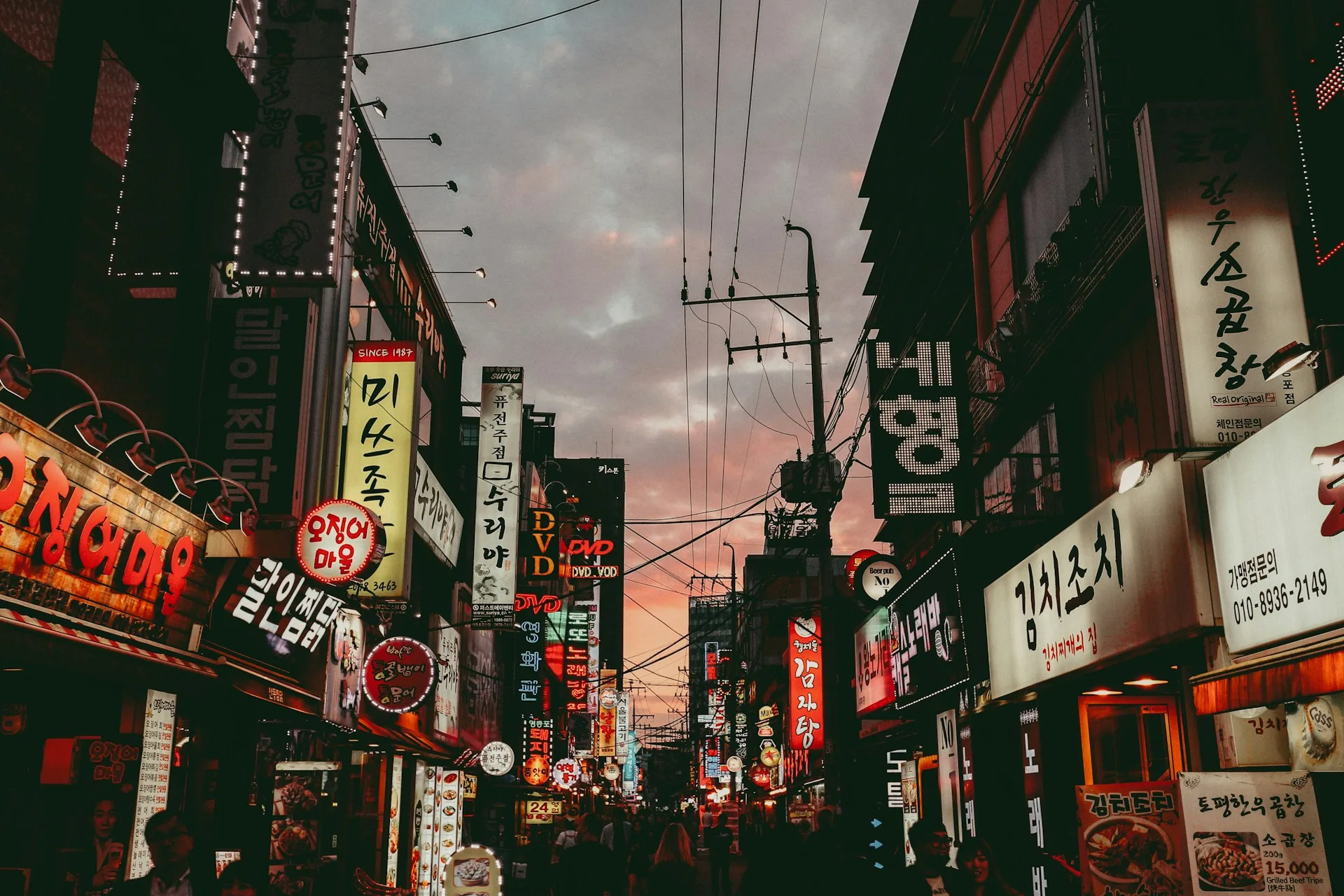
لماذا الدراسة في كوريا الجنوبية؟
تقدم كوريا الجنوبية جامعات SKY عالمية المستوى ومنح KGSP الممولة بالكامل ورسوماً دراسية معقولة وصناعة تقنية وثقافية مزدهرة وواحدة من أكثر البيئات المعيشية أماناً في العالم.
Why Study in South Korea
South Korea welcomes over 200,000 international students from more than 190 countries, and that number is growing fast. The country has invested heavily in internationalizing its universities, expanding English-taught programs, and offering some of the most generous government scholarships in the world. The result is a study destination that combines academic prestige, affordability, career opportunity, and cultural richness in a way that few countries can match.
If you're considering South Korea alongside other Asian or Western destinations, this guide breaks down exactly what makes it stand out — with real numbers and honest comparisons.
World-Class Universities and Global Rankings
South Korea has over 190 universities, and its top institutions compete with the best in Asia and the world. The country punches well above its weight in global rankings for a nation of 52 million people.
South Korea's Top-Ranked Universities (2025-2026)
| University | QS World Ranking | THE World Ranking | Location |
|---|---|---|---|
| Seoul National University (SNU) | 31 | 62 | Seoul |
| KAIST | 56 | 91 | Daejeon |
| Yonsei University | 56 | 78 | Seoul |
| Korea University | 67 | 96 | Seoul |
| POSTECH | 71 | 132 | Pohang |
| Sungkyunkwan University (SKKU) | 100 | 145 | Seoul/Suwon |
| Hanyang University | 164 | 251-300 | Seoul |
| Kyung Hee University | 332 | 301-350 | Seoul |
| Sogang University | 440 | 401-500 | Seoul |
| Ewha Womans University | 346 | 301-350 | Seoul |
The SKY universities — Seoul National University, Korea University, and Yonsei University — are the Korean equivalent of the Ivy League. In Korean society, a SKY degree carries enormous prestige and opens doors in business, government, and academia.
Beyond SKY, KAIST (Korea Advanced Institute of Science and Technology) and POSTECH (Pohang University of Science and Technology) are specialized research universities focused on science and engineering that consistently rank among Asia's best. Sungkyunkwan University (SKKU), backed by Samsung, is rising rapidly in global rankings and is known for its strong corporate connections.
The KGSP/GKS Scholarship — Full Funding
The Korean Government Scholarship Program (KGSP), also called the Global Korea Scholarship (GKS), is one of the most comprehensive government scholarship programs in the world. It's fully funded and covers virtually everything.
What KGSP/GKS Covers
| Benefit | Details |
|---|---|
| Tuition | Full tuition for the entire program |
| Monthly living allowance | KRW 900,000 (undergraduate) / KRW 1,000,000 (graduate) |
| Round-trip airfare | Economy class tickets to and from Korea |
| Settlement allowance | KRW 200,000 upon arrival |
| Korean language training | 1 year at a Korean language institute before your degree begins |
| Medical insurance | National Health Insurance coverage |
| Completion grant | KRW 100,000 upon successful completion |
| Research support | Up to KRW 2,100,000-2,400,000 for thesis/research (graduate) |
KGSP/GKS Application Routes
There are two ways to apply:
- Embassy Track: Apply through the Korean embassy or consulate in your home country. Each embassy has its own selection process and quotas.
- University Track: Apply directly to a participating Korean university, which nominates you to NIIED (National Institute for International Education).
Affordable Tuition — A Major Advantage
South Korea's tuition fees are dramatically lower than those at comparable universities in the US, UK, or Australia. This is especially true at national (public) universities.
Tuition Comparison
| Institution Type | Annual Tuition (KRW) | Approximate USD |
|---|---|---|
| National university (humanities) | 3,500,000 - 5,000,000 | 2,600 - 3,700 |
| National university (engineering/science) | 5,000,000 - 8,000,000 | 3,700 - 6,000 |
| Private university (humanities) | 6,000,000 - 10,000,000 | 4,500 - 7,500 |
| Private university (engineering/science) | 8,000,000 - 15,000,000 | 6,000 - 11,200 |
| Private university (medicine) | 12,000,000 - 20,000,000 | 9,000 - 15,000 |
Compare this to annual tuition of USD 30,000-60,000 in the US, GBP 15,000-38,000 in the UK, or AUD 30,000-50,000 in Australia — South Korea offers extraordinary value.
Cost Comparison with Other Study Destinations
| Country | Annual Tuition (USD Equivalent) | Monthly Living Costs (USD) | Post-Study Work |
|---|---|---|---|
| South Korea | 3,000 - 11,000 | 600 - 900 | D-10 visa (6 months-2 years) |
| Japan | 5,000 - 15,000 | 800 - 1,200 | Designated Activities visa |
| Germany | 0 - 3,000 (public) | 900 - 1,200 | 18-month job-seeker visa |
| USA | 30,000 - 60,000 | 1,200 - 2,500 | OPT (1-3 years) |
| UK | 18,000 - 45,000 | 1,000 - 1,800 | Graduate visa (2 years) |
| Australia | 25,000 - 45,000 | 1,200 - 2,000 | Post-study work (2-4 years) |
Tech and Innovation Powerhouse
South Korea is one of the world's leading technology nations. For students in engineering, computer science, business, and related fields, studying here means being at the center of a global innovation ecosystem.
Key facts:
- Samsung Electronics is the world's largest semiconductor manufacturer and a top-3 smartphone maker
- Hyundai Motor Group (Hyundai and Kia) is the world's third-largest automaker and a leader in electric vehicles
- LG is a global leader in displays, batteries, and home electronics
- SK Group dominates semiconductors and energy storage
- Kakao and Naver are the tech giants behind Korea's digital ecosystem — comparable to Google and Meta in scale
- South Korea ranks #1 globally in internet speed and among the highest in R&D spending as a percentage of GDP (over 4.9%)
For students in STEM fields, Korean universities maintain deep partnerships with these companies. KAIST works closely with Samsung and Hyundai on research projects. SKKU is literally backed by Samsung. POSTECH has strong ties to POSCO (one of the world's largest steel companies). These connections translate into internships, research funding, and career opportunities.
The K-Culture Wave
South Korea's cultural influence has exploded globally. K-pop groups like BTS and BLACKPINK, K-dramas on Netflix, Korean cinema (Parasite won the Best Picture Oscar), and Korean cuisine have created a worldwide wave of interest in Korean culture.
For international students, this means:
- Cultural immersion in the country that produces the content millions consume worldwide
- Creative industries — entertainment, media, fashion, and gaming are major employers
- Language advantage — learning Korean opens doors in entertainment, translation, business, and diplomacy
- Global alumni networks — the growing international interest in South Korea creates demand for professionals who understand Korean culture and business
- Campus culture — Korean university life is vibrant with festivals, clubs, and social activities
Safe and Modern Living
South Korea is consistently ranked among the safest countries in the world. The infrastructure is exceptional — fast, reliable public transport, high-speed internet everywhere, modern healthcare, and 24/7 convenience.
What does this mean in practice?
- Safety: Extremely low violent crime rates. It's normal to see people leaving laptops unattended in cafes or walking alone at 3 AM
- Transport: Seoul's subway system is one of the world's best — clean, on time, and incredibly affordable. The KTX bullet train connects major cities
- Technology: Free Wi-Fi nearly everywhere, cashless payments standard, cutting-edge digital services
- Healthcare: Excellent and affordable, with mandatory National Health Insurance for all students
- Convenience: Over 50,000 convenience stores (CU, GS25, 7-Eleven) open 24/7 across the country
- Food: Diverse, delicious, and affordable — from KRW 5,000-8,000 campus meals to world-class restaurants
Student Cities Ranked
| City | Population | Key Strengths | Considerations |
|---|---|---|---|
| Seoul | 9.7M | Capital, most universities, best job market, cultural hub | Higher living costs, competitive |
| Busan | 3.4M | Coastal city, beaches, lower costs, Pusan National University | Fewer English-taught programs |
| Daejeon | 1.5M | Science/research hub, KAIST, affordable | Smaller city, less nightlife |
| Incheon | 3.0M | Near Seoul, international airport, growing universities | Spread-out city |
| Daegu | 2.4M | Medical hub, affordable, Kyungpook National University | Hot summers, fewer international students |
| Gwangju | 1.5M | Arts and culture city, Chonnam National University | Smaller international community |
Potential Drawbacks — Being Honest
No destination is perfect. Here's what to consider:
- Language barrier: While English-taught programs exist, daily life in Korea largely requires Korean. Signs, menus, and administrative processes are often in Korean only, especially outside Seoul
- Academic intensity: Korean university culture can be very competitive and demanding, with heavy workloads and strong emphasis on grades
- Homogeneity: South Korea is more ethnically homogeneous than Western countries, and some international students report feeling like outsiders, particularly in smaller cities
- Work restrictions: Part-time work requires a separate permit and is limited, unlike countries like Australia where work rights are automatic
- Hot, humid summers: July-August temperatures in Seoul regularly exceed 35C with high humidity
- Mandatory military service for Korean men creates a unique campus dynamic — many male Korean students take breaks from university for military service
Who Should Choose South Korea?
South Korea is an excellent fit if you:
- Want a prestigious degree at an affordable price from a globally ranked university
- Are interested in technology, engineering, sciences, or business — South Korea's strongest sectors
- Want to experience K-culture firsthand and immerse yourself in Korean society
- Are looking for a fully funded scholarship (KGSP/GKS) to cover your entire education
- Value safety, efficiency, and modern infrastructure in your daily life
- Want to learn Korean — a skill increasingly valued in global business and diplomacy
It might not be the best fit if you can't adapt to a language-heavy environment (consider Singapore or the Netherlands for fully English-speaking options), want a quick path to permanent residency (consider Canada or Australia), or prefer a Mediterranean climate (consider Spain or Italy).
Next Steps
Ready to explore further? Here's where to go next:
- Plan your studies — Build your timeline and understand South Korea's academic calendar
- Browse programs and universities — Compare South Korea's top institutions by subject area
- Understand costs and funding — Get a realistic picture of tuition, living costs, and scholarships
- Check visa requirements — Learn about the D-2 student visa process and arrival steps
الأسئلة الشائعة
Why should I study in South Korea instead of Japan or China?
Is South Korea safe for international students?
How many international students study in South Korea?
Are South Korean degrees recognized worldwide?
Do I need to speak Korean to study in South Korea?
What is the KGSP/GKS scholarship?
Is South Korea expensive for international students?
What makes South Korea's tech industry special for students?
أدلة ذات صلة
خطط لدراستك
جدول زمني خطوة بخطوة للدراسة في كوريا الجنوبية — من اختيار الجامعة والبرنامج إلى متطلبات TOPIK ونظام القبول في مارس/سبتمبر.
🎓البرامج والجامعات
قارن بين الجامعات والبرامج بناءً على الملاءمة والمخرجات.
📝القبول والتقديم
افهم المتطلبات والمواعيد وكيف تجهّز طلبًا قويًا.
💰التكاليف والتمويل
قدّر التكاليف الكلية وابحث عن خيارات تمويل واقعية.
🛂التأشيرة والوصول
خطط للتأشيرة مبكرًا واستعد لخطوات الوصول.
🏡الحياة في كوريا الجنوبية
دليل عملي للحياة اليومية في كوريا الجنوبية — المدن الطلابية والسكن والنقل والطعام والصحة والأمان.
💼العمل والمهنة
دليل شامل للعمل في كوريا الجنوبية — العمل الجزئي وتأشيرة البحث عن عمل D-10 وتأشيرة العمل المهني E-7 والمسارات المهنية في سامسونج وهيونداي.
آخر الأخبار
أستراليا تقدم إجراءات جديدة للطلاب الدوليين – Study Abroad
أستراليا تقدم إجراءات جديدة للطلاب الدوليين – Study Abroad
ماذا تتوقع عند الدراسة في الخارج في خريف 2020 – Study Abroad
ماذا تتوقع عند الدراسة في الخارج في خريف 2020 – Study Abroad
شبكة جامعات Aurora من بين الشبكات التي اختارتها المفوضية الأوروبية للانضمام رسمياً إلى شبكات الجامعات الأوروبية – Study Abroad
شبكة جامعات Aurora من بين الشبكات التي اختارتها المفوضية الأوروبية للانضمام رسمياً إلى شبكات الجامعات الأوروبية – Study Abroad
أحدث المقالات
10 نصائح مثبتة لتعلّم الألمانية قبل وصولك
أتقن أساسيات الألمانية بهذه النصائح والموارد العملية. من التطبيقات إلى شركاء اللغة، اكتشف أفضل الطرق للاستعداد لدراستك في ألمانيا.
دليل ميزانية الطلاب الكامل في ألمانيا 2026
تفصيل واقعي للنفقات الشهرية، ونصائح لتوفير المال، وتخطيط الميزانية للطلاب الدوليين في ألمانيا. تعلّم كيف تعيش براحة بميزانية طالب.
كيفية التقديم للجامعات الألمانية: دليل خطوة بخطوة كامل
دليل شامل يأخذك عبر كل خطوة من عملية التقديم للجامعات الألمانية، من تجهيز المستندات إلى استلام خطاب القبول.