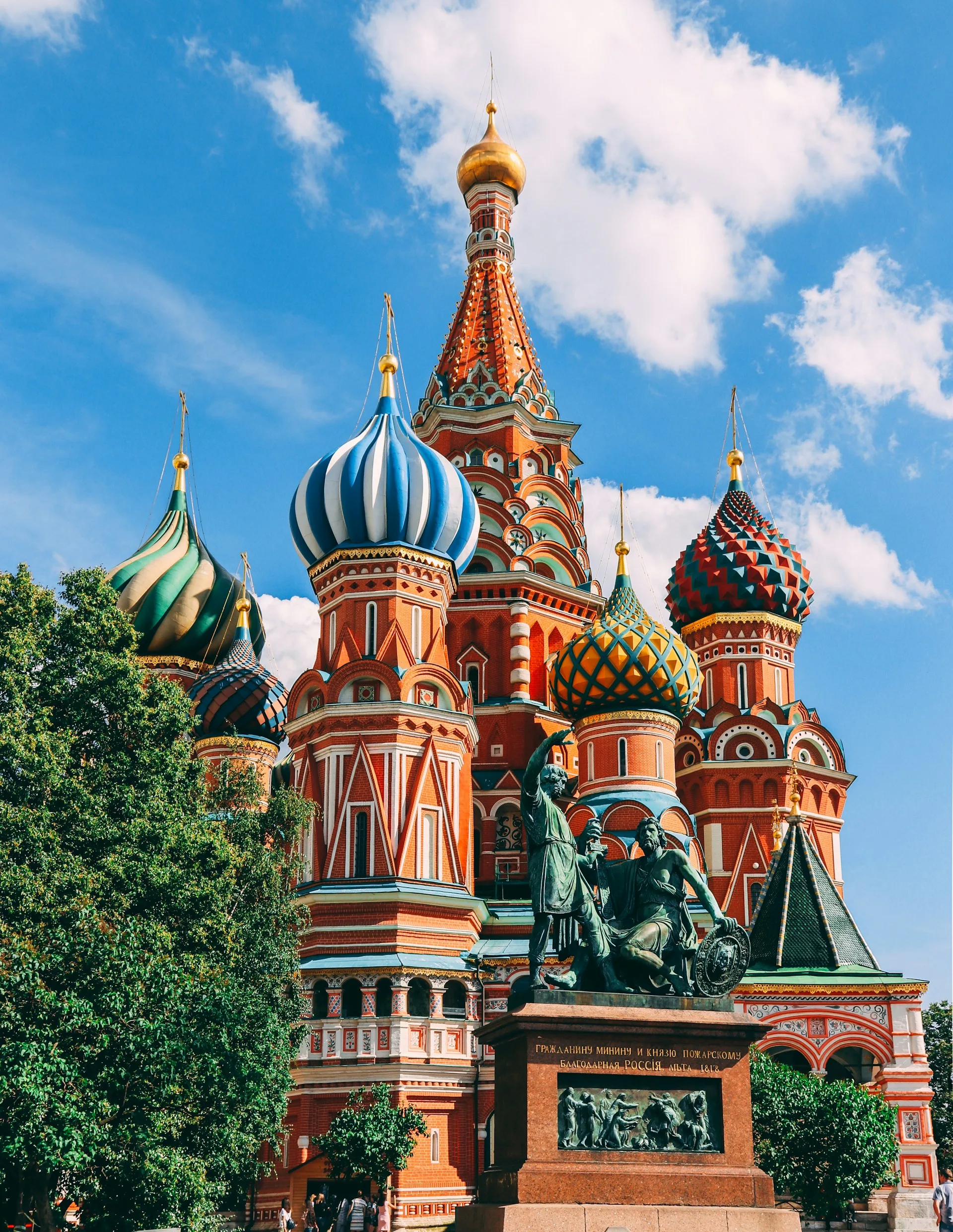
خطط لدراستك في روسيا - الدراسة في روسيا (ar)
ابدأ التخطيط قبل 9-12 شهراً — الجدول الزمني، اعتراف الشهادات، إعداد اللغة والسنة التحضيرية.
Plan Your Studies in Russia
Successful preparation for studying in Russia starts 9-12 months before your intended start date — longer if you need the preparatory faculty year for Russian language preparation. Russia's application process differs from Western systems in several important ways: the academic calendar, the credential recognition process, the language preparation pathways, and the role of the preparatory faculty. This guide gives you the complete planning framework.
Understanding the Russian Academic Calendar
Russia follows a two-semester system, but unlike Germany or the Netherlands, the September intake dominates:
| Semester | Classes start | Application period | Notes |
|---|---|---|---|
| Autumn semester | September 1 | December-July (varies by pathway) | Main intake; all programs available |
| Spring semester | February | September-November | Limited; some Master's programs only |
The vast majority of programs start in September. This is the standard intake for Bachelor's, Specialist, Master's, and PhD programs. A small number of Master's programs accept February entry, but you should plan for September unless your specific program explicitly confirms otherwise.
The academic year runs:
- Autumn semester: September 1 to late December (exams in January)
- Spring semester: February to late May (exams in June)
- Summer break: July-August
Choosing Your Application Pathway
There are three main routes to studying in Russia as an international student:
Route 1 — Russian Government Scholarship (Quota Program)
- Application period: January-February (varies by country)
- Selection process: Review by Russian embassy or designated agency in your country
- What it covers: Full tuition + dormitory + monthly stipend
- Best for: Students who want fully funded study and are willing to go through the selection process
Route 2 — Direct University Admission (Self-Funded)
- Application period: March-July for September start
- Process: Apply directly to your chosen university's international admissions office
- What it covers: You pay tuition and living costs yourself (still very affordable)
- Best for: Students who want to choose their specific university and program without quota limitations
Route 3 — Bilateral Agreements and Exchange Programs
- Application period: Varies by program
- Process: Apply through your home university or national education agency
- What it covers: Varies — some are fully funded, others partially funded
- Best for: Students at universities with Russian partner institutions
| Pathway | Application opens | Decision by | Cost to student |
|---|---|---|---|
| Government Scholarship | January-February | April-June | Free (stipend included) |
| Direct Admission | March-July | Rolling / within 2-4 weeks | Tuition + living costs |
| Exchange Programs | Varies | Varies | Varies by program |
Credential Recognition
Your foreign educational documents must be recognized in Russia before you can enrol. This process is called nostrification.
Automatic recognition
Russia has bilateral agreements with many countries that allow automatic recognition of educational credentials. If your country has such an agreement, your documents are accepted without additional evaluation. Countries with bilateral agreements include many CIS states, China, and several others.
Nostrification through Glavexpertcentr
If automatic recognition does not apply to your country, you need to submit your documents to Glavexpertcentr (the Main State Expert Centre for Evaluation of Education under Rosobrnadzor):
| Step | Details |
|---|---|
| Documents needed | Original diploma/certificate + notarized Russian translation + apostille or consular legalization |
| Submission | Online through the Glavexpertcentr website or in person |
| Processing time | 2-4 weeks (standard) |
| Cost | Approximately RUB 6,500-8,500 |
| Result | Recognition certificate confirming your qualification's equivalence |
What if your credentials are not directly recognized?
If your school-leaving certificate is not recognized for direct university entry, you have two options:
- Preparatory faculty year — attend a 10-12 month preparatory program at a Russian university, then enter the degree program
- Additional examinations — some universities accept students after passing entrance exams, even if formal nostrification is pending
Russian Language Preparation
For Russian-taught programs, language proficiency is essential. Here is what you need to know:
TORFL (TRKI) — The Official Russian Language Test
| Level | CEFR equivalent | Required for | Description |
|---|---|---|---|
| Elementary (TEU) | A1 | Basic communication | Survival-level Russian |
| Basic (TBU) | A2 | Preparatory faculty entry | Simple everyday communication |
| TORFL-1 | B1 | Bachelor's programs | Conversational fluency; can follow lectures |
| TORFL-2 | B2 | Master's/Specialist programs | Professional-level communication |
| TORFL-3 | C1 | Some PhD programs, teaching | Near-native proficiency |
| TORFL-4 | C2 | Academic/professional specialization | Native-level mastery |
The test has five sections: reading, writing, listening, speaking, and grammar/vocabulary. You must pass all five sections. Tests are offered at certified TORFL centres worldwide and at most Russian universities.
The Preparatory Faculty Year
If you do not speak Russian, the preparatory faculty (podgotovitelnyy fakultet) is the standard pathway:
- Duration: 10-12 months (September/October to June/July)
- Content: Intensive Russian language (20-25 hours/week) + foundation subjects in your intended field
- Outcome: Reach TORFL-1 (B1) or higher; readiness for degree-level study
- Cost: RUB 80,000-200,000/year (or free under the Government Scholarship)
- Availability: Offered by most major universities
The preparatory faculty is not a language school — it is an academic program. You study Russian intensively while also taking preparatory courses in the subjects relevant to your future degree (mathematics and physics for engineering students, biology and chemistry for medical students, social sciences for humanities students, etc.).
| Preparatory faculty | University | Approximate annual cost |
|---|---|---|
| Russian Language Centre | Moscow State University | RUB 180,000-200,000 |
| Preparatory Faculty | St. Petersburg State University | RUB 160,000-180,000 |
| International Preparatory Faculty | Kazan Federal University | RUB 100,000-130,000 |
| Preparatory Department | Tomsk State University | RUB 90,000-120,000 |
| Foundation Program | ITMO University | RUB 120,000-150,000 |
English-taught programs — Language requirements
If you are applying to an English-taught program, you need:
| Test | Typical minimum score |
|---|---|
| IELTS | 6.0-6.5 overall (no band below 5.5) |
| TOEFL iBT | 75-90 |
| Cambridge | B2 First (FCE) or higher |
Some universities accept other evidence of English proficiency, such as a degree taught in English or English as a native language. Check your specific program requirements.
Choosing Between University Types
Russia has three main categories of higher education institutions:
Classical Universities (Klassicheskie universitety)
- Examples: Moscow State (Lomonosov), St. Petersburg State, Kazan Federal, Novosibirsk State
- Strengths: Broad range of disciplines, strong research traditions, comprehensive campuses
- Best for: Students in humanities, natural sciences, social sciences, law, and interdisciplinary fields
Technical Universities (Tekhnicheskie universitety)
- Examples: Bauman MSTU, MIPT, ITMO, SPbPU (Peter the Great Polytechnic), MEPhI
- Strengths: Engineering, technology, applied sciences, strong industry connections
- Best for: Students in engineering, IT, physics, and applied mathematics
Medical Universities (Meditsinskie universitety)
- Examples: Sechenov University, Pirogov RNIMU, Kazan State Medical University, PSPbSMU
- Strengths: Dedicated medical training, clinical practice, WHO-recognized degrees
- Best for: Students pursuing medicine, dentistry, pharmacy, or nursing
Specialized Institutions
- Arts: Moscow Conservatory, Surikov Art Institute, VGIK (film)
- Economics: Plekhanov Russian University of Economics, Financial University
- Agriculture: Timiryazev Agricultural Academy
- IT: Innopolis University (Russia's dedicated IT university)
| University type | Duration (Bachelor's) | Duration (Specialist) | Research focus | Industry ties |
|---|---|---|---|---|
| Classical | 4 years | 5 years (some programs) | Very strong | Moderate |
| Technical | 4 years | 5-5.5 years | Strong (applied) | Very strong |
| Medical | N/A | 6 years | Clinical focus | Hospital partnerships |
Planning Timeline
If you need the preparatory faculty year
| When | What to do |
|---|---|
| January (Year 1) | Research universities and programs; apply for Government Scholarship |
| February-April | Complete scholarship selection process; gather documents |
| May-June | Receive admission/scholarship confirmation; begin visa process |
| July-August | Obtain visa; arrange travel; prepare for departure |
| September (Year 1) | Arrive; begin preparatory faculty year |
| June (Year 2) | Complete preparatory faculty; take TORFL exam |
| September (Year 2) | Begin degree program |
If applying directly (with existing Russian or English proficiency)
| When | What to do |
|---|---|
| 9 months before | Research universities and programs; begin credential recognition |
| 6-7 months before | Apply for Government Scholarship or submit direct applications |
| 4-5 months before | Receive admission confirmation; begin visa process |
| 2-3 months before | Obtain invitation letter; apply for visa |
| 1 month before | Receive visa; arrange travel and accommodation |
| September | Arrive; complete registration; begin studies |
Key Documents to Prepare
Start gathering these documents early:
| Document | Details | Where to get it |
|---|---|---|
| Educational certificates | Original diploma + certified translations | Your school/university + certified translator |
| Transcripts | Full academic record with grades | Your school/university |
| Apostille | Authentication of educational documents | Government authority in your country |
| Passport | Valid for at least 18 months beyond planned arrival | Your national passport office |
| Medical certificate | General health + HIV test result | Licensed medical facility |
| Passport photos | 3x4 cm, recent, white background | Photo studio |
| Language certificate | TORFL or IELTS/TOEFL as applicable | Test centre |
| Notarized translations | Russian translations of all documents | Certified translator |
Next Steps
- Explore programs and universities — find the right institution and program for your field
- Understand admissions and applications — learn the application process step by step
- Costs and funding — budget planning and the Government Scholarship
- Visa and arrival — prepare for the visa process and your first days
الأسئلة الشائعة
When should I start planning to study in Russia?
When do Russian universities start?
Do I need to speak Russian to study in Russia?
What is the preparatory faculty year?
What is TORFL/TRKI?
How do I get my credentials recognized in Russia?
Should I choose a classical university or a technical university?
Can I apply to multiple universities in Russia?
أدلة ذات صلة
لماذا الدراسة في روسيا
تقدم روسيا رسوماً دراسية معقولة، ومنحة حكومية ممولة بالكامل، وبرامج علمية وطبية عالمية المستوى — اكتشف لماذا يختارها أكثر من 350,000 طالب دولي.
🎓البرامج والجامعات في روسيا
دليل شامل لأكثر من 700 جامعة روسية وأنواع الشهادات واختيار البرنامج المناسب.
📝القبول والتقديم في روسيا
أتقن عملية التقديم — بوابة Study in Russia، المنحة الحكومية، القبول المباشر وتوثيق المستندات.
💰تكاليف وتمويل الدراسة في روسيا
تحليل واقعي للرسوم الدراسية وتكاليف المعيشة والمنحة الحكومية الروسية — روسيا من أكثر وجهات الدراسة الجيدة بأسعار معقولة.
🛂التأشيرة والوصول إلى روسيا
دليل كامل لتأشيرة الطالب الروسية — خطاب الدعوة، عملية التقديم، التسجيل بالهجرة وقائمة مراجعة الأسبوع الأول.
🏡الحياة في روسيا كطالب
كل ما تحتاج معرفته عن الحياة اليومية — السكن الجامعي، الرعاية الصحية، المواصلات، البنوك، الثقافة والأمان.
💼العمل والمسيرة المهنية في روسيا
دليلك للعمل أثناء الدراسة — حقوق العمل، البحث عن وظيفة، الرواتب وفرص المسيرة المهنية.
آخر الأخبار
أستراليا تقدم إجراءات جديدة للطلاب الدوليين – Study Abroad
أستراليا تقدم إجراءات جديدة للطلاب الدوليين – Study Abroad
ماذا تتوقع عند الدراسة في الخارج في خريف 2020 – Study Abroad
ماذا تتوقع عند الدراسة في الخارج في خريف 2020 – Study Abroad
شبكة جامعات Aurora من بين الشبكات التي اختارتها المفوضية الأوروبية للانضمام رسمياً إلى شبكات الجامعات الأوروبية – Study Abroad
شبكة جامعات Aurora من بين الشبكات التي اختارتها المفوضية الأوروبية للانضمام رسمياً إلى شبكات الجامعات الأوروبية – Study Abroad
أحدث المقالات
10 نصائح مثبتة لتعلّم الألمانية قبل وصولك
أتقن أساسيات الألمانية بهذه النصائح والموارد العملية. من التطبيقات إلى شركاء اللغة، اكتشف أفضل الطرق للاستعداد لدراستك في ألمانيا.
دليل ميزانية الطلاب الكامل في ألمانيا 2026
تفصيل واقعي للنفقات الشهرية، ونصائح لتوفير المال، وتخطيط الميزانية للطلاب الدوليين في ألمانيا. تعلّم كيف تعيش براحة بميزانية طالب.
كيفية التقديم للجامعات الألمانية: دليل خطوة بخطوة كامل
دليل شامل يأخذك عبر كل خطوة من عملية التقديم للجامعات الألمانية، من تجهيز المستندات إلى استلام خطاب القبول.