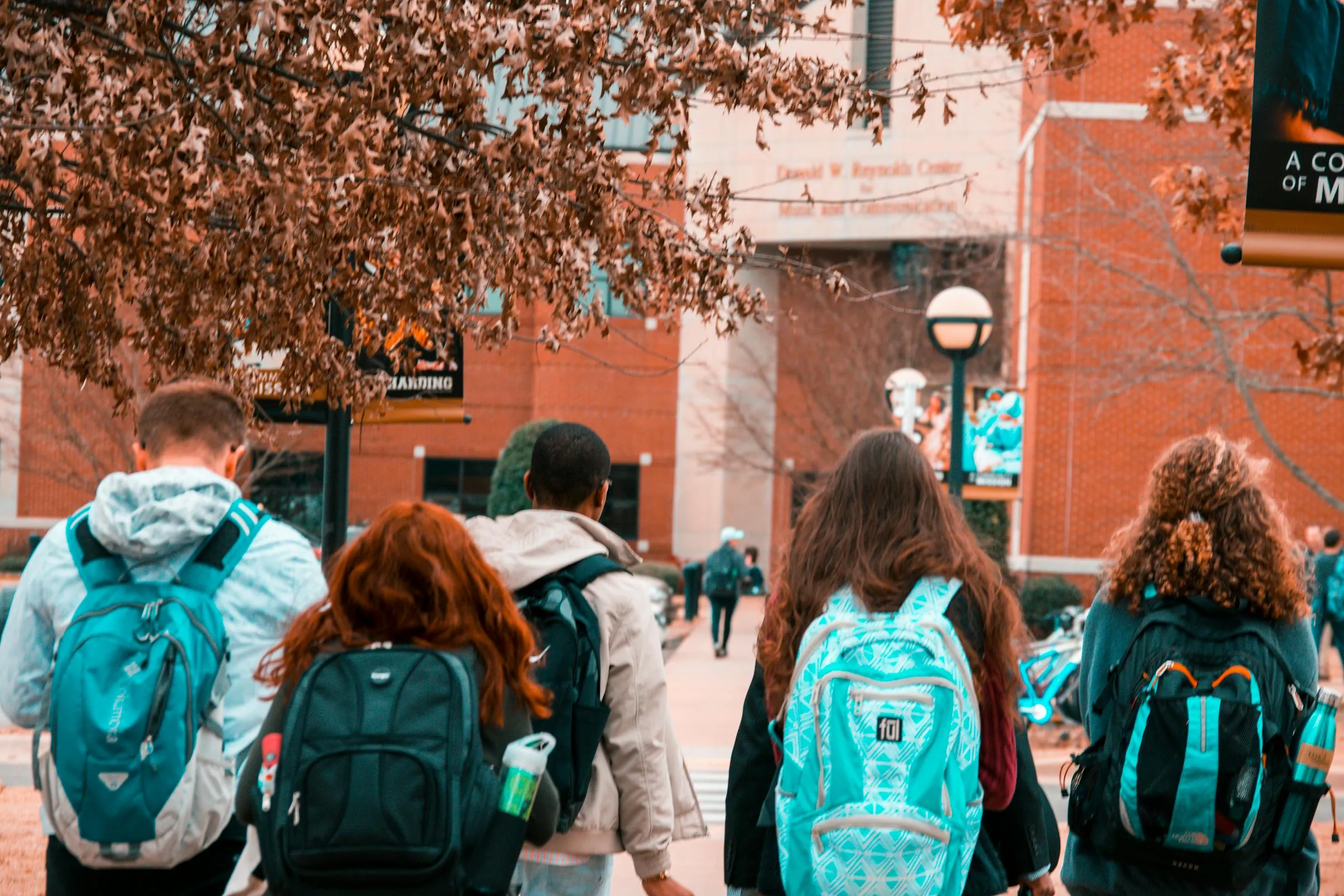
الحياة الطلابية في الجامعات الأمريكية: الدليل الكامل للطلاب الدوليين
اكتشف حياة السكن الجامعي، الأخويات، رياضات NCAA، خطط الوجبات، الأندية، مراكز التوظيف والأمان في الجامعات الأمريكية.
في هذه الصفحة
- Housing and Dorm Life
- Meal Plans and Dining
- Greek Life: Fraternities and Sororities
- NCAA Sports and School Spirit
- Clubs and Student Organisations
- Campus Safety
- Career Centres and Professional Development
- Diversity and Inclusion
- Health and Wellness
- Spring Break and Campus Traditions
- Practical Tips for International Students
- Frequently Asked Questions
- Final Thoughts
American campus life is unlike anything else in the world. US universities are not just places where you attend classes — they are self-contained communities with their own housing, dining, healthcare, sports, entertainment, and social systems. A large American university campus can spread across hundreds of acres, with dormitories housing thousands of students, dining halls serving three meals a day, recreation centres with Olympic-sized pools and rock climbing walls, stadiums seating 100,000 fans, and hundreds of student organisations covering every interest from robotics to salsa dancing. For international students, understanding and navigating this campus ecosystem is essential to making the most of your American education. This guide covers every aspect of student life on US campuses in 2026 — from your first day in the dorms to graduation day.
The campus experience is one of the primary reasons international students choose the United States over other study destinations. In most countries, universities are primarily academic institutions where students attend classes and then go home. In the US, the university is your home, your social life, your fitness centre, your entertainment venue, and your career launchpad — all wrapped into one. This immersive environment accelerates your integration, builds lifelong friendships, and creates the kind of networks that shape careers. But it can also be overwhelming, especially if you are coming from a very different cultural context. This guide helps you know what to expect.
Housing and Dorm Life
Types of On-Campus Housing
Most US universities guarantee on-campus housing for first-year students, and many require freshmen to live on campus. Housing options vary by university but generally include:
- Traditional dormitories: Shared rooms (usually doubles) with communal bathrooms on each floor. This is the most common first-year housing. Expect a room of roughly 12–16 square metres shared with one roommate.
- Suite-style housing: Several bedrooms connected to a shared bathroom and sometimes a small living area. More privacy than traditional dorms.
- Apartment-style housing: Full apartments with kitchens, living rooms, and private bathrooms. Usually available to upperclassmen (juniors and seniors).
- Themed housing: Living-learning communities focused on specific interests (international students, STEM students, sustainability, languages, etc.).
The Roommate Experience
Sharing a room with a stranger is a quintessential American college experience. Most universities pair first-year students with a roommate based on a questionnaire about sleep habits, study preferences, and cleanliness standards. For international students, this is often the first deep cross-cultural relationship you will build. Some tips:
- Communicate openly about expectations from day one — noise levels, visitors, study times, shared supplies
- Respect cultural differences; your roommate may have very different habits and values from yours
- If conflicts arise, talk to your Resident Advisor (RA) — a trained upperclassman who lives on your floor and mediates roommate issues
- Many lifelong friendships start with roommate pairings; be open to the experience even if it seems strange at first
Costs
On-campus housing typically costs $8,000–$16,000 per academic year, depending on the university and housing type. This usually includes utilities, internet, and basic furnishings (bed, desk, chair, dresser). Many universities require first-year students to also purchase a meal plan.
Meal Plans and Dining
American university dining is a world unto itself. Large universities operate multiple dining halls, food courts, cafes, and convenience stores across campus. Meal plans are the primary way students access campus dining.
How Meal Plans Work
A meal plan gives you a set number of meals per week (or per semester) at campus dining facilities. Common options include:
- Unlimited plan: Eat as many meals as you want at dining halls, typically $5,000–$7,000 per semester
- Block plan: A fixed number of meals per semester (150–200 meals), plus “dining dollars” for cafes and food courts
- “Flex” plan: A combination of meal swipes and flexible spending money
Dining halls at top universities have improved dramatically in recent years. Expect options including salad bars, international cuisine stations, halal and kosher options, vegan and vegetarian stations, and allergy-conscious preparations. Universities like UCLA, UMass Amherst, and Virginia Tech are consistently rated among the best college dining programmes in the country.
For International Students
If you have dietary requirements based on religion or culture (halal, kosher, vegetarian, no pork, no beef), most large universities can accommodate you. Check with the dining services office before you arrive. If campus dining does not meet your needs, some universities allow you to opt out of mandatory meal plans with documented dietary restrictions.
Greek Life: Fraternities and Sororities
Greek life — the system of fraternities (male) and sororities (female) identified by Greek letters — is one of the most distinctive and sometimes confusing aspects of American campus culture for international students. Approximately 9 million Americans are members of Greek organisations, and on some campuses, Greek life dominates the social scene.
What Greek Organisations Do
- Social events: Parties, formals, date nights, and mixers are the most visible aspect of Greek life
- Community service: Most chapters require minimum community service hours each semester
- Philanthropy: Chapters raise money for designated charities through events and campaigns
- Networking: Greek alumni networks are powerful, particularly in business, law, and politics
- Housing: Many chapters have their own houses where members live together
Should International Students Join?
Greek life is entirely optional. The pros include a built-in social network, leadership opportunities, alumni connections, and a strong sense of belonging. The cons include costs (dues range from $500 to $5,000+ per semester), time commitments, and a culture that may feel exclusionary or focused on drinking. International students who join Greek organisations often say it accelerated their integration into American culture, but it is equally valid to build your social life through other campus organisations.
Multicultural Greek Organisations
Beyond the traditional system, many campuses have multicultural Greek organisations — historically Black fraternities and sororities (NPHC), Latino Greek organisations, Asian-interest Greek organisations, and South Asian Greek organisations. These groups often provide a more culturally familiar community for international students of specific backgrounds.
NCAA Sports and School Spirit
Nothing captures the American campus experience quite like college sports. The National Collegiate Athletic Association (NCAA) organises intercollegiate athletics at over 1,100 schools, and at major universities, sports are not just entertainment — they are a cultural institution.
The Scale of College Sports
- Football: The biggest sport on most campuses. Michigan Stadium (“The Big House”) seats 107,601 people. Saturday game days transform entire cities, with tailgating, marching bands, and traditions that date back over a century.
- Basketball: College basketball culminates in March Madness, a 68-team single-elimination tournament that captivates the entire nation for three weeks every spring.
- Other sports: Baseball, soccer, lacrosse, swimming, track and field, hockey, and dozens more. International students can often join club or intramural teams.
Attending Games
Student tickets for football and basketball games are often included in your student fees or available at heavily discounted rates ($10–$30 for a football game that costs the general public $100+). Attending games is one of the best ways to feel connected to your university community, even if you do not follow the sport. The atmosphere is electric, and school spirit crosses cultural and linguistic boundaries.
Clubs and Student Organisations
Large US universities have 500 to 1,000+ registered student organisations, covering virtually every interest imaginable. Common categories include:
- Academic and professional: Pre-law society, engineering clubs, business fraternities, debate teams
- Cultural and international: Indian Students Association, Chinese Students and Scholars Association, Latin American Student Organisation, African Student Union
- Service and volunteering: Habitat for Humanity, tutoring programmes, environmental groups
- Arts and performance: A cappella groups, theatre troupes, dance teams, film clubs
- Recreation and sports: Club sports, outdoor adventure clubs, esports teams, martial arts
- Media: Student newspapers, radio stations, TV channels, literary magazines
- Religious and spiritual: Muslim Student Association, Hillel, Christian fellowships, Buddhist meditation groups
- Political and advocacy: Democrats, Republicans, environmental advocacy, human rights organisations
For International Students
Joining clubs is the single most effective way to build a social network, practice English, develop leadership skills, and make friends outside your national community. Most universities hold a Student Activities Fair or Club Fair during the first week of classes where all organisations set up tables and recruit new members. Attend this fair and sign up for at least 3–5 organisations that interest you. You can always drop ones that do not work out.
Campus Safety
Safety is a top concern for international students and their families. US universities invest heavily in campus safety:
- Campus police: Most large universities have their own police departments with sworn officers who patrol campus 24/7
- Blue-light emergency phones: Towers with emergency buttons are stationed across campus, connecting you directly to campus police
- Safe walk/ride programmes: Free escort services for students walking alone at night
- Campus alerts: Text message and email warning systems for emergencies (severe weather, security threats)
- Title IX offices: Dedicated offices handling sexual harassment and assault prevention, reporting, and support
- Security cameras and access control: Dormitories and academic buildings require card access after hours
The Clery Act
US federal law requires all universities to publish annual crime statistics for their campus and surrounding areas. You can review any university’s crime data at the Department of Education’s website before deciding where to attend. This transparency is unique to the US and provides valuable information for comparing campus safety.
Career Centres and Professional Development
US university career centres are among the most comprehensive in the world. Services typically include:
- Career counselling: One-on-one sessions to explore career paths, review resumes, and practise interviews
- Job and internship databases: University-specific platforms where employers post positions targeted at students
- Career fairs: Large events where dozens or hundreds of employers recruit on campus each semester
- Alumni networking: Databases and events connecting current students with alumni working in their field of interest
- Workshops: Resume writing, interview skills, salary negotiation, networking strategies
- On-campus interviews: Major employers come to campus to interview students for full-time positions and internships
For International Students
Career centres at universities with large international populations often have dedicated international career advisors who understand the complexities of CPT, OPT, H-1B, and employer sponsorship. They can help you identify companies that sponsor work visas and navigate the job search process as a non-citizen. Start engaging with the career centre in your first year — do not wait until you are a senior.
Diversity and Inclusion
US universities are among the most diverse institutions on Earth. A large state university might have students from 100+ countries, speaking dozens of languages, practising all major religions, and representing every racial and ethnic background. Universities invest heavily in diversity infrastructure:
- Multicultural centres: Spaces and programming for students from underrepresented backgrounds
- International student offices: Visa advising, cultural adjustment support, and programming
- Diversity offices: Chief Diversity Officers and dedicated staff working on inclusion initiatives
- Bias response teams: Systems for reporting and addressing discrimination
- Cultural celebrations: Diwali festivals, Lunar New Year events, Hispanic Heritage Month, Black History Month, and many more
Health and Wellness
Most US universities provide comprehensive health services on campus:
- Student health centres: On-campus clinics offering primary care, immunisations, prescriptions, and basic testing
- Counselling centres: Free or low-cost mental health services, including individual therapy, group therapy, and crisis intervention
- Recreation centres: State-of-the-art gyms, swimming pools, fitness classes, intramural sports — all included in student fees
- Wellness programmes: Stress management workshops, meditation spaces, peer support programmes
Mental health awareness has become a major priority on US campuses. If you are struggling with homesickness, anxiety, academic stress, or culture shock, counselling services are available and confidential. There is no stigma in using them — a significant percentage of students access mental health services during their time at university.
Spring Break and Campus Traditions
Spring Break
Spring break is a one-week holiday in March or April. While the stereotypical image is of students on Florida beaches, many international students use the break for travel within the US, exploring cities and national parks. Some universities organise alternative spring break trips focused on community service or outdoor adventure. It is also a good time to visit friends at other universities or explore potential cities for post-graduation careers.
University Traditions
Every university has unique traditions that build community and school spirit:
- Homecoming: A fall celebration with a football game, parade, and events welcoming back alumni
- Midnight breakfast: Many universities serve a free late-night breakfast during finals week
- Primal scream: Students release stress before finals by screaming collectively at midnight
- Commencement: Graduation ceremonies are elaborate, formal events with caps and gowns, often featuring celebrity speakers
Practical Tips for International Students
- Attend orientation: Most universities have a dedicated international student orientation before the main orientation. Go to both.
- Get a student ID immediately: Your student ID is your key to everything — building access, dining, transit discounts, library, and events
- Open a US bank account: Campus credit unions often make this easy for international students. You will need a bank account for on-campus jobs and everyday expenses.
- Get a US phone number: Essential for two-factor authentication, job applications, and daily communication. Many carriers offer affordable student plans.
- Explore campus in the first week: Walk the entire campus, locate your classrooms, find the library, career centre, health centre, and international student office
- Say yes to everything (at least initially): Accept invitations to events, meals, and activities even if they seem unfamiliar. This is how friendships form.
Frequently Asked Questions
Do I have to live on campus?
Most universities require first-year students to live on campus. After freshman year, you can usually choose to live off campus. Living on campus is strongly recommended for at least the first year because it dramatically accelerates your social integration and gives you the full campus experience.
How much does a meal plan cost?
Meal plans typically range from $3,500 to $7,000 per semester, depending on the plan tier and university. An unlimited meal plan at a large university costs roughly $5,000–$6,000 per semester. Some universities offer lighter (and cheaper) plans for upperclassmen who cook in apartment-style housing.
Is Greek life important for career success?
Greek life provides networking benefits, particularly in finance, consulting, and business. However, it is absolutely not required for career success. Many highly successful graduates never joined a Greek organisation. The career centre, clubs, and internships are equally effective (and often more directly relevant) networking tools.
How safe are US campuses?
US campuses are generally safe environments with dedicated police, emergency systems, and safety protocols. Crime does occur, as it does anywhere, but universities invest heavily in prevention and response. Check the Clery Act crime statistics for any university you are considering. Common-sense precautions — avoiding isolated areas at night, locking your door, and staying aware of your surroundings — apply as they do everywhere.
Can I play sports at a US university?
Yes. Beyond the highly competitive NCAA Division I teams, most universities offer club sports (competitive but less time-intensive) and intramural sports (recreational, open to all skill levels). Popular intramural sports include soccer, basketball, volleyball, flag football, and tennis. This is an excellent way for international students to stay active and meet people.
What is a Resident Advisor (RA)?
An RA is an upperclassman who lives on your dormitory floor and serves as a mentor, mediator, and resource. They organise social events, enforce housing rules, and are your first point of contact for roommate conflicts, personal issues, or emergencies. RAs receive training in crisis response, diversity, and student support.
How do I deal with culture shock?
Culture shock is normal and expected. Symptoms include homesickness, frustration with cultural differences, loneliness, and difficulty adjusting to new food and social norms. Most universities offer counselling services and international student programming specifically designed to help with adjustment. Connecting with other international students, maintaining some routines from home, and gradually exploring American culture all help. Most students report that the adjustment period lasts 2–4 months.
Are there religious facilities on campus?
Most large US universities have interfaith centres or chaplaincies that serve multiple religions. You will typically find Muslim prayer rooms, Jewish Hillel centres, Christian churches and chapels, Hindu and Buddhist meditation spaces, and more either on campus or immediately adjacent. University towns also have diverse religious communities in the wider area.
Final Thoughts
American campus life is one of the great experiences of international education. It is immersive, energetic, diverse, and designed to develop you not just as a student but as a person. The residential campus model — where your academic, social, and personal life all converge in one place — creates an intensity of experience that accelerates growth, builds lasting relationships, and prepares you for professional life in ways that classroom education alone cannot.
The key to making the most of it is active participation. Join clubs, attend games, eat in the dining hall, introduce yourself to your neighbours in the dorm, visit office hours, and take advantage of every resource the university offers. You are paying a significant amount to be there — extract every ounce of value from the experience.
For more on studying in the United States, explore our comprehensive USA country guide, or read our articles on the community college pathway, Ivy League vs state universities, and financial aid for international students.