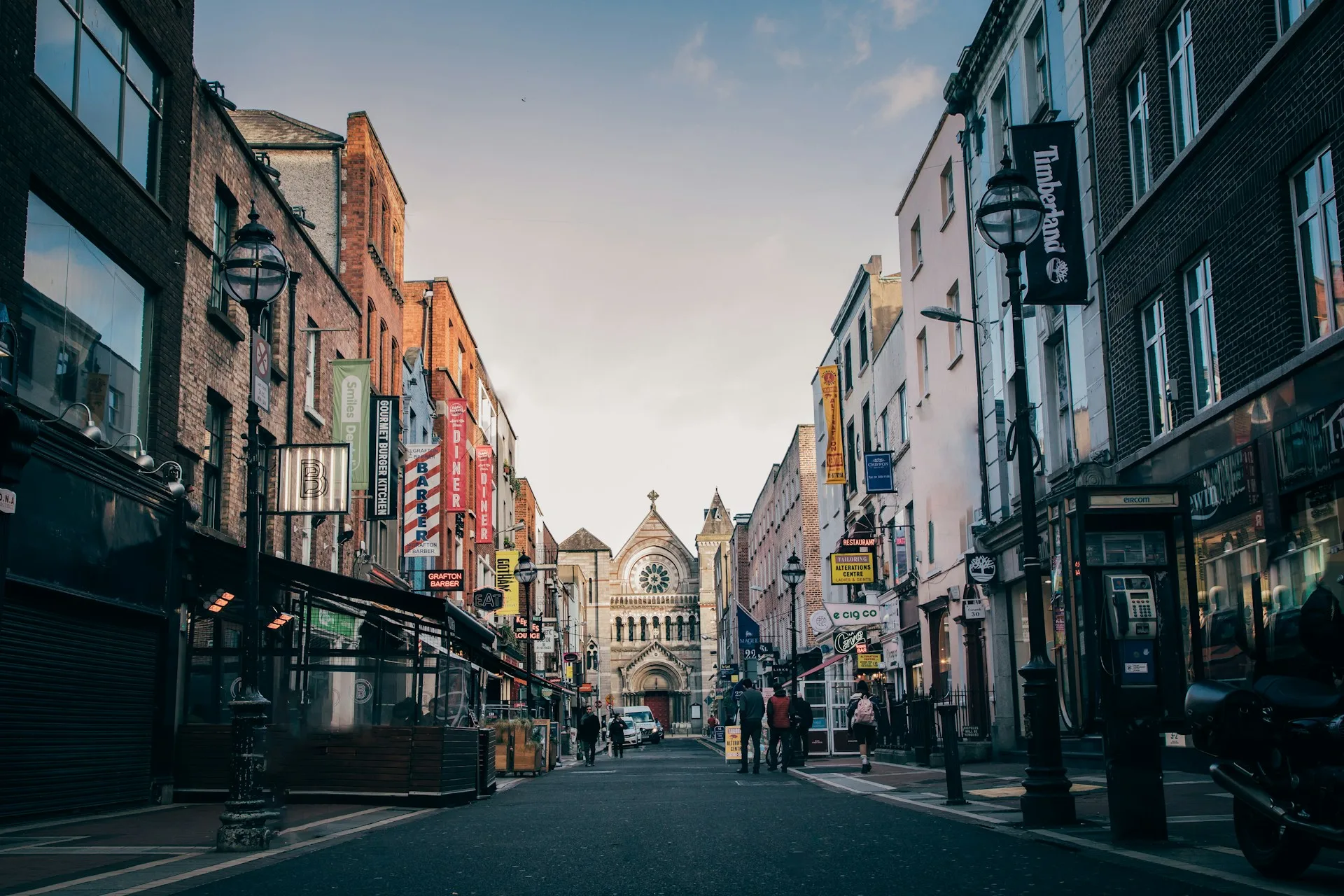
Why Study in Irlanda - İrlanda'da Eğitim (tr)
Irlanda offers English-speaking education within the EU, globally ranked universities, Europe's biggest tech hub, and a graduate work scheme that lets you stay 1-2 years after your degree.
Why Study in Irlanda: A Complete Guide for International Students
Irlanda has become one of Europe's most sought-after study destinations, and for good reason. It is the only English-speaking country in the Eurozone, home to globally ranked universities, and serves as the European headquarters for the world's biggest technology companies. For uluslararasi ogrenciler, Irlanda offers a rare combination: a high-quality, English-language education within the European Union, with a clear pathway to post-study employment in one of Europe's most dynamic economies.
This guide explains what makes Irlanda stand out, how it compares to other popular destinations, and whether it is the right choice for your academic and career ambitions.
English-Speaking Education Within the European Union
Irlanda's most distinctive advantage is its position as the only English-speaking country in the EU (since the UK's departure). This creates a unique benefit for uluslararasi ogrenciler that no other European country can match.
What does this mean in practice?
- All universite courses are taught in English -- no need to learn a second language before you start
- EU students benefit from lower ogretim ucretleri and freedom of movement within the bloc
- Non-EU students gain access to the EU job market through Irlanda's graduate work scheme
- Degrees are recognized across the EU through the Bologna Process and across the English-speaking world
- Professional qualifications earned in Irlanda are portable across 27 EU member states
For students from non-English-speaking countries, studying in Irlanda means improving your English in an immersive environment while earning a degree that is recognized globally. For students from English-speaking countries outside Europe, Irlanda provides a gateway to the EU without a language barrier.
World-Class Universities and Research
Irlanda's higher education system punches well above its weight for a country of just 5 million people. The country has 8 universities, all publicly funded and quality-assured through Quality and Qualifications Irlanda (QQI), plus a network of Technological Universities and Institutes of Technology.
How do Irish universities rank globally?
| Universite | QS 2025 Rank | THE 2025 Rank | Known For |
|---|---|---|---|
| Trinity College Dublin (TCD) | 81 | 134 | Humanities, sciences, law, computer science |
| Universite College Dublin (UCD) | 126 | 171 | Business, engineering, agriculture, veterinary |
| NUI Galway (Universite of Galway) | 256 | 251-300 | Medicine, engineering, arts, marine science |
| Universite College Cork (UCC) | 292 | 301-350 | Pharmacy, food science, law, medicine |
| Dublin City Universite (DCU) | 421 | 401-500 | Communications, computing, education, business |
| Universite of Limerick (UL) | 426 | 401-500 | Engineering, sport science, business, education |
| Maynooth Universite | 601-650 | 401-500 | Computer science, humanities, social sciences |
| TU Dublin | 801-850 | 601-800 | Technology, engineering, built environment |
Research excellence
Irlanda invests heavily in research through bodies like Science Foundation Irlanda (SFI), the Irish Research Council (IRC), and Enterprise Irlanda. Key research strengths include:
- Information and communications technology (ICT) -- Irlanda's ADAPT Centre and INSIGHT Centre are world leaders in AI and data analytics
- Pharmaceutical and life sciences -- Irlanda is a global hub for pharma manufacturing and biomedical research
- Food and agriculture -- Teagasc and universite research centres lead in sustainable food production
- Renewable energy -- Irlanda's Atlantic coast makes it a leader in wind and marine energy research
- Literature and humanities -- Trinity College's Long Room Library and Irlanda's four Nobel Prize-winning writers anchor a world-class humanities tradition
For students, this research investment means access to cutting-edge facilities, funded research opportunities, and the chance to work with leading academics. Many Master's and PhD programs include industry partnerships with multinational companies based in Irlanda.
Europe's Technology Capital
Irlanda's transformation into Europe's technology hub is one of the most remarkable economic stories of the past three decades. What began with Intel's chip fabrication plant in the 1990s has grown into the largest concentration of technology companies in Europe.
Which tech companies are headquartered in Irlanda?
| Company | Irlanda Role | Employees (approx.) | Location |
|---|---|---|---|
| EMEA Headquarters | 8,000+ | Dublin (Silicon Docks) | |
| Apple | European HQ & Operations | 6,000+ | Cork |
| Meta (Facebook) | EMEA Headquarters | 3,000+ | Dublin |
| Microsoft | EMEA Operations Centre | 3,000+ | Dublin |
| Amazon | EU Operations | 5,000+ | Dublin |
| Intel | Manufacturing & Research | 5,000+ | Leixlip (near Dublin) |
| Salesforce | International HQ | 2,000+ | Dublin |
| EMEA Headquarters | 2,000+ | Dublin | |
| Stripe | Co-founded by Irish brothers | 1,000+ | Dublin |
| Pfizer | Manufacturing & Research | 4,000+ | Cork, Dublin, Ringaskiddy |
Beyond the household names, over 1,000 multinational companies have significant operations in Irlanda, and the country has a thriving startup ecosystem supported by Enterprise Irlanda and NDRC (National Digital Research Centre).
What does this mean for students? It means internships, graduate programs, networking events, campus recruitment, and job opportunities that are difficult to find in any other European country. Many companies actively recruit from Irish universities, and universite career services maintain strong corporate relationships.
The Third Level Graduate Scheme
Irlanda's Third Level Graduate Scheme (also known as the Stamp 1G immigration permission) is one of Europe's most generous post-study work arrangements.
How does the Graduate Scheme work?
| Qualification Level | NFQ Level | Duration of Stay |
|---|---|---|
| Honours Bachelor's Degree | Level 8 | 1 year |
| Master's Degree | Level 9 | 2 years |
| PhD / Doctorate | Level 10 | 2 years |
Key features:
- No job offer required -- you receive permission to stay and seek employment
- Full-time work allowed -- no restrictions on hours or employer type
- No employer sponsorship needed during the scheme period
- Pathway to longer-term permits -- you can transition to a Critical Skills Employment Permit or General Work Permit
- Available to graduates of QQI-recognized programs at Irish higher education institutions
This scheme gives graduates genuine time to find employment, build professional networks, and transition to longer-term residency. Combined with Irlanda's strong job market, it represents a compelling post-study pathway. For full details on calisma iznis and career paths, see our Work & Career guide.
Friendly Culture and Quality of Life
Irlanda consistently ranks among the friendliest countries in the world for international visitors and students. The Irish concept of "craic" (pronounced "crack") -- meaning fun, entertainment, and good conversation -- permeates social life and makes integration easier than in many other countries.
What makes Irish culture distinctive?
- Warmth and hospitality -- Irish people are genuinely interested in where you come from and quick to include newcomers in social activities
- Pub culture -- Irish pubs are social hubs, not just places to drink. Live music sessions (called "trad sessions"), conversation, and community gathering are central
- GAA sports -- Gaelic football and hurling are uniquely Irish sports with passionate followings. Attending a match at Croke Park is an unforgettable experience
- Literary heritage -- Irlanda has produced four Nobel Prize-winning writers (Yeats, Shaw, Beckett, Heaney) and a literary culture that values storytelling
- Music and arts -- Traditional Irish music is alive in pubs across the country, and Irlanda punches above its weight in contemporary music, film, and theatre
- Outdoor life -- The Wild Atlantic Way, Ring of Kerry, Cliffs of Moher, and countless hiking trails offer stunning natural landscapes within easy reach
Safety and quality of life
Irlanda is one of the safest countries in Europe. The Global Peace Index consistently ranks it in the top 15 worldwide. Violent crime is rare, public spaces are generally safe, and the police (An Garda Siochana) are unarmed. The country also offers universal healthcare, a strong social safety net, and a high standard of living.
Ipucu: Join your universite's clubs and societies from day one. Irish students are sociable and inclusive, and clubs are the fastest way to build friendships and experience the culture firsthand. Most universities have over 100 clubs and societies covering everything from debating and drama to surfing and traditional music.
How Irlanda Compares to Other Study Destinations
| Factor | Irlanda | UK | Netherlands | Almanya |
|---|---|---|---|---|
| Language of instruction | English | English | English (many programs) | German (mostly) |
| EU membership | Yes | No | Yes | Yes |
| International tuition (approx.) | EUR 10,000-25,000 | GBP 15,000-45,000 | EUR 2,500-15,000 | EUR 0-3,000 (most) |
| Post-study work | 1-2 years | 2 years | 1 year (orientation) | 18 months |
| Tech sector presence | Very strong | Strong | Moderate | Strong |
| English proficiency (locals) | Native | Native | Very high | Moderate |
| Living costs (monthly) | EUR 1,000-1,500 | GBP 900-1,800 | EUR 900-1,300 | EUR 800-1,200 |
Irlanda's unique selling point is the combination of native English-language instruction, EU membership, and an exceptionally strong technology and pharma sector. No other country offers all three.
Is Irlanda Right for You?
Irlanda is an excellent choice if you:
- Want to study in English within the EU -- the only country that offers this combination
- Are interested in technology, pharma, or finance careers -- Irlanda's multinational sector is unmatched in Europe
- Value a friendly, sociable culture -- Irlanda's warmth makes settling in genuinely easy
- Want a post-study work pathway in Europe -- the Graduate Scheme provides 1-2 years to build your career
- Prefer a smaller, safer country -- Irlanda offers a high quality of life without the overwhelming scale of larger nations
- Want access to Europe -- travel easily across the EU from Irish airports
Irlanda may be less suitable if you are looking for very low ogretim ucretleri (consider Almanya or Scandinavia), want a very large city experience (Dublin has about 1.4 million people -- big for Irlanda but small compared to London or Paris), or need a wide range of non-English-language programs.
Sonraki Adimlar
Ready to explore studying in Irlanda? Here is where to go from here:
- Plan Your Studies -- Build a timeline with key deadlines, intake dates, and requirements
- Programs & Universities -- Compare Irish universities and find the right course
- Admissions & Application -- Understand the CAO system and postgraduate basvurus
- Costs & Funding -- Estimate your budget and find burslar
- Visa & Arrival -- Prepare your student permission and IRP registration
- Living in Irlanda -- Get ready for daily life, housing, and Irish culture
- Work & Career -- Plan your yari zamanli calisma and post-graduation career
Sık Sorulan Sorular
Why should I study in Irlanda instead of the UK or other English-speaking countries?
How do Irish universities rank globally?
Is Irlanda expensive for uluslararasi ogrenciler?
Can I work in Irlanda after graduating?
What is the Third Level Graduate Scheme?
Is Irlanda really a major tech hub?
What is student life like in Irlanda?
Do I need to speak Irish (Gaelic) to study in Irlanda?
İlgili rehberler
Plan Your Studies
A step-by-step planning timeline for studying in Kanada — from choosing a province and program to meeting language requirements and applying to Designated Learning Institutions.
🎓Programs & Universities in Irlanda
A comprehensive guide to Irlanda's 8 universities and Technological Universities -- program types, the QQI framework, subject strengths, and how to choose the right institution for your goals.
📝Admissions & Application
A step-by-step guide to applying to Canadian universities and colleges — from document preparation and credential evaluation to OUAC, direct basvurus, and conditional kabul.
💰Costs & Funding
A realistic breakdown of ogretim ucretleri, yasam masraflari by city, burslar, GIC requirements, and yari zamanli calisma earnings for uluslararasi ogrenciler in Kanada.
🛂Visa & Arrival
Complete guide to the Canadian study permit — requirements, GIC, biometrics, CAQ for Quebec, provincial saglik sigortasi, and your first-week arrival checklist.
🏡Living in Irlanda
Everything you need to know about daily life as an international student in Irlanda -- housing, healthcare, transport, banking, culture, and safety.
💼Work & Career in Irlanda
Your complete guide to working while studying in Irlanda -- student work rights, typical wages, the Third Level Graduate Scheme, and career pathways in Europe's tech hub.