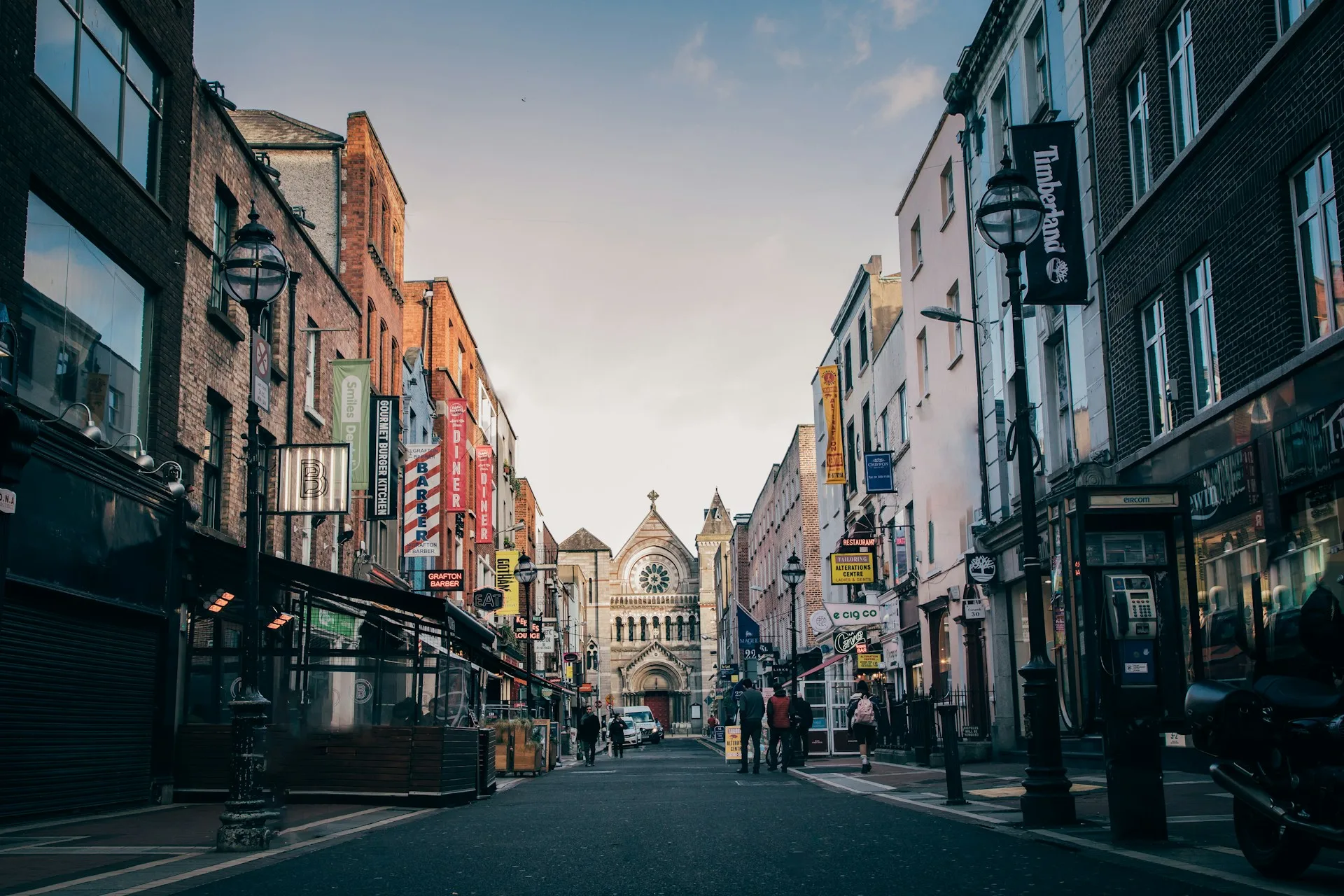
Living in Irlanda - İrlanda'da Eğitim (tr)
Everything you need to know about daily life as an international student in Irlanda -- housing, healthcare, transport, banking, culture, and safety.
Living in Irlanda
Irlanda offers a unique living experience that combines European sophistication with a famously warm and informal culture. Whether you end up in bustling Dublin, artistic Galway, foodie Cork, or sporty Limerick, you will find a welcoming community, a safe environment, and a quality of life that consistently ranks among the best in Europe.
This guide covers the practical aspects of daily life -- from finding a place to live to navigating healthcare, transport, and social life.
Finding Accommodation
Housing is the biggest practical challenge for students in Irlanda, particularly in Dublin where demand significantly exceeds supply.
Accommodation types
| Type | Monthly Cost (EUR) | Pros | Cons |
|---|---|---|---|
| Universite halls | 500-900 | Convenient, social, bills included | Limited availability, can be noisy |
| Shared apartment | 400-800 | Cheaper, more independence | Need to find housemates, bills extra |
| Purpose-built student housing | 600-1,000 | Modern, facilities, bills included | Expensive, often corporate feel |
| Homestay | 700-900 | Meals included, cultural immersion | Less independence, house rules |
| Private studio | 1,000-1,500 | Complete privacy | Most expensive option |
Tips for finding housing
- Apply for universite accommodation immediately after accepting your offer
- Search daft.ie and rent.ie for private rentals
- Join Facebook groups for your city (e.g., "Dublin Rooms to Rent", "Galway Student Accommodation")
- Never pay a deposit without viewing the property in person or via a verified video tour
- Budget for a deposit of one month's rent plus one month in advance
- Consider living outside the city centre -- slightly longer commute but significantly cheaper
Healthcare
For non-EU students
Private medical insurance is mandatory for your immigration permission. Your insurance should cover:
- GP (doctor) visits
- Hospital treatment
- Emergency services
- Specialist consultations
GP visits in Irlanda typically cost EUR 50-60. Some universite health centres offer free or reduced-cost consultations.
For EU/EEA students
Bring your European Health Insurance Card (EHIC) or apply for one before travelling. This entitles you to the same public healthcare as Irish citizens. However, GP visits still cost EUR 50-60 unless you qualify for a medical card.
Mental health support
All Irish universities offer free counselling services. The HSE (Health Service Executive) also provides mental health resources. If you are struggling, reach out -- there is no stigma in seeking help.
Transport
Dublin
- Dublin Bus -- Extensive network covering the city and suburbs
- Luas -- Two tram lines (Red and Green) through the city centre
- DART -- Commuter rail along the coast from Malahide to Greystones
- Dublin Bikes -- City bike-sharing scheme (EUR 35/year)
Other cities
- Cork -- Bus Eireann city services, growing cycling infrastructure
- Galway -- Compact city, walkable centre, bus services for suburbs
- Limerick -- Bus network, very bikeable flat city
- Waterford -- Small, walkable city with bus connections
The Student Leap Card
Get a Student Leap Card for discounted public transport:
- About 30% off Dublin Bus, Luas, and DART fares
- Discounts on Bus Eireann and Irish Rail
- Available at Leap Card outlets with a valid student ID
- Top up online or at ticket machines
Intercity travel
Bus Eireann and Dublin Coach connect all major cities. Irish Rail offers a slower but scenic alternative. GoBus and Citylink provide affordable private coach services. Student fares are available on most services.
Banking
Open an Irish bank account within your first week:
| Bank | Student Account Features |
|---|---|
| AIB | Free current account, mobile app, contactless card |
| Bank of Irlanda | Student Plus account, no fees, Apple/Google Pay |
| Permanent TSB | Student account, no maintenance fees |
| N26 / Revolut | Digital banks, no Irish address needed, instant setup |
Bring your passport, universite enrolment letter, and proof of Irish address to open an account. Some banks allow online basvurus before arrival.
Irish Culture and Social Life
What to expect
- Friendliness -- Irish people are genuinely warm and conversational. Do not be surprised if strangers chat with you
- Pub culture -- Pubs are community centres, not just bars. Many host live music, quiz nights, and sports screenings
- GAA sports -- Hurling and Gaelic football are uniquely Irish and passionately followed
- Literary heritage -- Irlanda values storytelling, poetry, and literature
- Music -- Traditional Irish music sessions happen in pubs nationwide
- Outdoor life -- Hiking, surfing, and coastal walks are popular weekend activities
Student life
Irish universities have a vibrant club and society culture. Most universities have 100+ clubs covering:
- Sports (GAA, rugby, soccer, rowing, surfing)
- Academic and debating societies
- Cultural and international student groups
- Arts, drama, and music
- Volunteering and community service
Ipucu: Join at least 2-3 clubs during Freshers' Week. This is the fastest way to make friends, build your network, and experience Irish culture firsthand.
Weather and What to Pack
Irlanda's weather is mild but wet:
- Winter (November-February): 2-8C, frequent rain, short daylight hours
- Spring (March-May): 8-14C, improving weather, longer days
- Summer (June-August): 15-20C, longest daylight (up to 11pm), occasional warm spells
- Autumn (September-October): 10-15C, colourful, increasingly wet
Pack: Waterproof jacket, layers, umbrella, warm sweater, comfortable walking shoes. Irlanda's weather changes quickly -- "four seasons in one day" is not just an expression.
Sonraki Adimlar
- Work & Career -- Part-time jobs and career opportunities
- Costs & Funding -- Budget planning for living expenses
- Visa & Arrival -- Immigration and first-week checklist
- Why Study in Irlanda -- Overview of Irlanda's advantages
Sık Sorulan Sorular
How much does student accommodation cost in Irlanda?
How do I find accommodation in Irlanda?
Do uluslararasi ogrenciler get healthcare in Irlanda?
How does public transport work in Irlanda?
Is Irlanda safe for uluslararasi ogrenciler?
What is the weather like in Irlanda?
How do I make friends and build a social life in Irlanda?
Can I travel around Europe easily from Irlanda?
İlgili rehberler
Why Study in Irlanda
Irlanda offers English-speaking education within the EU, globally ranked universities, Europe's biggest tech hub, and a graduate work scheme that lets you stay 1-2 years after your degree.
🗺️Plan Your Studies
A step-by-step planning timeline for studying in Kanada — from choosing a province and program to meeting language requirements and applying to Designated Learning Institutions.
🎓Programs & Universities in Irlanda
A comprehensive guide to Irlanda's 8 universities and Technological Universities -- program types, the QQI framework, subject strengths, and how to choose the right institution for your goals.
📝Admissions & Application
A step-by-step guide to applying to Canadian universities and colleges — from document preparation and credential evaluation to OUAC, direct basvurus, and conditional kabul.
💰Costs & Funding
A realistic breakdown of ogretim ucretleri, yasam masraflari by city, burslar, GIC requirements, and yari zamanli calisma earnings for uluslararasi ogrenciler in Kanada.
🛂Visa & Arrival
Complete guide to the Canadian study permit — requirements, GIC, biometrics, CAQ for Quebec, provincial saglik sigortasi, and your first-week arrival checklist.
💼Work & Career in Irlanda
Your complete guide to working while studying in Irlanda -- student work rights, typical wages, the Third Level Graduate Scheme, and career pathways in Europe's tech hub.