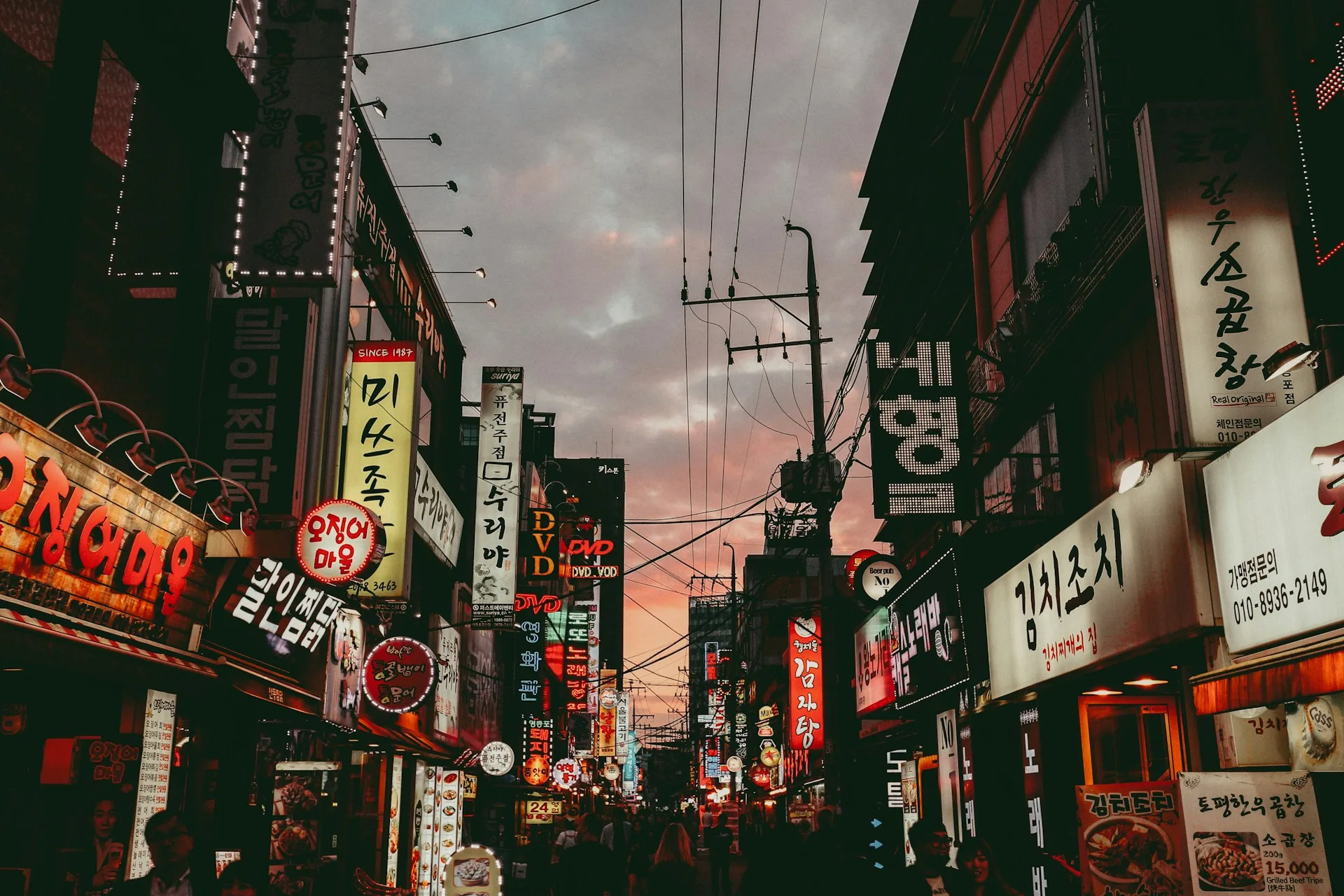
Estudiar en Corea del Sur
Estudiar en Corea del Sur con guías prácticas sobre universidades SKY, KAIST, admisiones, visados de estudiante, costes de matrícula, becas KGSP y salidas profesionales.
De un vistazo
Datos clave
Why Study en Corea del Sur
South Korea offers world-class SKY universities, fully funded KGSP scholarships, affordable tuition, a booming tech and culture industry, and one of the safest living environments on Earth.
- Home to prestigious SKY universities (Seoul National, Korea, Yonsei) and research powerhouses KAIST (#56 QS) and POSTECH.
- Korean Government Scholarship Program (KGSP/GKS) provides full tuition, monthly stipend, flights, and idioma coreano training.
- National university tuition starts at just KRW 4-8 million/year -- dramatically cheaper than the US, UK, or Australia.
- Global tech leader: Samsung, LG, Hyundai, SK, and Kakao drive one of Asia's most innovative economies.
Planifica tus Estudios
A step-by-step planning timeline for studying en Corea del Sur -- from choosing a university and program to meeting TOPIK requirements and understanding the March/September intake system.
- Start planning 10-14 months before your intended start date for the best results.
- Two main intakes: March (Spring -- primary) and September (Fall). March is the larger intake.
- TOPIK (Test of Proficiency in Korean) Level 3-4 required for Korean-taught programs; English programs accept IELTS/TOEFL.
- Credential evaluation through NIIED or individual universities -- apostille or consular authentication required.
Programas y Universidades
A comprehensive guide a Corea del Surn universities and programs -- from the SKY trio and KAIST to impartido en ingles degrees, specialized institutions, and rising stars in global rankings.
- Over 190 universities with 800+ impartido en ingles degree programs available to estudiantes internacionales.
- SKY universities (Seoul National, Korea, Yonsei) are the most prestigious; KAIST and POSTECH lead in STEM.
- Sungkyunkwan University (SKKU), backed by Samsung, is one of Asia's fastest-rising universities.
- Specialized institutions like KAIST (science/tech), POSTECH (engineering), and KDI School (policy/development) offer world-class niche training.
Admision y Solicitud
A step-by-step guide to applying a Corea del Surn universities -- from document authentication and TOPIK requirements to KGSP scholarship applications and direct university admissions.
- Most universidades surcoreanas accept direct applications -- no centralized system for estudiantes internacionales.
- Two main intakes: March (Spring -- primary) and September (Fall). Apply 6-10 months before the start date.
- Key documents: apostilled transcripts, language test scores (TOPIK or IELTS/TOEFL), study plan, and recommendation letters.
- KGSP/GKS scholarship has its own proceso de solicitud through the embassy track or university track.
Costes y Financiacion
A realistic breakdown of tasas de matricula, costes de vida by city, KGSP and university scholarships, trabajo a tiempo parcial earnings, and total budget planning for estudiantes internacionales en Corea del Sur.
- National university tuition: KRW 4-8 million/year (USD 3,000-6,000). Private: KRW 6-15 million/year.
- Monthly costes de vida: KRW 800,000-1,200,000 in Seoul; 20-30% less in other cities.
- KGSP/GKS provides full tuition, KRW 900,000-1,000,000/month stipend, flights, and insurance.
- Trabajo a tiempo parcial permitted (20 horas/semana with approval) at KRW 9,860+/hour salario minimo.
Visado y Llegada
Guia completa de the D-2 visado de estudiante for South Korea -- requirements, proceso de solicitud, Alien Registration Card, National Health Insurance, and your first-week arrival checklist.
- D-2 visado de estudiante required for degree programs; D-4 for language courses. Apply at the Korean embassy in your country.
- Key documents: Certificate of Admission, prueba financiera (USD 9,000+), apostilled credentials, and passport.
- Processing time: normalmente 2-4 weeks. Visa fee varies by nationality (USD 40-80).
- Upon arrival: register for Alien Registration Card (ARC) within 90 days and enroll in National Health Insurance.
Living en Corea del Sur
A practical guide to everyday life en Corea del Sur -- student cities, housing, transport, food, healthcare, safety, culture, and navigating the language barrier.
- Seoul is the main student hub with 60+ universities, but Busan, Daejeon, and Daegu offer lower costs and unique experiences.
- Monthly costes de vida: KRW 800,000-1,200,000 in Seoul; significativamente less in regional cities.
- World-class transporte publico: Seoul metro, KTX bullet trains, and intercity buses connect the entire country affordably.
- One of the safest countries in the world with 24/7 convenience culture and excellent healthcare.
Trabajo y Carrera
Guia completa de working en Corea del Sur as an estudiante internacional -- trabajo a tiempo parcial permits, the D-10 job-seeking visa, E-7 work visa, and key industries hiring international graduates.
- Trabajo a tiempo parcial: hasta 20 horas/semana with permission from Immigration (after 6 months of study).
- D-10 job-seeking visa allows graduates to stay in Korea for 6 months to 2 years while seeking employment.
- E-7 work visa for professionals in specialized fields -- sponsored by a Korean employer.
- Key industries: electronics (Samsung, LG, SK), automotive (Hyundai, Kia), entertainment, biotech, and IT startups.