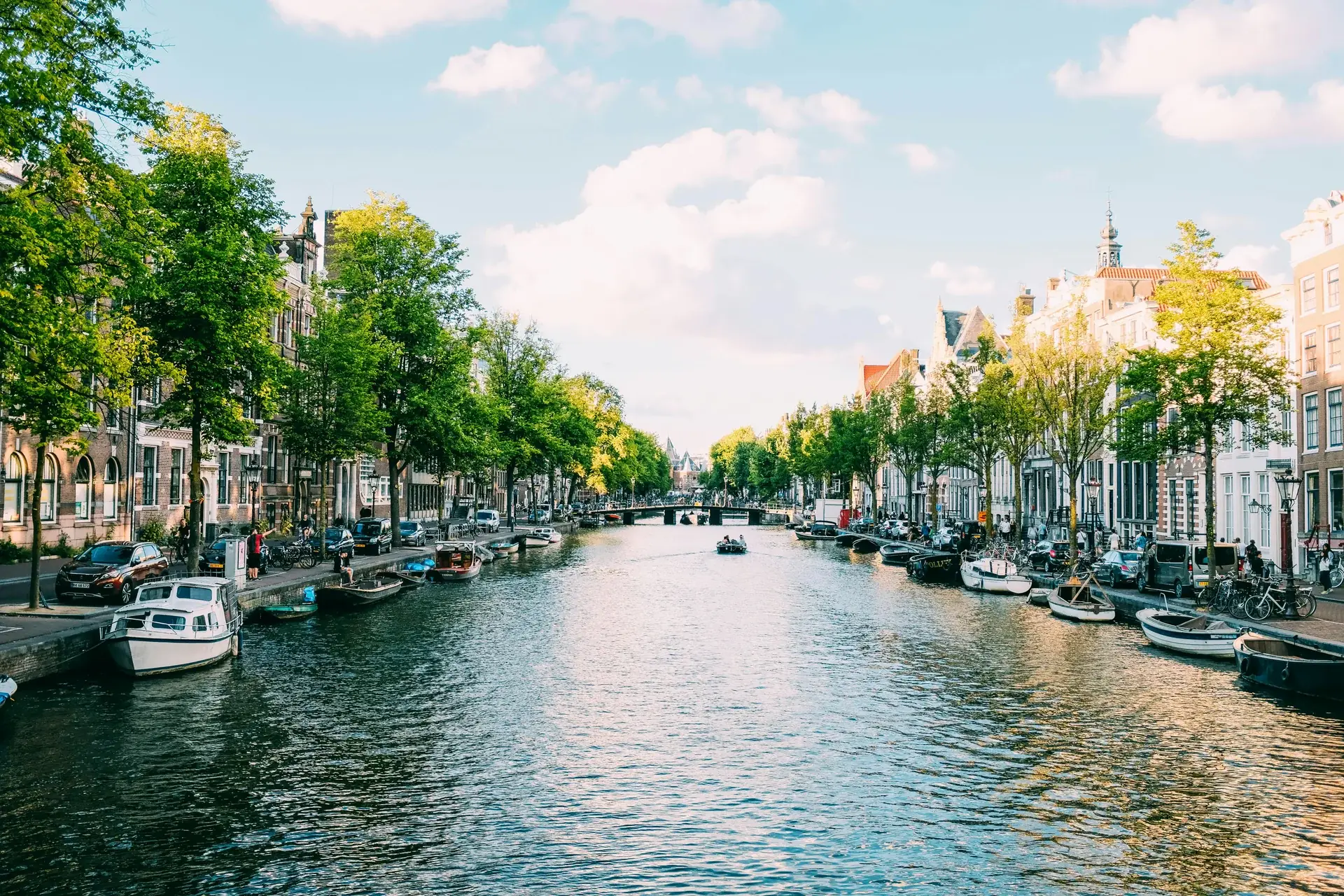
Living en los Paises Bajos as a Student - Estudiar en los Países...
Your complete guide to student life en los Paises Bajos -- from finding housing and navigating the bike culture to healthcare, transporte publico, and making the most of Dutch city life.
Living en los Paises Bajos as a Student
Living en los Paises Bajos is a genuinely unique experience -- compact cities connected by bike paths and train lines, a society where nearly everyone speaks English, a rich cultural calendar, and a calidad de vida that consistently ranks among the best in the world. But it also comes with challenges: a severe housing shortage, persistent grey weather, and a cultural directness that takes some getting used to.
Esta guia cubre everything necesitas know about daily life as a student en los Paises Bajos.
Student Cities
The Netherlands is small -- puedes cross the entire country by train in about three hours -- but each city has its own distinct personality. Here is what necesitas know about the main student cities.
Amsterdam
- Population: 920,000 | Students: ~115,000
- Universities: University of Amsterdam (UvA), Vrije Universiteit (VU), Amsterdam University of Applied Sciences (HvA)
- Character: Cosmopolitan, busy, culturally rich, expensive
- Monthly living cost: EUR 1,200--1,600
- Pros: World-class museums (Rijksmuseum, Van Gogh), vibrant nightlife, most international city, excellent mercado laboral
- Cons: Most expensive city, severe housing shortage, crowded with tourists, can feel overwhelming
- Best for: Students who thrive in big-city environments and want maximum career networking
Rotterdam
- Population: 660,000 | Students: ~55,000
- Universities: Erasmus University Rotterdam, Rotterdam University of Applied Sciences
- Character: Modern, diverse, bold, entrepreneurial
- Monthly living cost: EUR 1,050--1,400
- Pros: Striking modern architecture, Europe's largest port, diverse food scene, more affordable than Amsterdam, great nightlife
- Cons: Less traditionally "Dutch" than other cities, some areas feel industrial
- Best for: Students in business, logistics, architecture, or creative industries who want urban energy without Amsterdam prices
Utrecht
- Population: 370,000 | Students: ~70,000
- Character: Historic, student-focused, cozy, central
- Monthly living cost: EUR 1,100--1,450
- Pros: Beautiful medieval canals, nearly 1 in 4 residents is a student, central location (30 minutes to Amsterdam), charming small-city feel
- Cons: Housing shortage nearly as severe as Amsterdam, can feel small after a while
- Best for: Students who want the best of both worlds -- a university-town atmosphere with big-city access
Groningen
- Population: 235,000 | Students: ~65,000
- Character: Youthful, affordable, vibrant, community-minded
- Monthly living cost: EUR 900--1,200
- Pros: Highest student-to-resident ratio, most affordable major student city, consistently rated happiest city en los Paises Bajos, excellent nightlife for its size
- Cons: Remote (2.5 hours from Amsterdam by train), fewer oportunidades laborales than Randstad cities
- Best for: Students who want a true university-town experience with a strong social scene and lower costs
Eindhoven
- Population: 240,000 | Students: ~30,000
- Character: High-tech, innovative, growing, international
- Monthly living cost: EUR 950--1,300
- Pros: Brainport tech hub (ASML, Philips, NXP), excellent internship and oportunidades laborales in tech, affordable, growing cultural scene
- Cons: Less historically charming than other ciudades neerlandesas, smaller social scene
- Best for: Engineering, technology, and design students who want proximity to leading tech employers
Leiden
- Population: 130,000 | Students: ~35,000
- Character: Historic, academic, charming, well-connected
- Monthly living cost: EUR 1,000--1,350
- Pros: Home to the oldest university en los Paises Bajos, beautiful historic center, 15 minutes to The Hague and beach, strong academic tradition
- Cons: Small city with limited nightlife, housing can be expensive relative to city size
- Best for: Students in humanities, law, or science who prefer a quieter, historic university town
Maastricht
- Population: 120,000 | Students: ~18,000
- Character: European, international, cozy, border-town
- Monthly living cost: EUR 900--1,200
- Pros: Most internationally diverse university (50%+ estudiantes internacionales), close to Belgium and Germany, affordable, charming old town, excellent food scene
- Cons: Far from the Randstad (2.5 hours to Amsterdam), small mercado laboral, can feel isolated from the rest de los Paises Bajos
- Best for: Students who want a deeply international experience in a compact, European setting
Delft
- Population: 105,000 | Students: ~25,000
- Character: Intimate, tech-focused, picturesque, bike-friendly
- Monthly living cost: EUR 1,000--1,350
- Pros: Home to TU Delft, charming canal-lined center, 15 minutes to Rotterdam and The Hague, strong engineering community
- Cons: Very limited housing supply, small city, limited nightlife outside of student events
- Best for: Engineering and architecture students at TU Delft who want a focused academic environment
The Hague (Den Haag)
- Population: 560,000 | Students: ~30,000
- Character: International, political, sophisticated, coastal
- Monthly living cost: EUR 1,050--1,350
- Pros: International city of peace and justice (ICJ, ICC, 200+ international organizations), beach at Scheveningen, diverse population, government connections
- Cons: More professional than student-oriented, higher costs than smaller cities
- Best for: Students in international law, political science, or international relations
Housing: The Biggest Challenge
Finding student housing is the single most difficult aspect of moving a los Paises Bajos. The country has a well-documented housing shortage, and alojamiento estudiantil is in extremely high demand in virtually every city.
Types of Student Housing
| Tipo | Coste mensual | Ventajas | Desventajas |
|---|---|---|---|
| University/SSH housing | EUR 350--600 | Guaranteed quality, social, managed | Limited availability, lottery system |
| Student house (shared) | EUR 400--700 | Social, often in good locations | Hospiteeravond (screening), hard to find |
| Private room | EUR 500--900 | More privacy, flexible | Expensive, risk of scams |
| Studio apartment | EUR 700--1,200 | Full independence | Very expensive, limited supply |
| Temporary/short-stay | EUR 600--1,000 | Available on short notice | Expensive, not a long-term solution |
| Host family | EUR 300--500 | Cultural immersion, support | Less independence |
Where to Search
| Platform | Tipo | URL |
|---|---|---|
| Your university housing service | University-managed | Check your university website |
| SSH (Stichting Studentenhuisvesting) | Student housing organizations | ssh.nl, duwo.nl, sshxl.nl |
| Room.nl | National student housing | room.nl |
| Kamernet | Private rooms/apartments | kamernet.nl |
| Pararius | Private market | pararius.com |
| Facebook groups | Informal | Search "[City] student housing" |
| HousingAnywhere | Sublets and short-term | housinganywhere.com |
Essential Housing Tips
- Register with your university's housing service immediately -- the day you receive your admission, not the day you accept
- Start searching 3--6 months before arrival -- the closer to September, the harder it gets
- Never pay for a room you have not seen -- housing scams targeting estudiantes internacionales are rampant. Common red flags: payment before viewing, prices that seem too good to be true, landlords who are "abroad," requests for Western Union/MoneyGram transfers
- Consider cities outside your university city -- the Netherlands is small. Vivir en a neighboring city and commuting 20--30 minutes by train is common
- Join Facebook housing groups -- despite being informal, these are a major source of student housing
- Budget for a higher cost than advertised -- utilities (gas, water, electricity) may be EUR 100--150/month on top of rent
- Understand Dutch rental law -- contracts should specify whether costs are "all-in" (inclusief) or "exclusive" (exclusief). "All-in" includes utilities; "exclusive" does not
The Hospiteeravond
In Dutch student houses, new housemates are often chosen through a hospiteeravond (hospitality evening). Existing tenants invite applicants over for dinner or drinks and collectively decide who fits the household. This is a cultural norm -- treat it as a social event where you show your personality, not a formal interview. Tips:
- Be yourself -- housemates are looking for someone they will enjoy living with
- Show interest in the house and current residents
- Bring a small contribution (a bottle of wine, snacks)
- Ask questions about house rules and communal living arrangements
Consejo: If puedesnot find permanent housing before arrival, book temporary accommodation (hostel, Airbnb, or your university's temporary housing) for 2--4 weeks and continue searching after you arrive. Being physically present in the city makes it much easier to view rooms, attend hospiteeravonden, and respond quickly to listings.
Cycling Culture
The Netherlands has aproximadamente 23 million bicycles for 17.9 million people -- more bikes than residents. Cycling is not a hobby; it is the primary mode of transport for most students.
Getting a Bike
| Option | Cost | Notas |
|---|---|---|
| Second-hand (Marktplaats, Facebook) | EUR 50--150 | Best value. Check brakes and lights. |
| University bike sales | EUR 50--120 | Many universities organize second-hand bike sales during orientation |
| Swapfiets | EUR 16.50/month | Subscription service -- they replace/fix your bike if anything goes wrong. Very popular with students. |
| New bike | EUR 300--600 | From bike shops. Overkill for most students -- bikes get stolen. |
| OV-fiets | EUR 4.55/trip | Rental bikes at train stations. Useful for day trips, not daily commuting. |
Cycling Rules
- Lights are mandatory after dark -- front white, rear red. Police issue fines (EUR 60+)
- Use the bike lane (fietspad) -- normalmente red asphalt. Do not cycle on the sidewalk.
- Signal turns by extending your arm
- Lock your bike always -- bike theft is the most common crime en los Paises Bajos. Use a good lock (EUR 20--40)
- Give way to traffic from the right at unmarked intersections
- Cycling while using your phone is illegal (EUR 160 fine)
- Do not drink and bike -- it is legal in practice, but police can fine you if you are a danger
Consejo: Buy two locks -- a frame lock and a chain lock. Always lock your bike to a fixed object (bike rack, fence post). Never leave your bike unlocked, even for a minute. Bike theft is endemic, and a good lock is the best prevention.
Public Transporte
For trips beyond cycling distance, the Netherlands has an excellent transporte publico network:
OV-Chipkaart
The OV-chipkaart is a rechargeable smart card used across all Dutch transporte publico:
- Personal OV-chipkaart: EUR 7.50, linked to your identity. Requerido for subscriptions and discounts.
- Anonymous OV-chipkaart: EUR 7.50, no personal link. Good for occasional use.
- How it works: Check in (hold card to reader at start) and check out (hold card to reader at destination). You are charged per kilometer traveled.
Transportee Options
| Mode | Operator | Coverage | Notas |
|---|---|---|---|
| Trains | NS (Dutch Railways) | All cities and major towns | Fast, frequent, reliable. Intercity trains every 10--15 min on major routes. |
| Buses | Various (Connexxion, Arriva, Qbuzz) | Cities and regional areas | Useful for areas not served by trains. |
| Trams | GVB (Amsterdam), RET (Rotterdam), HTM (The Hague) | City centers | Quick way to get around centro de la ciudads. |
| Metro | GVB (Amsterdam), RET (Rotterdam) | Amsterdam and Rotterdam only | Fast for longer city distances. |
Student Transporte Discounts
- DUO Student Transporte Card: Free weekday OR free weekend travel on all transporte publico (for estudiantes UE with DUO finance)
- NS Flex Student Discount: 40% off-peak discount for EUR 0/month (with student OV)
- NS Dal Voordeel: 40% off-peak discount for EUR 5/month (without student OV)
- NS Weekend Vrij: Unlimited weekend travel for EUR 35/month
Sanidad
The Dutch healthcare system is excellent but works differently from many countries.
How It Works
- Register with a GP (huisarts): Your GP is your first point of contact for all health issues. Puedesnot visit a specialist without a GP referral.
- Make an appointment: Call your GP practice during office hours. For urgent matters, most practices have same-day slots.
- Specialist care: If needed, your GP refers you to a specialist at a hospital or clinic.
- Emergency care (spoedeisende hulp): Go directly to a hospital emergency department for serious emergencies. Call 112 for life-threatening situations. Call your GP's after-hours line (huisartsenpost) for urgent but non-life-threatening issues.
Important Healthcare Notes
- Register with a GP immediately after arrival -- do not wait until you are sick. Some GP practices have waiting lists.
- Bring your insurance card to every appointment
- Dental care is not fully covered by basic insurance -- consider supplementary dental insurance if you need regular dental work
- Salud mental care is covered by basic insurance with a GP referral. Many universities also offer free counseling services.
- Pharmacies (apotheek) are where you collect prescriptions. They are separate from GP practices.
Compare seguro medico options for the Netherlands
Clima and What to Expect
The Dutch weather is... a topic. The Netherlands has a maritime climate strongly influenced by the North Sea, which means:
| Season | Months | Temperature | What to Expect |
|---|---|---|---|
| Spring | March--May | 8--16°C | Gradually warming, tulip season, still rainy |
| Summer | June--August | 18--25°C | Best weather, long days (sun until 10pm), occasional heatwaves |
| Autumn | September--November | 8--16°C | Rainy, windy, grey skies settling in |
| Winter | December--February | 0--8°C | Cold, dark (sunset at 4:30pm), occasional snow and ice |
Survival Tips
- Invest in a good rain jacket -- not just an umbrella (wind makes umbrellas useless)
- Layer your clothing -- Dutch weather can change multiple times in a day
- Buy waterproof panniers or a rain cover for your bike bag -- you will cycle in the rain
- Get a Vitamin D supplement -- limited winter sunlight can affect your mood and energy
- Embrace it -- the Dutch have a saying: "Er is geen slecht weer, alleen slechte kleding" (there is no bad weather, only bad clothing)
Dutch Culture and Social Life
Dutch Directness (Eerlijkheid)
The Dutch are famous for saying exactly what they think. If your presentation was not good, your Dutch classmate will tell you directly. If they do not want to come to your party, they will say "no" without a lengthy excuse. This is not rudeness -- it is a cultural value of honesty and efficiency.
How to handle it:
- Do not take it personally -- it is not about you, it is about the culture
- Appreciate the clarity -- you always know where you stand
- Adopt it yourself -- Dutch people respect directness in return
- If something genuinely offends you, say so directly -- that is the Dutch way of resolving it
Gezelligheid
Gezelligheid is a uniquely Dutch concept that roughly translates to a warm, convivial atmosphere -- a mix of coziness, togetherness, and contentment. It describes:
- A cozy evening with friends at a cafe
- A warm living room with candles during a winter storm
- A lively birthday party with everyone sitting in a circle (yes, the Dutch literally sit in a circle at birthday parties)
- A barbecue in the park on a sunny day
Understanding and embracing gezelligheid is key to enjoying Dutch social life.
Social Life Tips
- Join a student association (studentenvereniging): These are central to Dutch student social life. They organize parties, sports, trips, and career events. Major ones include rowing, debating, and general social associations.
- Join ESN (Erasmus Student Network): Active at every universidad neerlandesa, ESN organizes events specifically for estudiantes internacionales -- trips, parties, cultural events, and buddy programs.
- Say yes to everything in your first month: Orientation week events, borrels (informal drinks), study group invitations, weekend trips. Building your social network early is essential.
- Be patient making Dutch friends: The Dutch are friendly but can be slow to form deep friendships. They often have established social circles from childhood. Estudiante internacional communities tend to be more immediately welcoming.
- Attend borrels: A borrel is an informal gathering with drinks, normalmente organized by student associations, departments, or employers. It is the most common social format en los Paises Bajos and a great way to meet people.
Food and Dining
- Dutch cuisine is not internationally famous, but it is changing. Traditional staples include stamppot (mashed potatoes with vegetables), bitterballen (deep-fried meat snacks), stroopwafels, hagelslag (chocolate sprinkles on bread), and herring.
- International food is excellent. Every Dutch city has Indonesian (rijsttafel is a must-try), Turkish, Surinamese, Chinese, and Middle Eastern restaurants. Amsterdam and Rotterdam have some of the most diverse food scenes in Europe.
- Supermarkets: Albert Heijn (largest chain), Jumbo, Lidl (budget), Aldi (budget), Dirk, Plus. Albert Heijn Bonus deals and Jumbo loyalty discounts can save 20--30% on your grocery bill.
- Eating out is expensive -- EUR 15--25 for a main course at a mid-range restaurant. Students mostly cook at home and eat out occasionally.
- Tipping: No requerido en los Paises Bajos (service is included), but rounding up or leaving 5--10% for good service is appreciated.
Consejo: The cheapest hot food in many ciudades neerlandesas is found at FEBO (automated fast-food wall), Turkish/Syrian bakeries, and Surinamese takeaway spots. A full meal for EUR 5--8 is realistic.
Sustainability and Environment
The Netherlands is one of the most environmentally conscious countries in the world:
- Waste separation is standard -- paper, plastic, glass, organic waste, and residual waste each have separate bins
- Statiegeld (deposit return): You pay a deposit on plastic bottles and cans, which you get back at return machines in supermarkets
- Solar energy and wind power are widespread
- Meat alternatives are readily available in supermarkets and restaurants -- the Netherlands is a European leader in plant-based food innovation
Proximos Pasos
Ready to explore more? Continue with these guides:
- Understand costs and funding -- Budget for housing, food, insurance, and discover scholarships
- Check visa requirements -- Entry visas, permiso de residencias, and arrival logistics
- Explore work and career options -- Trabajo a tiempo parcial, the zoekjaar, and career prospects
- Why the Netherlands? -- Revisit the reasons that make this a top study destination
Preguntas frecuentes
Que es el/la housing situation like for students en los Paises Bajos?
Which is the best student city en los Paises Bajos?
Necesito to speak Dutch to live en los Paises Bajos?
Como funciona transporte publico work en los Paises Bajos?
Is cycling really necessary en los Paises Bajos?
What is Dutch directness?
How is the weather en los Paises Bajos?
Is the Netherlands safe for estudiantes internacionales?
Guías relacionadas
Why Study en los Paises Bajos
The Netherlands offers the most programas impartidos en ingles in continental Europe, innovative teaching methods, and a post-graduation orientation year -- here's why 122,000+ estudiantes internacionales choose it.
🗺️Planifica tus Estudios en los Paises Bajos
Una guia de planificacion paso a paso que cubre the Dutch academic system, Studielink registration, credential evaluation, and timelines for starting your studies en los Paises Bajos.
🎓Programs and Universities en los Paises Bajos
Una guia completa de universidades neerlandesas -- from WO research universities like TU Delft and UvA to HBO institutions -- including top programs, rankings, and how to choose.
📝Admissions and Application for Dutch Universities
Navigate the Dutch proceso de solicitud -- from Studielink registration and Nuffic credential evaluation to numerus fixus selection and document requirements.
💰Costs and Funding for Studying en los Paises Bajos
A detailed breakdown of tasas de matricula, costes de vida, scholarships, and student finance options for studying en los Paises Bajos -- for both EU and estudiantes de fuera de la UE.
🛂Visa and Arrival Guide for the Netherlands
Everything necesitas know about MVV entry visas, VVR permiso de residencias, seguro medico, BSN registration, and settling in as an estudiante internacional en los Paises Bajos.
💼Work and Career en los Paises Bajos
Guia completa de working during and after your studies en los Paises Bajos -- trabajo a tiempo parcial rules, the zoekjaar orientation year, highly skilled migrant visa, and top employers.