Why Study en Estados Unidos - Estudiar en Estados Unidos (es)
The Estados Unidos hosts over one million estudiantes internacionales each year, offering world-class universities, unmatched research funding, and a flexible education system that lets you shape your own academic path.
Why the USA Remains the World's Top Study Destination
The Estados Unidos has been the leading destination for estudiantes internacionales for decades, and with good reason. Home to more top-ranked universities than any other country, the USA combines academic excellence with a uniquely flexible education system, massive research investment, and real pathways to professional careers after graduation. Whether you are drawn by the prestige of the Ivy League, the innovation culture of Silicon Valley, or the affordability of community colleges, the American educacion superior landscape has an option that fits your goals.
In the 2023-2024 curso academico, over 1.1 million estudiantes internacionales were studying at US institutions, segun the Institute of International Education. That number reflects a simple truth: no other country offers the same combination of academic quality, diversity, and opportunity.
Esta guia cubre everything necesitas know about why studying en Estados Unidos could be the right choice for you. For practical next steps, see our guides on planning your studies and programs and universities.
Academic Excellence and Global Prestige
How do universidades estadounidenses rank globally?
The Estados Unidos consistently dominates global university rankings. In the 2025 QS World University Rankings, 8 of the top 10 universities are American, including MIT, Stanford, Harvard, and Caltech. The US also leads in the Times Higher Education and Academic Ranking of World Universities (Shanghai Ranking).
But rankings tell only part of the story. The US has over 4,000 accredited institutions of educacion superior, ranging from elite research universities to small liberal arts colleges, each with distinct strengths. This means puedes find a world-class program even outside the most famous names.
| Ranking System | US Universities in Top 10 | US Universities in Top 100 |
|---|---|---|
| QS World Rankings 2025 | 8 | 27 |
| THE World Rankings 2025 | 7 | 34 |
| Shanghai Ranking 2024 | 8 | 39 |
Research funding and innovation
The US invests more in research and development than any other country. Federal research funding through agencies like the National Science Foundation (NSF), National Institutes of Health (NIH), and the Department of Energy exceeds USD 90 billion annually. Universities add billions more from private endowments, industry partnerships, and state funding.
For graduate students, this means access to cutting-edge labs, equipment, and research opportunities that are difficult to match elsewhere. Many PhD students in STEM fields receive full funding, including tuition waivers and living stipends, through research or teaching assistantships.
Consejo: When evaluating programs, look at the specific department's research expenditure rather than the overall university ranking. A mid-ranked university may have a top-five department in your field.
The Flexibility of the American Education System
Que es el/la liberal arts approach?
Unlike education systems in many other countries where students choose a narrow specialization from day one, American undergraduate education is built on a liberal arts foundation. This means you will take courses across multiple disciplines, including humanities, sciences, social sciences, and arts, during your first one to two years before declaring a major.
This approach has significant advantages:
- Exploration: Puedes discover new interests and strengths before committing to a field.
- Breadth: Employers value graduates who can think critically across disciplines.
- Flexibility: Changing your major is straightforward and common.
- Double majors and minors: Puedes combine fields like Computer Science and Economics or Biology and Philosophy.
The credit system explained
universidades estadounidenses use a credit-hour system rather than fixed yearly curricula. Each course is worth a set number of credits (normalmente 3-4), and necesitas accumulate a specified total (normalmente 120-130 credits) to graduate. This system allows you to:
- Take courses at your own pace (within a tiempo completo enrollment requirements for visa purposes)
- Transfer credits between institutions
- Pursue summer courses to accelerate your degree
- Choose electives that align with your career interests
Graduate programs: Master's and PhD
At the graduate level, US programs are equally distinctive. Master's programs normalmente last 1-2 years and combine coursework with a thesis or capstone project. PhD programs normalmente take 4-6 years and emphasize original research, often fully funded in STEM and social science fields.
Many PhD programs en Estados Unidos do not require a prior master's degree, so puedes enter directly after your bachelor's, potentially saving both time and money comparado con the European model.
Campus Culture and Student Life
What is campus life really like?
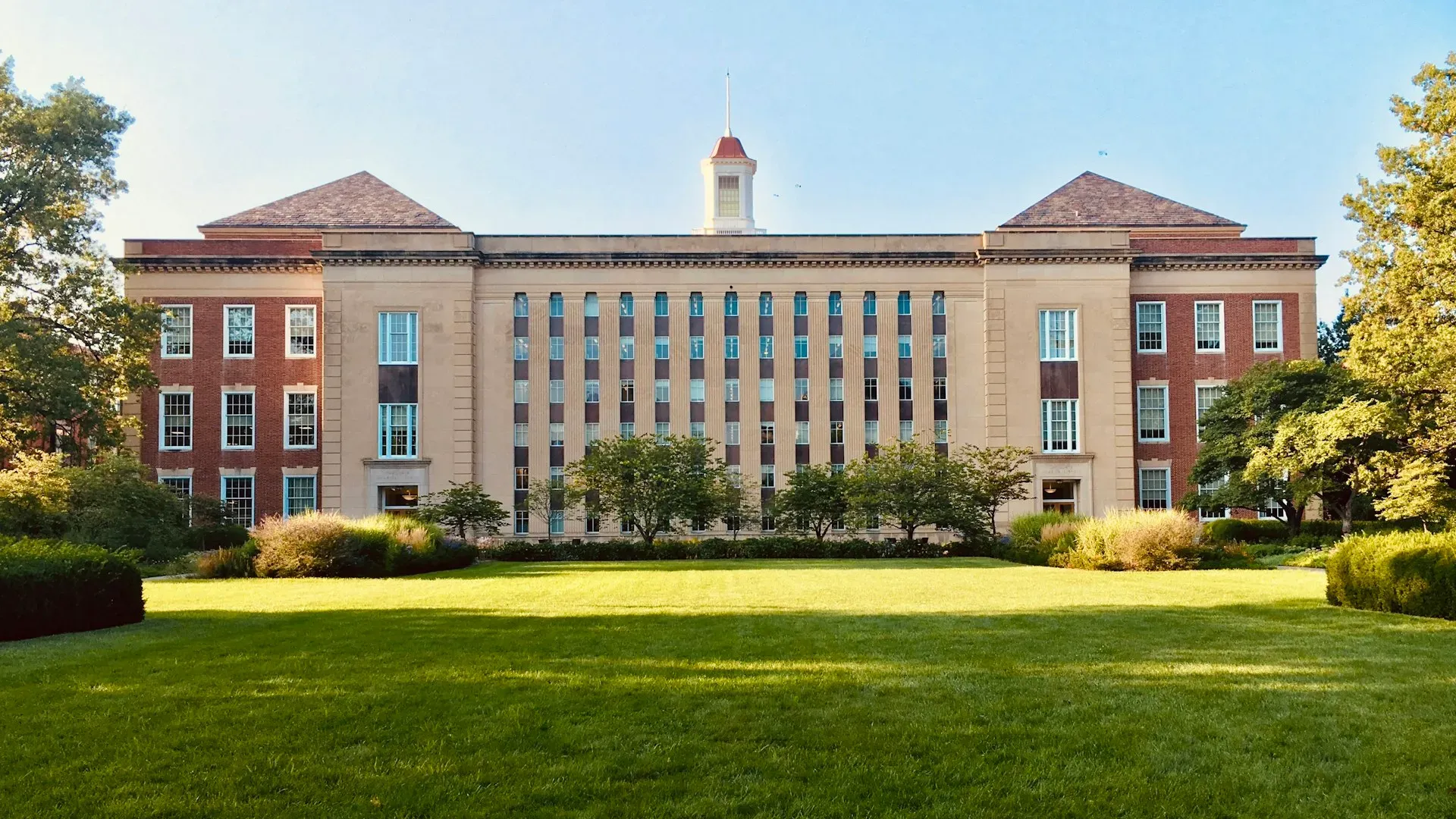
universidades estadounidenses are known for their vibrant campus culture. Most institutions are designed as self-contained communities, with dormitories, dining halls, libraries, gyms, health centers, and recreational facilities all on campus. This creates an immersive experience that goes well beyond the classroom.
Key features of US campus life include:
- Student organizations: Most universities have hundreds of clubs covering everything from academic societies to cultural groups, sports teams, debate clubs, and volunteer organizations.
- Greek life: Fraternities and sororities are part of the social fabric at many universities, offering networking, community service, and social events.
- Athletics: College sports, particularmente football and basketball, play a major cultural role and create strong school spirit.
- Servicios de orientacion profesional: Dedicated offices help students with resume writing, interview preparation, internship searches, and job placement.
- Counseling and wellness: Most universities offer free salud mental services, health clinics, and wellness programs.
Diversity and inclusion
US campuses are among the most diverse learning environments in the world. Students come from all 50 states and over 200 countries. Universities actively invest in multicultural programming, estudiante internacional offices, and support services designed to help you adjust and thrive.
Consejo: Look for universities with a strong International Student Services (ISS) office. These offices offer orientation programs, visa advising, cultural events, and a community of fellow estudiantes internacionales.
Innovation Ecosystem and Industry Connections
Silicon Valley, Boston, and beyond
One of the unique advantages of studying en Estados Unidos is proximity to the world's most dynamic innovation hubs:
- Silicon Valley (San Francisco Bay Area): Home to tech giants like Apple, Google, Meta, and thousands of startups. Stanford and UC Berkeley feed directly into this ecosystem.
- Boston/Cambridge: The MIT-Harvard corridor anchors a biotech, fintech, and AI hub with some of the highest research density in the world.
- New York City: Wall Street, media, fashion, and a thriving tech startup scene. Columbia and NYU provide direct access.
- Research Triangle (North Carolina): A growing hub for biotech, pharmaceuticals, and technology, anchored by Duke, UNC, and NC State.
- Austin, Texas: A rapidly growing tech and creative economy with strong ties to UT Austin.
Internships and industry partnerships
universidades estadounidenses place a strong emphasis on practical experience. Most programs encourage or require internships, co-op programs, or industry projects. Through Curricular Practical Training (CPT), estudiantes internacionales on F-1 visas can undertake paid internships during their studies, gaining valuable US experiencia laboral before graduation.
Many universities also host ferias de empleo where hundreds of employers recruit on campus, and alumni networks often play a key role in connecting students with opportunities. For more on work authorization, see our work and career guide.
Post-Graduation Work Opportunities
OPT and STEM OPT: Your pathway to US experiencia laboral
One of the strongest reasons to study en Estados Unidos is the Optional Practical Training (OPT) program. After completing your degree, F-1 visa holders can work en Estados Unidos for 12 months in a position related to their field of study. If you graduate with a degree in a designated STEM field, puedes extend this by an additional 24 months through the STEM OPT extension, giving you hasta 3 years of post-graduation work authorization.
| Work Authorization | Duracion | Eligibility |
|---|---|---|
| On-campus employment | Throughout studies | All F-1 students |
| Curricular Practical Training (CPT) | During studies | After 1 curso academico |
| Optional Practical Training (OPT) | 12 months | After degree completion |
| STEM OPT Extension | 24 additional months | STEM degree graduates |
This extended work period is particularmente valuable because it gives you time to demonstrate your skills to US employers and potentially transition to an H-1B work visa, which is the primary path to longer-term employment en Estados Unidos.
Consejo: When choosing a program, check whether it carries a STEM designation. Algunos programas that might not seem obviously STEM-related, como por ejemplo certain business analytics or digital media degrees, have been granted STEM CIP codes, making graduates eligible for the 24-month extension.
Types of Institutions: Finding Your Fit
The US offers a wider range of institution types than most countries. Understanding these differences helps you choose the right environment for your goals.
Research universities
These large institutions (think University of Michigan, UCLA, or MIT) combine extensive undergraduate programs with major graduate research. They offer the broadest range of majors, the largest campuses, and access to cutting-edge research. Class sizes can be large in introductory courses but normalmente shrink in upper-level and graduate courses.
Liberal arts colleges
Smaller institutions (like Williams, Amherst, or Pomona) that focus on undergraduate education with small class sizes, close faculty interaction, and an emphasis on critical thinking. These colleges are an excellent choice if you value personalized attention and a tight-knit community.
Community colleges
Two-year institutions that offer Associate degrees and serve as an affordable pathway to four-year universities. Tuition normalmente ranges from USD 8,000 to USD 15,000 al ano, significativamente lower than four-year institutions. Many community colleges have guaranteed transfer agreements (called articulation agreements) with state universities, making this a strategic and cost-effective route. Learn more about costs in our costs and funding guide.
Professional schools
Specialized institutions or divisions within universities that offer professional degrees como por ejemplo the MBA, JD (law), MD (medicine), or MFA (fine arts). These programs are normalmente at the graduate level and emphasize career-specific training.
Affordability: More Options Than You Think
While US tuition can be high, particularmente at private universities, there are many ways to manage costs:
- Community college pathway: Start at a community college for USD 8,000-15,000/year, then transfer to a four-year university.
- Public state universities: Tuition ranges from USD 25,000 to USD 45,000/year for estudiantes internacionales, significativamente menos de private institutions.
- Merit scholarships: Many universities offer significant tuition discounts based on academic achievement.
- Graduate assistantships: Many master's and PhD programs offer tuition waivers plus stipends in exchange for research or teaching work.
- On-campus employment: F-1 students can trabajar hasta 20 hours por semana during the curso academico.
For a full breakdown of costs and funding options, see our costs and funding guide.
Challenges to Consider
Studying en Estados Unidos is not without its challenges. Being informed helps you prepare:
- Cost: The US is one of the more expensive study destinations. Careful financial planning is essential. See our costs and funding guide.
- Visa process: The F-1 visa application requires detailed financial documentation and a consular interview. Our visa and arrival guide walks you through every step.
- Seguro medico: Coverage es obligatorio and can cost USD 1,500-3,000 al ano. Most universities offer or require their own plans.
- Cultural adjustment: The US is vast and culturally diverse. What daily life looks like varies enormously between a small college town in New England and a major city like Los Angeles. Read our living en Estados Unidos guide for practical tips.
- Distance from home: The US is geographically distant from many sending countries, which can make visits home expensive and infrequent.
Proximos Pasos
If the USA aligns with your academic and career goals, here is how to move forward:
- Define your priorities: Academic field, budget, preferred location, and post-graduation goals.
- Investigar programas: Use our programs and universities guide to compare institution types and find the right fit.
- Build a timeline: Start planning 12-18 months before your intended start date. Our plan your studies guide provides a detailed roadmap.
- Understand admissions: US applications are holistic and include essays, recommendations, and extracurriculars. See our admissions guide.
- Explore funding: Identify scholarships and funding opportunities early. Check our costs and funding guide.
The USA offers an unmatched combination of academic excellence, flexibility, research opportunity, and career pathways. With the right preparation, studying in America can be the investment that defines your future.
Preguntas frecuentes
Why do estudiantes internacionales choose the USA over other countries?
Is studying en Estados Unidos worth the cost?
Cuantos estudiantes internacionales study en Estados Unidos?
What makes the US education system different?
Puedo work en Estados Unidos after graduating?
Are community colleges a good option for estudiantes internacionales?
Cuales son most popular fields of study for estudiantes internacionales en Estados Unidos?
How diverse is the student body at universidades estadounidenses?
Guías relacionadas
Planifica tus Estudios
Guia de planificacion paso a paso que cubre las convocatorias de septiembre y enero, el sistema CAO para grado, el marco QQI, el reconocimiento de titulaciones a traves de NARIC Ireland y los requisitos de ingles.
🎓Programas y Universidades
A comprehensive guide a Nueva Zelanda's 8 universities, polytechnics, popular fields of study, and how to choose the right program and institution for your goals.
📝Admision y Solicitud
Todo lo que necesitas saber para solicitar plaza en universidades italianas -- preinscripcion, Dichiarazione di Valore, examenes de ingreso y consejos para navegar la burocracia academica italiana.
💰Costes y Financiacion
Un desglose realista de tasas de matricula, costes de vida por ciudad, becas y ganancias por trabajo a tiempo parcial para estudiantes internacionales en Irlanda.
🛂Visado y Llegada
Guia completa del permiso de estudiante irlandes para estudiantes de fuera de la UE -- requisitos de visado, registro IRP, permiso de inmigracion Stamp 2 y lista de tareas de tu primera semana.
🏡Living en Estados Unidos
From housing and seguro medico to banking and tipping culture, this guide covers everything estudiantes internacionales need to know about daily life in the Estados Unidos.
💼Trabajo y Carrera
Your complete guide to working during and after your studies en Nueva Zelanda -- trabajo a tiempo parcial rights, trabajo post-estudios visa, key industries, and the pathway to residency.