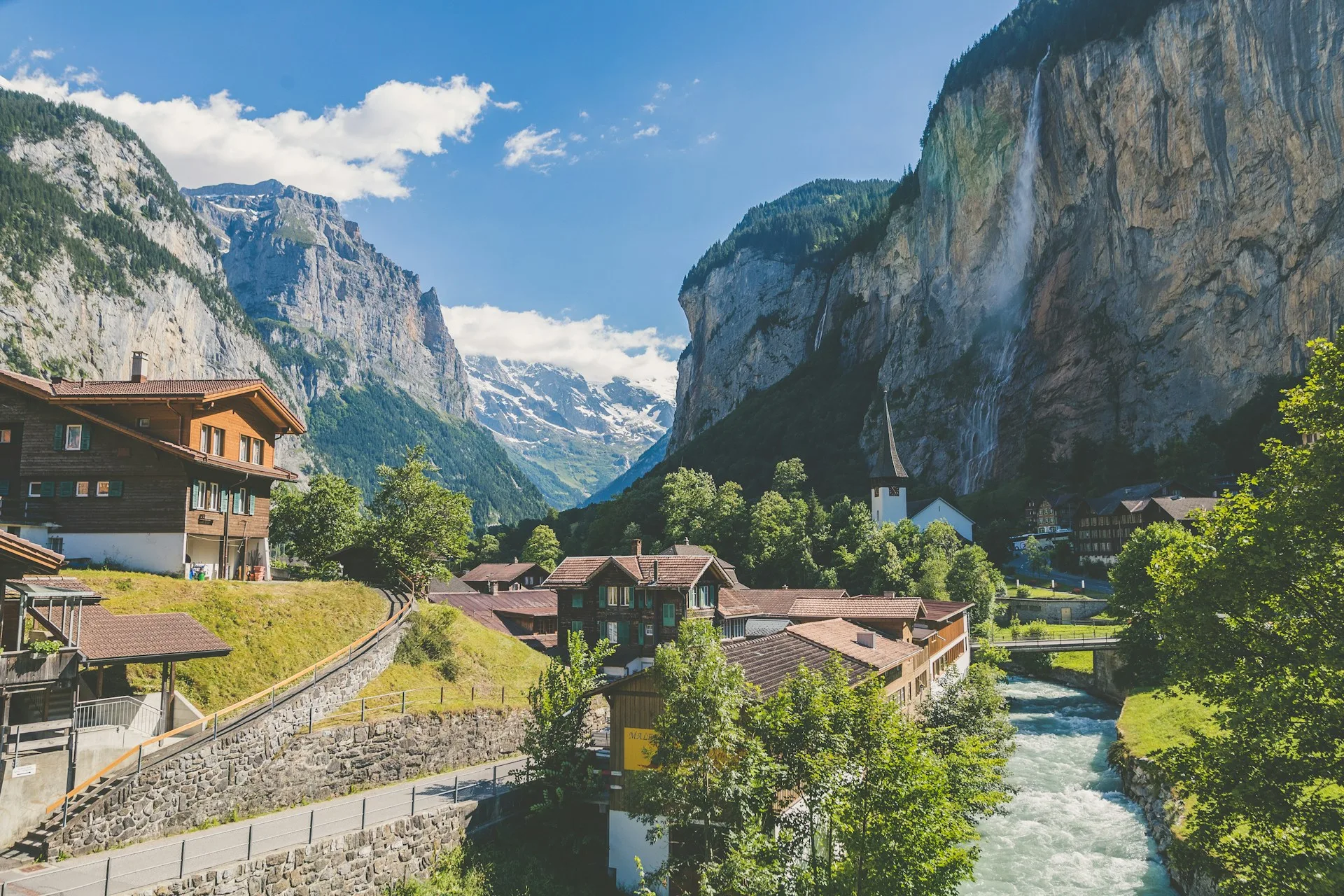
스위스 유학을 선택하는 이유
Switzerland offers world top-20 universities, a multilingual environment, and unmatched innovation — here's why it's one of the smartest study destinations in Europe.
Why 스위스 유학
Switzerland is a country that consistently outperforms its size. With just 8.8 million people, it is home to two of the world's top 20 universities, the number one ranking on the Global Innovation Index for over a decade running, and the headquarters of more international organizations than any other country. For students seeking a world-class education in a multilingual, safe, and spectacularly beautiful setting, Switzerland offers a combination that is genuinely hard to match anywhere else. Here is why you should consider it.
World Top-20 Universities
Switzerland's headline academic achievement is having two universities in the global top 20 — a remarkable feat for a country smaller than many individual US states.
ETH Zurich (스위스 Federal Institute of Technology Zurich)
- World ranking: consistently top 10 globally (QS, THE, Shanghai)
- 강점: engineering, computer science, natural sciences, architecture, mathematics
- Notable alumni: Albert Einstein, John von Neumann, Wolfgang Pauli (21 Nobel Prize winners affiliated)
- Tuition: CHF 730/학기 for all students regardless of nationality
- Language: Bachelor's in German; many Master's programs in English
ETH Zurich is widely considered the best university in continental Europe and one of the top technical universities in the world. Its research output rivals MIT and Stanford, and its 대학원s are among the most sought-after by global employers.
EPFL (Ecole Polytechnique Federale de Lausanne)
- World ranking: consistently top 20 globally
- 강점: engineering, computer science, life sciences, physics, architecture
- Notable features: stunning lakeside 캠퍼스, Rolex Learning Center, strong start-up ecosystem (EPFL Innovation Park)
- Tuition: CHF 730/학기 for all students regardless of nationality
- Language: Bachelor's in French; many Master's programs in English
EPFL has risen dramatically in the rankings over the past two decades and is now considered one of the best technical universities globally. Its 캠퍼스 on the shores of Lake Geneva is one of the most visually striking in Europe.
Other excellent 스위스 대학교
Switzerland's academic excellence extends well beyond the two federal institutes:
| University | World ranking (approx.) | Key strengths |
|---|---|---|
| University of Zurich | Top 80 | Medicine, law, economics, psychology |
| University of Geneva | Top 100 | International relations, physics (CERN), languages |
| University of Basel | Top 100 | Life sciences, nanoscience, pharmaceuticals |
| University of Bern | Top 120 | Climate science, space research, medicine |
| University of Lausanne | Top 130 | Business (HEC Lausanne), geoscience, life sciences |
| HSG St. Gallen | Top 10 (business) | Business, economics, law, international affairs |
팁: HSG St. Gallen is not in the overall global top 100, but its business and economics programs are consistently ranked among the best in Europe, rivalling London Business School and INSEAD for career outcomes in finance and consulting.
A Multilingual Academic Environment
Switzerland's four official languages create a unique educational landscape:
- German-speaking region (Deutschschweiz) — approximately 63% of the population; cities include Zurich, Bern, Basel, Lucerne, St. Gallen
- French-speaking region (Romandie) — approximately 23%; cities include Geneva, Lausanne, Neuchatel, Fribourg
- Italian-speaking region (Ticino) — approximately 8%; main city is Lugano
- Romansh-speaking region — approximately 0.5%; parts of Graubunden
This multilingualism means you can choose your language environment when selecting a university. Want to improve your French? Study in Lausanne or Geneva. Want to learn German? Choose Zurich or Bern. Want to work in an English-heavy international environment? Geneva's international organizations and Zurich's financial sector both operate primarily in English.
At the academic level, English is widely used, especially in Master's and doctoral programs. Many 스위스 대학교 offer programs in two or even three languages, and code-switching between languages is a normal part of daily life in many 스위스 도시.
팁: 스위스 German (Schweizerdeutsch) is very different from standard German (Hochdeutsch). University teaching is in standard German, but daily conversation in German-speaking Switzerland uses the local dialect. Don't panic — 스위스 사람들 switch to standard German or English when speaking with non-Swiss.
The World's Innovation Leader
Switzerland has topped the Global Innovation Index for over a decade — ahead of the US, UK, Sweden, and all other countries. This isn't abstract. As a student, you'll feel it:
- CERN (European Organization for Nuclear Research) — the world's largest particle physics laboratory, straddling the Swiss-French border near Geneva. University students can access CERN 인턴십s and research opportunities.
- Google's largest engineering office outside the US is in Zurich, employing over 5,000 people
- IBM Research Zurich — where the scanning tunneling microscope was invented (Nobel Prize 1986)
- Disney Research Zurich — affiliated with ETH Zurich
- Novartis and Roche — two of the world's largest pharmaceutical companies, both headquartered in Basel
- Nestle — the world's largest food company, headquartered in Vevey near Lausanne
- ABB, Zurich Insurance, 스위스 Re, Swatch Group, Rolex — all Swiss-headquartered multinationals
스위스 대학교 have exceptionally strong ties to industry. ETH Zurich alone has produced over 400 spin-off companies, and EPFL's Innovation Park hosts dozens of start-ups and corporate R&D labs. This translates directly into 인턴십 opportunities, thesis partnerships, and 졸업 후 employment.
International Organizations Hub
Geneva is the world capital of international cooperation, hosting:
- United Nations (European headquarters, UN Geneva)
- World Health Organization (WHO)
- World Trade Organization (WTO)
- International Committee of the Red Cross (ICRC)
- World Intellectual Property Organization (WIPO)
- International Labour Organization (ILO)
- World Economic Forum (based in Cologny, near Geneva)
- Over 200 international organizations and 750 NGOs
For students in international relations, law, public health, human rights, or development, Geneva offers access to 인턴십s and networking that no other city in the world can match. The Graduate Institute of International and Development Studies (IHEID), located in Geneva, is specifically designed around this ecosystem.
Bern, as the federal capital, is home to embassies and Switzerland's own governmental institutions, offering further opportunities in diplomacy and policy.
Affordable Tuition at Public Universities
Despite Switzerland's reputation as an expensive country, tuition at public universities is remarkably low:
| Institution type | Tuition per 학기 | Annual cost |
|---|---|---|
| ETH Zurich / EPFL | CHF 730 | CHF 1,460 |
| Cantonal universities | CHF 500-1,500 | CHF 1,000-3,000 |
| Universities of applied sciences | CHF 700-1,000 | CHF 1,400-2,000 |
| Private universities | CHF 5,000-30,000+ | CHF 10,000-60,000+ |
Compare CHF 1,460/year at ETH Zurich — one of the world's top 10 universities — with USD 55,000+/year at MIT or GBP 35,000+/year at Imperial College London. The value proposition is extraordinary.
Exceptional Quality of Life
Switzerland consistently ranks among the top countries in the world for quality of life:
- Safety — one of the lowest crime rates globally; cities feel safe at all hours
- Public transport — the SBB rail network is legendary for punctuality and coverage; a Halbtax (half-fare card) costs CHF 185/year and halves all 대중교통 fares
- Natural beauty — the Alps, lakes, and rolling countryside are literally at your doorstep; many university cities offer mountain and lake access within minutes
- Healthcare — world-class healthcare system (mandatory 건강 보험)
- Clean environment — pristine air, clean water, meticulous urban planning
- Political stability — direct democracy, neutrality, and a long tradition of stability
Student-friendly aspects
| Feature | 세부 사항 |
|---|---|
| Student transport discounts | SBB Halbtax (CHF 185/year), GA Travelcard for unlimited travel, regional passes |
| University sports (ASVZ/UNIL Sport) | Extensive free or low-cost sports programs at all universities |
| Cultural discounts | Museums, cinemas, theatres offer student rates; many museums are free on certain days |
| Outdoor recreation | Hiking, skiing, snowboarding, swimming in lakes — all accessible and often affordable with student discounts |
| International community | 25% 스위스의's population is foreign-born; 유학생 are well integrated |
팁: Switzerland's compact size means you can reach almost any part of the country within 3-4 hours by train. A weekend ski trip, a day at the lake, or an excursion to a different language region is always within reach.
Central European 위치
Switzerland sits at the geographical and cultural crossroads of Europe:
- Bordering countries: Germany, France, Italy, Austria, Liechtenstein
- Major cities within easy reach: Milan (3-4 hours by train from Zurich), Paris (4 hours by TGV from Geneva), Munich (3.5 hours from Zurich), Lyon (2 hours from Geneva)
- Budget airlines from 스위스 airports — Zurich, Geneva, and Basel airports connect to destinations across Europe for CHF 30-100
- Schengen Area — with a 스위스 체류 허가, you can travel freely across 27 Schengen countries
Switzerland's central location makes it an ideal base for exploring Europe during 학기 breaks. The combination of excellent rail connections and budget airlines means weekend trips to Italy, France, Germany, and beyond are straightforward and affordable.
A Culture of Precision and Excellence
스위스 문화 values quality, precision, and thoroughness. This permeates academic life:
- Small class sizes — particularly at the Master's level; professors are accessible
- Research focus — 스위스 대학교 invest heavily in research infrastructure; as a student, you benefit from state-of-the-art laboratories and facilities
- Industry partnerships — strong connections between universities and 스위스 industry mean practical relevance in teaching and research
- Academic freedom — 스위스 대학교 encourage independent thinking and original research
- Interdisciplinary approach — many programs encourage cross-departmental collaboration
The 스위스 academic system combines the best elements of the German tradition (rigour, research depth) with international openness and a strong practical orientation.
Is Switzerland Right for You?
Switzerland is an excellent choice if:
- You want a world-class education at a top-ranked university — ETH Zurich and EPFL offer quality comparable to MIT and Stanford at a fraction of the tuition
- You're interested in STEM, finance, pharma, or international affairs — these are Switzerland's strongest sectors, with direct industry connections
- You value a multilingual, international environment — four languages plus English create a genuinely cosmopolitan setting
- You want access to Europe's best job market — Switzerland has the highest average salaries in Europe and very low unemployment
- You appreciate outdoor lifestyle — if mountains, lakes, and clean air matter to you, Switzerland delivers like nowhere else
- You're willing to plan financially — tuition is affordable, but 생활비 require serious budgeting
Switzerland might not be the best fit if:
- You need the absolute lowest 생활비 — even with affordable tuition, CHF 1,800-2,500/month in 생활비 makes Switzerland one of the most expensive study destinations
- You want a large, 캠퍼스-based university experience — most 스위스 대학교 are integrated into cities without traditional 캠퍼스es (EPFL is a notable exception)
- You need maximum nightlife and urban excitement — 스위스 도시 are beautiful and liveable but generally more subdued than London, Berlin, or Paris
- You struggle with bureaucracy — 스위스 administration is efficient but thorough, and processes for 체류 허가s, insurance, and registration require patience
다음 단계
Ready to start planning? Here's your path forward:
- Plan your studies — understand the 스위스 academic system, 학기s, and 어학 요건
- Explore programs and universities — find the right program 스위스 전역에서's diverse institutions
- Understand costs and funding — build a realistic budget and discover 장학금s
- Prepare your application — learn the process, deadlines, and required documents
자주 묻는 질문
Is Switzerland expensive for 유학생?
Can I 스위스에서 공부 in English?
How does Switzerland compare to Germany or the UK for studying?
What are the best fields to 스위스에서 공부?
Do I need to speak German, French, or Italian to 스위스에서 공부?
Is Switzerland safe for 유학생?
What are the career prospects after 스위스 유학?
How many 유학생 스위스에서 공부?
관련 가이드
스위스 학업 계획
A complete planning guide covering the 스위스 academic calendar, credential recognition, 어학 요건 by region, and how to choose your canton and university.
🎓스위스 프로그램 및 대학교
A comprehensive guide to 스위스 higher education institutions — ETH Zurich, EPFL, cantonal universities, HSG St. Gallen, Fachhochschulen, and 영어 수업 프로그램.
📝스위스 입학 및 지원
Navigate the 스위스 admissions process — direct applications, swissuniversities information, ECUS reduced admission exams, document requirements, and timelines for 유학생.
💰스위스 비용 및 재정 지원
A realistic breakdown of 학비, 생활비 by city, 장학금s, and budgeting tips for 유학생 스위스에서 — affordable tuition, high 생활비.
🛂스위스 비자 및 입국
Complete guide to 스위스 학생 비자s, 체류 허가s, and your first-week checklist — from application to settling into your new 스위스 도시.
🏡스위스에서의 생활
Everything you need to know about daily life 스위스에서 — from choosing your city and finding housing to transport, healthcare, food, culture, and the 스위스 lifestyle.
💼스위스 취업 및 경력
A complete guide to working as a student 스위스에서, finding 인턴십s, and building your career — including post-study permits and Switzerland's world-leading job market.