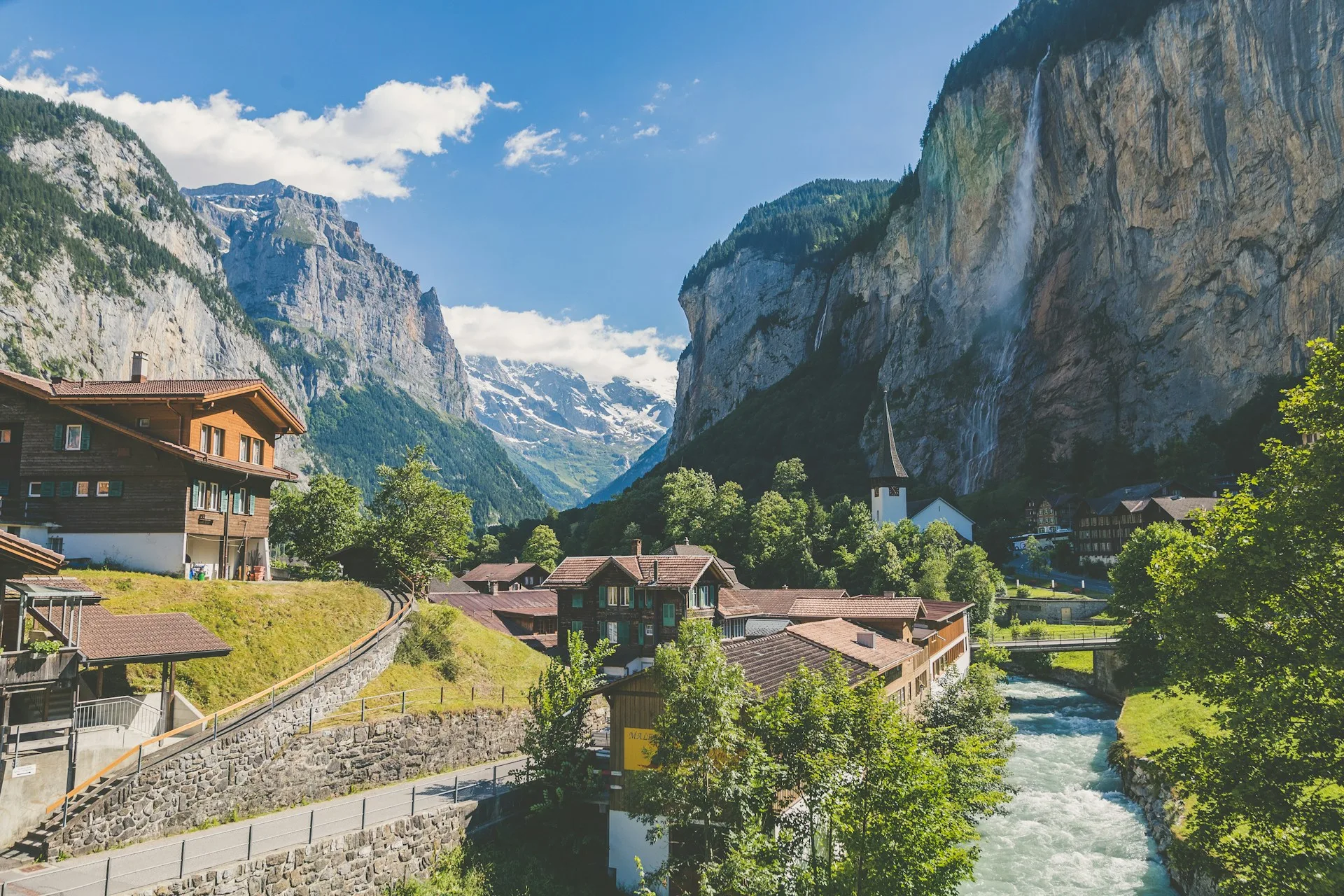
스위스 학업 계획 - 스위스 유학 (ko)
A complete planning guide covering the 스위스 academic calendar, credential recognition, 어학 요건 by region, and how to choose your canton and university.
Plan Your Studies 스위스에서
스위스 유학 requires thoughtful planning, particularly because the country's multilingual structure and decentralized education system mean your choices about region, language, and institution type shape your entire experience. This guide walks you through the 스위스 academic system, helps you navigate credential recognition, and gives you a realistic timeline from first research to enrolment.
Understanding the 스위스 Higher Education System
Switzerland's higher education is built on the Bologna framework, consistent with the rest of Europe:
| Degree | 기간 | ECTS credits | Equivalent |
|---|---|---|---|
| Bachelor | 3 years | 180 | Under대학원 |
| Master | 1.5-2 years (after Bachelor) | 90-120 | Graduate |
| Doctorate/PhD | 3-5 years (after Master) | — | Doctoral |
Three types of institutions
Switzerland has three distinct types of higher education institutions, each with a different focus:
1. Universities (Universitare Hochschulen)
- 10 cantonal universities + 2 federal institutes (ETH Zurich, EPFL)
- Focus on academic research, theory, and fundamental science
- Offer Bachelor's, Master's, and Doctoral degrees
- Most selective, especially at the Master's level
- Examples: ETH Zurich, EPFL, University of Zurich, University of Geneva, University of Basel
2. Universities of Applied Sciences (Fachhochschulen / Hautes Ecoles Specialisees)
- 7 regional Fachhochschulen networks with multiple 캠퍼스es
- Focus on practice-oriented education with strong industry partnerships
- Offer Bachelor's and Master's degrees (no Doctorates independently)
- Mandatory 인턴십s and applied research projects
- Examples: ZHAW, FHNW, HES-SO, BFH, HSLU, FHO/OST, SUPSI
3. Universities of Teacher Education (Padagogische Hochschulen)
- 14 institutions training primary and secondary school teachers
- Offer Bachelor's and Master's degrees in education
- Strong practical component with supervised teaching placements
All three types are recognized under the Bologna system, and degrees are equivalent in terms of level (Bachelor = Bachelor, Master = Master) even if the institutional focus differs.
팁: For 유학생, the distinction between universities and Fachhochschulen matters. If you want a research-intensive, theoretically deep education, choose a university. If you want hands-on, industry-connected training with guaranteed practical experience, a Fachhochschule may be the better fit. Both lead to excellent career outcomes.
The 스위스 Academic Calendar
| Period | Dates (typical) | 비고 |
|---|---|---|
| Autumn 학기 | Mid-September to late December | Lectures; exams in January-February |
| Spring 학기 | Mid-February to late May | Lectures; exams in June-July |
| Summer break | July to mid-September | Research, 인턴십s, travel |
| Mid-학기 breaks | Vary by university | 1-2 weeks in October/November; 2 weeks at Easter |
Most programs start in the autumn 학기 (September). Some Master's programs accept entry in the spring 학기 (February), but this is less common and varies by university. Always check your specific program.
Key dates for planning
| When | What |
|---|---|
| September-November (year before) | Research programs, check 입학 요건 |
| October-December | Take language tests, prepare documents |
| November-February | 지원 deadlines (most universities) |
| March-May | Receive admission decisions |
| April-June | Apply for 장학금s, arrange funding |
| May-July | Apply for visa (non-EU students) |
| August-September | Arrange housing, arrive, register |
| Mid-September | Semester begins |
Credential Recognition
How it works
swissuniversities is the umbrella organization that coordinates 스위스 higher education. However, credential recognition is handled at two levels:
- University-level: each university evaluates foreign qualifications as part of admissions. This is the most important step — if the university admits you, your credentials are effectively recognized for that program.
- National level: 스위스 ENIC (under SERI, the State Secretariat for Education, Research and Innovation) provides official 학력 평가s, which may be needed for professional recognition or some visa processes.
What 스위스 대학교 look for
| Entry level | Typical requirements |
|---|---|
| Bachelor's entry | Secondary school certificate equivalent to the 스위스 Maturitat. Many countries' standard high school diplomas do NOT meet this requirement — you may need A-levels, IB diploma, AP credits, or a year of university study in your home country. |
| Master's entry | Bachelor's degree from a recognized university in a related field. This is the most common entry point for 유학생. |
| Doctoral entry | Master's degree from a recognized university with strong academic performance. Admission is typically arranged directly with a supervising professor. |
Important for Bachelor's applicants: 스위스 Bachelor's entry requirements are stricter than in many countries. A standard US high school diploma, for example, is not sufficient — you would need strong SAT/AP scores or to complete a year of university study first. Check with your target university for specific requirements from your country.
팁: The most straightforward path for 유학생 is entering at the Master's level. Most 스위스 대학교 have clear Master's admission criteria, and the evaluation of a completed Bachelor's degree is more standardforward than evaluating diverse secondary school systems.
Language 요건 by Region
Your choice of region determines the primary language of instruction:
German-speaking Switzerland (Deutschschweiz)
| Level | Language | Typical requirement |
|---|---|---|
| Bachelor's | German | TestDaF 4x4, DSH-2, Goethe C1, or telc C1 Hochschule |
| Master's | German or English | Varies by program; STEM programs often in English |
| Doctoral | English (primarily) | 영어 능력 required; German beneficial |
Universities: ETH Zurich, University of Zurich, University of Bern, University of Basel, HSG St. Gallen, University of Lucerne
French-speaking Switzerland (Romandie)
| Level | Language | Typical requirement |
|---|---|---|
| Bachelor's | French | DELF B2 or DALF C1 |
| Master's | French or English | Varies by program; many English options at EPFL |
| Doctoral | English (primarily) | 영어 능력 required; French beneficial |
Universities: EPFL, University of Geneva, University of Lausanne, University of Neuchatel, University of Fribourg (bilingual DE/FR)
Italian-speaking Switzerland (Ticino)
| Level | Language | Typical requirement |
|---|---|---|
| Bachelor's | Italian | B2-C1 Italian proficiency |
| Master's | Italian or English | USI offers several English-taught Master's programs |
Universities: Universita della Svizzera italiana (USI) in Lugano
영어 수업 프로그램
For programs taught entirely in English (common at Master's level):
| Test | Typical minimum |
|---|---|
| IELTS Academic | 6.5-7.0 overall |
| TOEFL iBT | 90-100 |
| Cambridge | C1 Advanced (CAE) with grade B or higher |
팁: Even if your program is in English, invest time in learning the local language. At ETH Zurich, daily life in Zurich operates primarily in 스위스 German. At EPFL, you'll navigate Lausanne in French. A2-B1 level in the local language makes housing searches, social life, and eventual job hunting significantly easier.
Choosing Your Canton
Switzerland has 26 cantons, each with its own character. Your choice of canton affects your academic environment, language setting, 생활비, and career opportunities:
German-speaking cantons
| Canton/City | 특징 | University | 비용 of living |
|---|---|---|---|
| Zurich | Financial capital, tech hub, largest city | ETH Zurich, University of Zurich, ZHAW | High (CHF 2,000-2,500/month) |
| Bern | Federal capital, diplomatic, charming | University of Bern, BFH | Moderate-high (CHF 1,800-2,200/month) |
| Basel | Pharma hub, cultural, border city (FR/DE) | University of Basel, FHNW | Moderate-high (CHF 1,800-2,200/month) |
| St. Gallen | Business/economics focus, smaller city | HSG St. Gallen | Moderate (CHF 1,700-2,100/month) |
| Lucerne | Tourism, beautiful lake setting | University of Lucerne, HSLU | Moderate-high (CHF 1,800-2,200/month) |
French-speaking cantons
| Canton/City | 특징 | University | 비용 of living |
|---|---|---|---|
| Geneva | International hub, UN/WHO, cosmopolitan | University of Geneva, IHEID | High (CHF 2,000-2,500/month) |
| Vaud (Lausanne) | Olympic capital, lake life, EPFL hub | EPFL, University of Lausanne | High (CHF 1,900-2,400/month) |
| Neuchatel | Watchmaking, smaller and affordable | University of Neuchatel | Moderate (CHF 1,600-2,000/month) |
| Fribourg | Bilingual (FR/DE), medieval, student-friendly | University of Fribourg | Moderate (CHF 1,600-2,000/month) |
Italian-speaking canton
| Canton/City | 특징 | University | 비용 of living |
|---|---|---|---|
| Ticino (Lugano) | Mediterranean feel, Italian culture, finance | USI Lugano, SUPSI | Moderate (CHF 1,600-2,000/month) |
Step-by-Step Planning Timeline
18-12 months before
- Research programs — use the swissuniversities study program database (studyprogrammes.ch) and individual university websites
- Check 입학 요건 — particularly 어학 요건 and credential equivalence for your country
- Identify language tests needed — register for German, French, or English exams
12-9 months before
- Take language exams — TestDaF, DELF/DALF, IELTS, or TOEFL
- Prepare application documents — transcripts, certificates, motivation letter, CV
- Research 장학금s — Excellence 장학금s, ESKAS, university-specific awards
9-6 months before
- Submit applications — most deadlines fall between November and February for autumn start
- Apply for 장학금s — some deadlines are as early as October-November
- Get 학력 평가s if required (through 스위스 ENIC or university)
6-3 months before
- Receive admission decisions (typically March-May)
- Accept your offer and pay deposit if required
- Begin visa application (non-EU students) — immediately upon receiving admission
3-0 months before
- Arrange housing — apply for university housing or search for private accommodation
- Set up 건강 보험 — mandatory 스위스에서 (choose KVG/LAMal-compliant plan)
- Plan finances — open a 스위스 은행 계좌 if possible; ensure sufficient funds
- Arrive 1-2 weeks early — complete registration, settle in, attend orientation
다음 단계
Now that you have a planning framework:
- Explore programs and universities — detailed profiles of 스위스 institutions and programs
- Understand admissions — 지원 절차es, deadlines, and required documents
- Plan your budget — tuition, 생활비, and 장학금 opportunities
- Why 스위스에서 공부 — revisit the full picture of what Switzerland offers
자주 묻는 질문
When does the 학년도 start 스위스에서?
How are foreign credentials recognized 스위스에서?
Do I need to speak German to 스위스에서 공부?
What language tests are accepted by 스위스 대학교?
How far in advance should I start planning?
Can I transfer credits from another country to a 스위스 대학교?
Should I choose a university in the German, French, or Italian region?
What is the difference between a university, a Fachhochschule, and a Padagogische Hochschule?
관련 가이드
스위스 유학을 선택하는 이유
Switzerland offers world top-20 universities, a multilingual environment, and unmatched innovation — here's why it's one of the smartest study destinations in Europe.
🎓스위스 프로그램 및 대학교
A comprehensive guide to 스위스 higher education institutions — ETH Zurich, EPFL, cantonal universities, HSG St. Gallen, Fachhochschulen, and 영어 수업 프로그램.
📝스위스 입학 및 지원
Navigate the 스위스 admissions process — direct applications, swissuniversities information, ECUS reduced admission exams, document requirements, and timelines for 유학생.
💰스위스 비용 및 재정 지원
A realistic breakdown of 학비, 생활비 by city, 장학금s, and budgeting tips for 유학생 스위스에서 — affordable tuition, high 생활비.
🛂스위스 비자 및 입국
Complete guide to 스위스 학생 비자s, 체류 허가s, and your first-week checklist — from application to settling into your new 스위스 도시.
🏡스위스에서의 생활
Everything you need to know about daily life 스위스에서 — from choosing your city and finding housing to transport, healthcare, food, culture, and the 스위스 lifestyle.
💼스위스 취업 및 경력
A complete guide to working as a student 스위스에서, finding 인턴십s, and building your career — including post-study permits and Switzerland's world-leading job market.