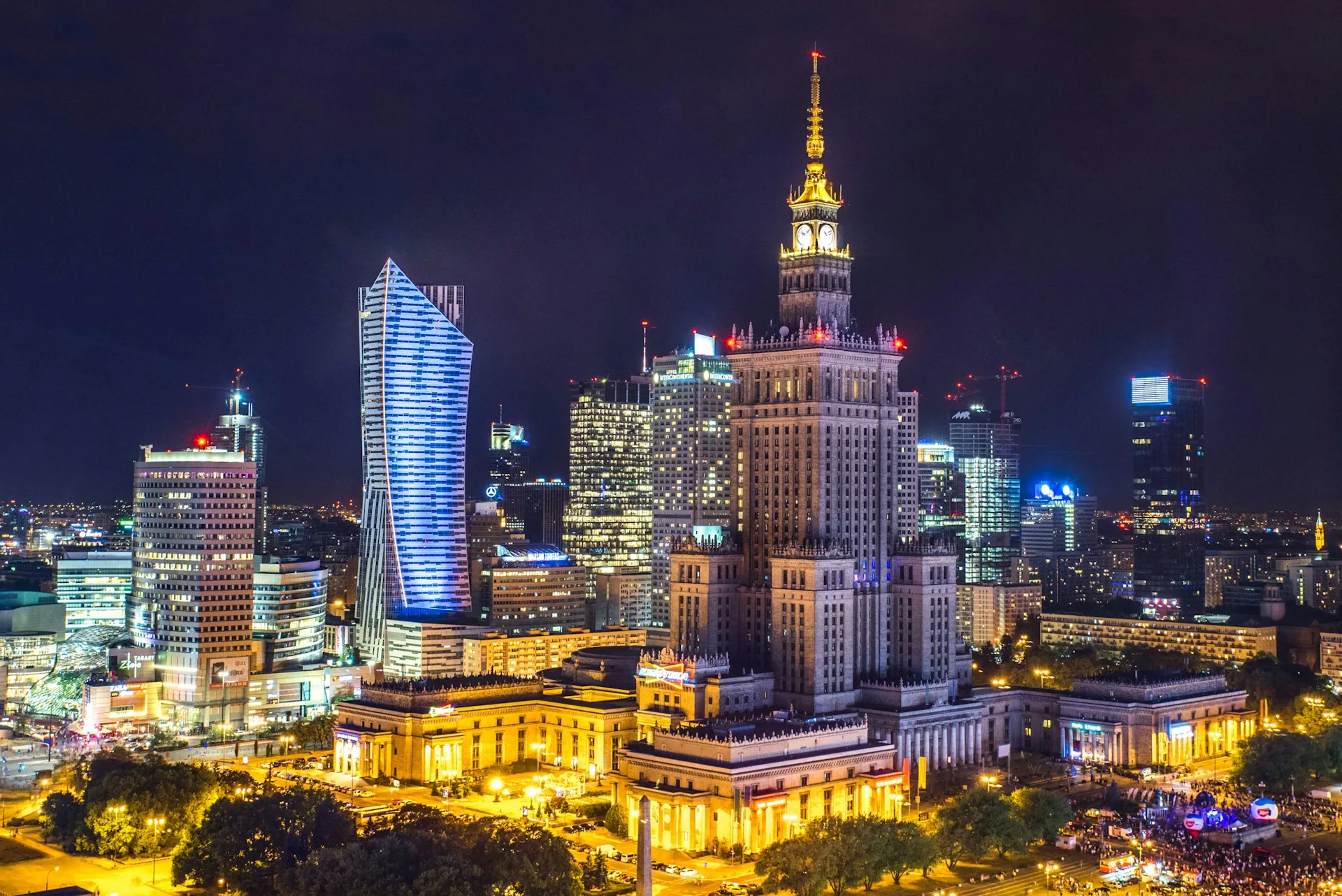
폴란드 학업 계획 - 폴란드 유학 (ko)
A complete planning guide covering the 폴란드 academic calendar, October and February intakes, credential recognition through NAWA, 폴란드어 courses, and choosing between public and private universities.
Plan Your Studies 폴란드에서
폴란드 유학 requires thoughtful planning, but the process is straightforward and well-supported. 폴란드 대학교 have decades of experience welcoming 유학생, and government agencies like NAWA (폴란드 National Agency for Academic Exchange) provide clear pathways from initial research to enrollment. This guide walks you through every step — from understanding the academic system to building a realistic timeline.
Understanding the 폴란드 Higher Education System
Poland's higher education system follows the Bologna Process framework, aligned with the European standard:
| Degree | 폴란드 name | 기간 | ECTS credits | Equivalent |
|---|---|---|---|---|
| Bachelor's | Licencjat / Inzynier | 3-3.5 years | 180-210 | Bachelor's |
| Master's | Magister / Magister inzynier | 1.5-2 years (after Bachelor's) | 90-120 | Master's |
| Long-cycle Master's | Magister | 5-6 years | 300-360 | Integrated Master's |
| Doctoral | Doktor | 3-4 years (after Master's) | — | PhD |
Important distinctions:
- Licencjat is the standard Bachelor's degree for humanities, social sciences, and business. Inzynier is the Bachelor's equivalent for engineering and technical fields.
- Long-cycle Master's programs (jednolite studia magisterskie) are 5-6 year integrated programs that award a Master's directly, without a separate Bachelor's. Medicine (6 years), dentistry (5 years), law (5 years), pharmacy (5.5 years), and veterinary science (5.5 years) follow this model.
- The ECTS system means your credits transfer seamlessly across Europe.
Types of higher education institutions
| Type | Number | 특징istics |
|---|---|---|
| Public universities (uniwersytety) | ~90 | Broad academic range, strong research, government-funded |
| Public technical universities (politechniki) | ~18 | Engineering, technology, architecture focus |
| Medical universities | ~10 | Medicine, dentistry, pharmacy, nursing |
| Economics universities | ~5 | Business, economics, finance |
| Private universities (uczelnie niepubliczne) | ~250+ | Often more flexible admissions, career-focused, variable quality |
| Art and music academies | ~20 | Fine arts, music, theatre, film |
Poland has over 400 higher education institutions in total. Quality varies, so always check accreditation status through the 폴란드 Accreditation Committee (PKA) — the national quality assurance body.
The Academic Calendar
The 폴란드 학년도 is divided into two 학기s:
| Period | Dates (typical) | Activity |
|---|---|---|
| Winter 학기 | Early October - late January | Lectures, seminars, labs |
| Winter exam session | Late January - mid-February | Exams and assessments |
| Semester break | 1-2 weeks in February | Between 학기s |
| Summer 학기 | Mid-February - late June | Lectures, seminars, labs |
| Summer exam session | June - early July | Exams and assessments |
| Resit exams | September | Second-chance exams |
| Summer break | July-September | Vacation, 인턴십s |
Key breaks during the year
- All Saints' Day — 1 November (national holiday, usually a day or two off)
- Independence Day — 11 November (national holiday)
- Christmas break — approximately 2 weeks in late December/early January
- Easter break — approximately 1 week in March/April
- May holidays — 1 May (Labour Day) and 3 May (단점titution Day), often creating a long weekend
팁: The October start means you should aim to arrive in late September for orientation week. Most universities run dedicated orientation programs for 유학생 in the last week of September, covering everything from registration to city tours.
October vs. February intake
| Factor | October intake (winter 학기) | February intake (summer 학기) |
|---|---|---|
| Availability | All programs | Limited — mainly private universities and some Master's programs |
| 지원 deadline | Typically June-August | Typically November-January |
| Orientation | Full orientation program | Smaller orientation, fewer new 유학생 |
| Recommendation | Strongly recommended | Good option if you miss October or want a gap |
Most 유학생 start in October. If you are considering a February start, confirm availability with your target university first.
Credential Recognition — The NAWA System
Getting your existing qualifications recognised 폴란드에서 depends on where you studied and what you want to do.
Automatic recognition
Poland has bilateral agreements with many countries for automatic degree recognition. Degrees from the following are generally recognised without additional procedures:
- EU/EEA countries — recognised under the Lisbon Recognition Convention and EU directives
- Countries with bilateral agreements — including Ukraine, Belarus, China, and many others (check the current list with NAWA)
University-level recognition
For most 유학생 applying to 폴란드 대학교, the admitting university evaluates your credentials directly. You typically need:
- Certified copies of your diploma and transcripts
- Sworn translations into 폴란드 or English (by a certified translator)
- Apostille or legalisation of your diploma (depending on your country)
- In some cases, a 학력 평가 statement from NAWA
Nostryfikacja (professional recognition)
For regulated professions (medicine, law, pharmacy, architecture, engineering), you may need nostryfikacja — a formal credential recognition process conducted by a 폴란드 대학교 in the same field. This involves:
- Submitting your diploma and detailed 교과과정 to the university
- Possible additional exams or practical assessments
- Processing time of 2-6 months
팁: If you plan to 폴란드에서 공부 (rather than practise a profession), universities handle credential recognition as part of the admissions process. You only need nostryfikacja if you want to practise a regulated profession with a degree obtained abroad.
Language 요건
요건 depend on whether your program is taught in English or Polish.
For 영어 수업 프로그램
| Test | Typical minimum score | 비고 |
|---|---|---|
| IELTS Academic | 5.5-6.5 | Most commonly required; 6.0+ for competitive programs |
| TOEFL iBT | 72-90 | Accepted by most universities |
| Cambridge B2 First | 160+ | Widely accepted |
| Cambridge C1 Advanced | 170+ | Preferred by some competitive programs |
| Duolingo English Test | 95-110 | Accepted by a growing number of universities |
Some universities accept alternative proof of 영어 능력:
- Secondary or post-secondary education completed in English
- Interview conducted in English (common at private universities)
- English as a first language / passport from an English-speaking country
For Polish-taught programs
| Test | Minimum level | 비고 |
|---|---|---|
| Certificate of 폴란드 as a Foreign Language | B1-B2 | Issued by the State Commission for the Certification of Proficiency in 폴란드 |
| University 폴란드어 course | Completion certificate | Many universities offer 1-year preparatory 폴란드 courses |
| University entrance exam | Pass | Some universities conduct their own 폴란드어 assessments |
팁: If you want to study in 폴란드 but do not yet have the language skills, consider enrolling in a one-year 폴란드어 preparatory course at a 폴란드 대학교. These intensive programs bring you from zero to B2/C1 level and often include cultural orientation and academic preparation. They typically cost EUR 2,000-3,500.
Choosing Between Public and Private Universities
This is an important decision for 유학생. Here is a practical comparison:
Choose a public university if:
- You want the strongest academic reputation and research opportunities
- You want access to EU-funded research infrastructure and labs
- You are pursuing medicine, engineering, or sciences where public institutions dominate
- You want the prestige of historic institutions like Jagiellonian or University of Warsaw
- You are an EU student who can study tuition-free in Polish
- You value larger student communities with more diverse activities
Choose a private university if:
- You want more flexible admissions requirements and processes
- You prefer smaller class sizes with more personal attention
- You are looking for career-focused programs with strong industry connections
- You want a wider selection of 영어 수업 프로그램 (some private universities offer more)
- You value modern 캠퍼스es and facilities (some private institutions have invested heavily)
- You are interested in business, management, or social sciences where top private schools excel
Quality indicators to check
- PKA accreditation — the 폴란드 Accreditation Committee evaluates all programs. Look for "positive" or "outstanding" ratings.
- International accreditations — for business schools, look for AACSB, EQUIS, or AMBA accreditation. Kozminski University has all three (triple crown).
- Rankings — check the Perspektywy ranking (Poland's national university ranking), QS World University Rankings, and THE World University Rankings.
- Graduate employment rates — ask about employment statistics and career services.
| Factor | Top public universities | Top private universities |
|---|---|---|
| Tuition (English programs) | EUR 2,000-4,000/year | EUR 3,000-8,000/year |
| Class size | 50-200+ (lectures), 15-30 (seminars) | 20-60 |
| Research focus | Strong | Varies; some are research-active |
| Industry connections | Through research and alumni | Often directly built into 교과과정 |
| Admissions selectivity | Moderate to high | Low to moderate |
| PKA rating | Generally positive or outstanding | Varies — check individually |
Building Your Planning Timeline
Here is a comprehensive timeline for an October start:
| When | Action |
|---|---|
| 12 months before | Research programs and universities; begin learning 폴란드 if needed |
| 9-10 months before | Take IELTS/TOEFL or 폴란드어 test; attend education fairs |
| 8-9 months before | Apply for NAWA or Erasmus+ 장학금s (deadlines vary) |
| 6-8 months before | Submit applications to universities; gather and translate documents |
| 5-6 months before | Receive admission decisions; accept your offer |
| 4-5 months before | Apply for 학생 비자 (non-EU students); arrange 건강 보험 |
| 2-3 months before | Begin housing search; join student groups online |
| 1 month before | Book flights; prepare documents for arrival; confirm housing |
| Late September | Arrive for orientation week; complete registration |
For a February start, shift this timeline back by approximately 4 months (start planning in June/July).
팁: Join Facebook groups and forums for 유학생 at your target university. Groups like "Erasmus Warsaw," "International 학생 Krakow," or university-specific groups are excellent sources of housing tips, administrative advice, and pre-arrival connections.
Key Resources for Planning
- 폴란드 유학 (studyinpoland.pl) — official portal for 유학생, program search, and university information
- NAWA (nawa.gov.pl) — 폴란드 National Agency for Academic Exchange; 장학금s, credential recognition, and mobility programs
- PKA (pka.edu.pl) — 폴란드 Accreditation Committee; check program quality ratings
- ENIC-NARIC Poland — credential recognition for professional purposes
- Perspektywy (ranking.perspektywy.pl) — Poland's national university ranking
- Campus Poland — education fairs and information events held worldwide
다음 단계
With your plan in place, move on to the detailed guides:
- Explore programs and universities — find the right institution and program
- Understand the admissions process — applications, documents, and deadlines
- Calculate costs and find funding — budget planning and 장학금s
- Prepare for your visa — visa types, documents, and arrival steps
자주 묻는 질문
When does the 학년도 start 폴란드에서?
Can I start my studies in February instead of October?
What is NAWA and what does it do?
How are my credentials recognised 폴란드에서?
Should I choose a public or private university?
Do I need to learn 폴란드 before arriving?
How far in advance should I start planning?
What language tests are required for 영어 수업 프로그램?
관련 가이드
폴란드 유학을 선택하는 이유
Poland combines genuinely affordable tuition, 800+ 영어 수업 프로그램, centuries-old universities, and a booming tech economy — here's why over 85,000 유학생 choose it every year.
🎓폴란드 프로그램 및 대학교
A comprehensive guide to 폴란드 higher education institutions — top universities, technical universities, medical schools, private institutions, and the 800+ 영어 수업 프로그램 available.
📝폴란드 입학 및 지원
Navigate the 폴란드 admissions process — the IRK online system, direct applications, required documents, sworn translations, and application timelines for 유학생.
💰폴란드 비용 및 재정 지원
A realistic breakdown of 학비, 생활비, 장학금s, and 아르바이트 earnings 폴란드에서 — one of the most affordable study destinations in the EU.
🛂폴란드 비자 및 입국
Complete guide to the 폴란드 학생 비자 (national visa type D) — requirements, 지원 절차, 체류 허가s, and your first-week checklist after landing 폴란드에서.
🏡폴란드에서의 생활
Everything you need to know about daily life as an 유학생 폴란드에서 — housing, healthcare, transport, food, culture, and safety in one of Europe's most affordable countries.
💼폴란드 취업 및 경력
Your complete guide to working while 폴란드 유학 — student work rights, finding jobs, 졸업 후 career pathways, and Poland's booming tech and BPO sectors.